


“The most explosive album I’ve ever done”: Was the Christian trilogy from Bob Dylan genuinely bad?

Bob Dylan might just be the single most polarising of all the accepted all-time greats. For every one who stands outside his shows and calls him the greatest artist of all time, there are two people willing to walk out before the concert is even finished because they can’t stand to listen to him a moment longer.
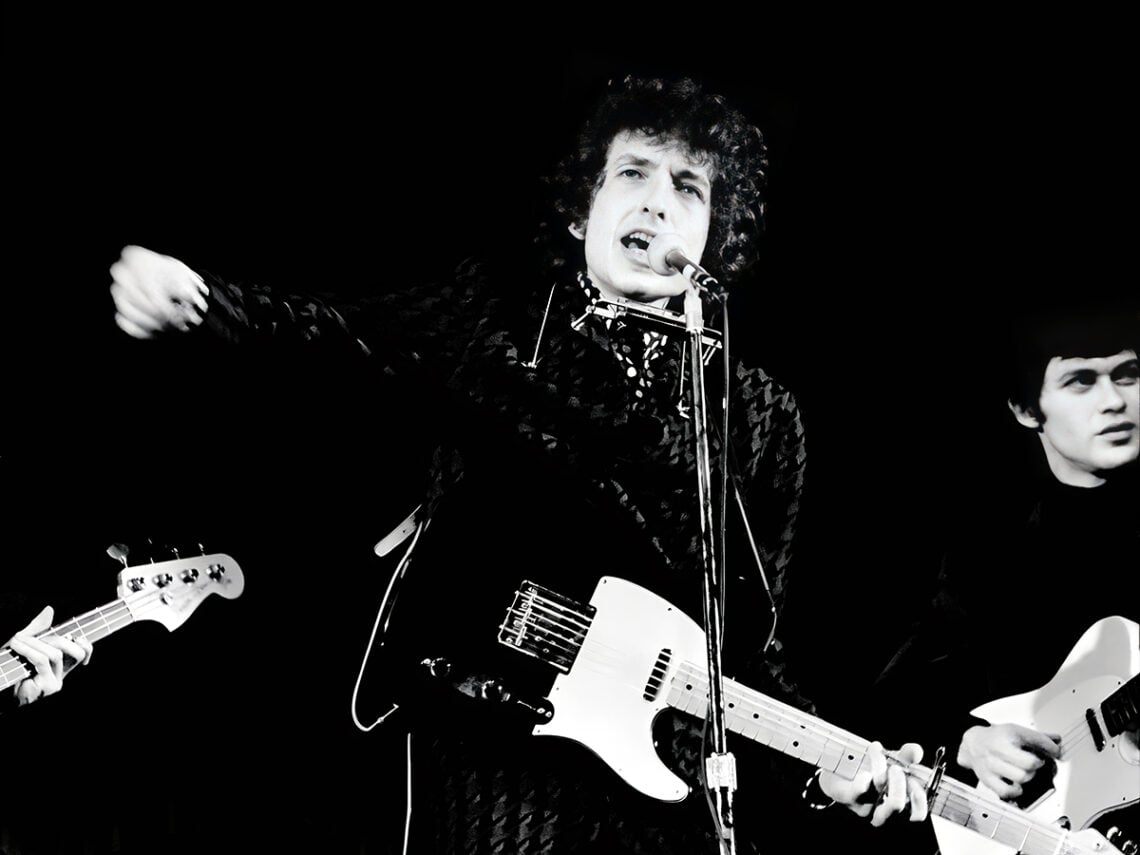
Even when he was at the peak of his fame, when he was held in the highest cultural regard as the spokesman for his generation in the middle 1960s, he was roundly booed, battered and bruised everywhere he went by his fans who wanted to hear their version of Bob Dylan, not his. And that wasn’t the only time he came up against a combative audience, either. Once his crowd had finally caught up with his electric vision, he’d already moved on to his next calling. Country music, roots and traditional songs. Again, he was too far ahead of his audience, and the critics who wrote about him, as evidenced by the famous Rolling Stone review for Self Portrait from Greil Marcus which opens with the words “What is this shit?” whilst many in the audience at the 1969 Isle of Wight festival were asking variations on the same question.
Following a string of successful and well received albums in the 1970s, like New Morning, Planet Waves, Blood on the Tracks, Desire and Street-Legal, Dylan’s career once again took a turn which caught his audience off-guard.
One of the very things that makes Dylan so great, though, is his internal sense of what is right, and where to take his art next. He doesn’t pander to a fickle audience who don’t know what they want to hear until they’ve grown up with it, or make records purely to sell a million copies and make a million dollars more, but because he has a deep, personal drive to explore new musical realms, and to expand his art into new frontiers. When he immerses himself in a new territory, he gets in all the way. He wades waist deep into the big muddy. He did it with rock and roll, then he did it with folk; he did it with country, and, in 1979, he did it with Gospel.
Despite his Jewish upbringing, Christian imagery runs through the heart of Dylan’s work all the way back to his genesis as a writer. Sixteen years on, during his sprawling, epic 1978 world tour, he started tinkering with a collection of songs that would place that Christian imagery front and centre, though. Once again, his fans weren’t ready for this shift in his work and, just like on his fabled tour of 1966, they let him know it night after night on the road when he returned with his latest sound in 1979.

Owing to the response at the time, the resulting albums have long since been tarnished with a poor reputation and are poorly regarded by casual critics in the accepted narrative of Dylan’s career. You will find Saved, from 1980, near the bottom of every ranking of Dylan’s albums, but it should be much closer to the top. Dylan’s lyricism is as strong as it ever was on this album, his singing is inspired and all that is backed by one of the greatest bands he ever assembled, including Fred Tackett on guitar, Tim Drummond on bass, Jim Keltner on drums and Spooner Oldham on keys, as well as a beautiful backing troupe of gospel singers.
Recorded in the legendary Muscle Shoals Sound Studio with Jerry Wexler and Barry Beckett, the second album in Dylan’s so-called gospel trilogy—Saved is the only true gospel album of the three, the other two are each different forms of rock—stands up with the very best work he ever did. What is more, and even more incredible, is that the songs got even better when they took them on the road. Every night, Dylan won the unbelievers and non-believers around with his fierce, transcendent and full-throated performances. He may not have moved their minds towards Jesus, but he certainly got their bodies moving, with spirit-stirring renditions of songs like the titular ‘Saved’, ‘In the Garden’, ‘Covenant Woman’ and ‘Solid Rock’. Perhaps the stand-out was ‘What Can I Do For You?’, which closed with a searing, transcendent harmonica solo that could cut to the core of even the most ardent atheist.
The performances on the record and on the tour were enough to prove that Dylan was not kidding in his commitment to The Lord. He’d done the work, studying with the Vineyard Christian Fellowship in California and absorbing the message and the word of the Bible into his lyrics. Tucked away in the archives at the Bob Dylan Center in Tulsa, OK is a sheet of paper that proves how deeply Dylan had immersed himself in the good book, where he had written out, in alphabetical order, multiple columns of keywords and themes that come up in his songs again and again, themes like absolution and divorce, faith and forgiveness, love and marriage, and next to each one, a corresponding Bible chapter and verse to refer to in his lyrics.
The clearest evidence of Dylan’s commitment at the time is in his performances, though. Dylan delivered some of the greatest performances of his entire touring career over these three years, but it was evident from the opening song of his 1979 album Slow Train Coming, the funk infused ‘Gotta Serve Somebody’, that Dylan’s convictions were unshakeable. He means what he’s singing, as much as he ever did on ‘Blowin’ in the Wind’, ‘Like a Rolling Stone’ or ‘You’re a Big Girl Now’.
John Lennon didn’t like what he heard, writing the scathing song “Serve Yourself” in response, whilst Leonard Cohen was said to have walked around his house puzzling that “I just don’t get this, why would he go for Jesus at a late time like this?” but Nick Cave went as far as to name it as his all time favourite album, saying “that’s a great record, full of mean-spirited spirituality. It’s a genuinely nasty record, certainly the nastiest ‘Christian’ album I’ve ever come across”. The Grammy voting committee seemed to agree, too, as Dylan picked up the inaugural award for Best Male Rock Vocal Performance for ‘Slow Train Coming’. Other standouts on the album include ‘Precious Angel’, ‘I Believe in You’, ‘Slow Train’ and ‘When You Gonna Wake Up’.
But it was the final album of the three, 1981’s Shot of Love, which Dylan has singled out himself again and again over the years as his own favourite Bob Dylan album. Talking to Jann Wenner in the 2000s, Dylan said that “one album of mine which I think was overlooked was the ‘Shot of Love’ album”. Similarly, he’d defended the record in an MTV interview with Martha Quinn in 1983, and in a conversation with Martin Keller in the same year, when he said that “it’s not like I sit around and listen to Bob Dylan stuff. I like Freewheelin‘, and I like my first album. Shot of Love is my favourite, actually”.
And when you listen, you can hear why. There is an urgency and an energy and a bit to the album that was present in his mid-60s peak, but which was also present in the raw, visceral and rock and roll from the 1950s that Dylan grew up with, and which inspires so much of the sound of this album. There is a reason he has described the record as “the most explosive album I’ve ever done”. When you listen to songs like the titular opener ‘Shot of Love’ or the relentless ‘The Groom’s Still Waiting at the Altar’, you can hear that explosiveness in both Dylan’s delivery and the music playing behind him.
There is also a great sense of melody and musicality on the album, in songs like ‘Heart of Mine’ and ‘Watered Down Love’, which are not always two descriptions so widely associated with Dylan’s work (in fact, this whole era is something of a melodic highpoint in Dylan’s career, in both the songs that made it to the albums and the ones, such as ‘Ain’t Gonna Go to Hell for Anybody’, ‘No Man Righteous’, ‘City of Gold’ and ‘Caribbean Wind’, that didn’t).
Something else the album has, alongside the naturally expected poetic mastery and inventive way with words (‘Dead Man, Dead Man’, ‘In the Summertime), is a maturity and a warm humanity which may not have always been present in his earlier works, as well. No song is a better example of this than the closer, the stirring ‘Every Grain of Sand’. There is a reason that Dylan closed the album, and his religious run of albums, with this powerful song, and there is a reason that he has closed almost each and every one of his shows from the last four years with it as well. Simply put, it is one of his greatest ever songs.

Never Miss A Tale
The Far Out Bob Dylan Newsletter
All the latest stories about Bob Dylan from the independent voice of culture.
Straight to your inbox.