


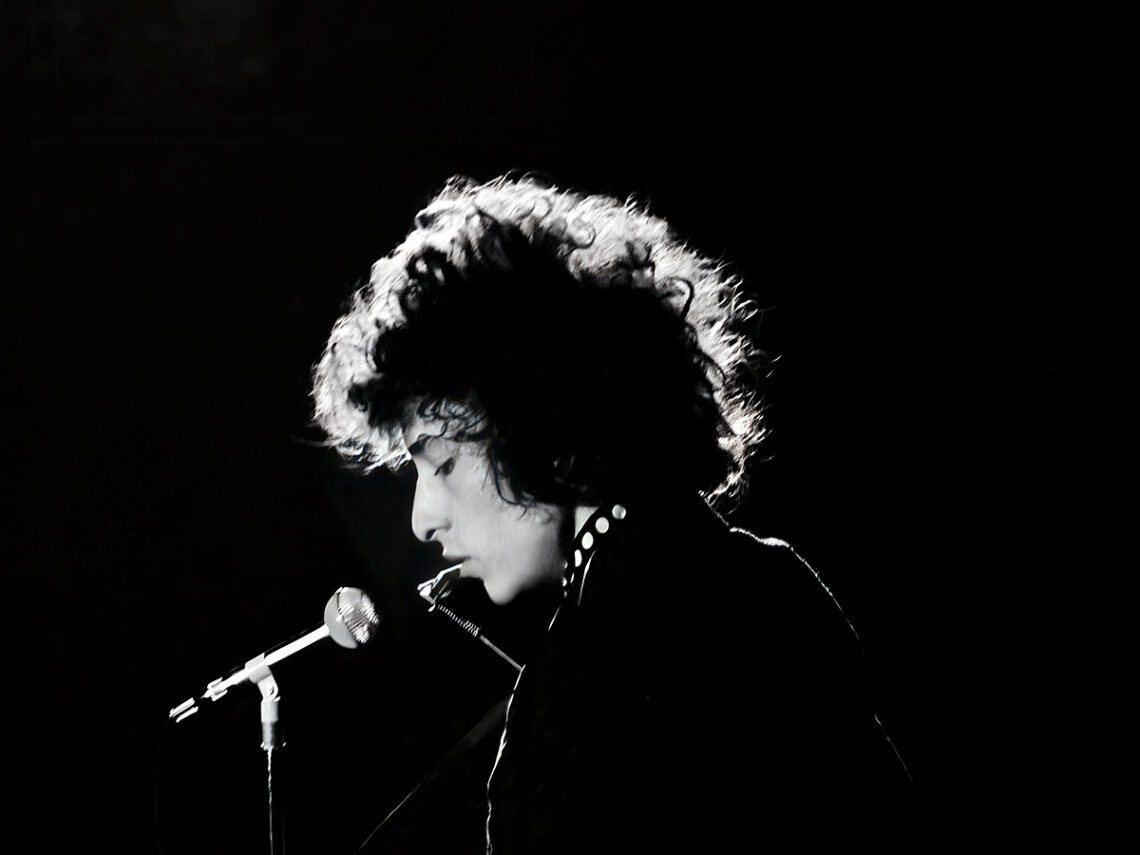
When Bob Dylan covered Sam Cooke’s ‘A Change Is Gonna Come’

When Sam Cooke first heard Bob Dylan’s monumental ‘Blowin’ in the Wind’ in 1963, he felt the winds of change blowing right straight through him.
Cooke had arrived on the scene with the softly sung, achingly tender ‘You Send Me’ in 1957, which had captured America’s heart and went all the way to the top of the charts. Over the coming years, he found similar successes with his brand of soulful pop with songs like ‘You Were Made for Me’, ‘Everybody Loves to Cha Cha Cha’, ‘Wonderful World’, ‘Cupid’, ‘Twistin’ the Night Away’ and ‘Another Saturday Night’.
Cooke very quickly established himself as one of the finest vocalists in the country, his romantic ballads becoming the soundtrack to countless young loves. Around the same time, the young Dylan arrived in New York and took Greenwich Village by storm.
While his self-titled debut for Columbia Records in 1962 was a fine collection of blues songs and traditional standards, it wasn’t until his second record, The Freewheelin’ Bob Dylan, in 1963 that the folksinger found his voice. In songs such as ‘Masters of War’, ‘A Hard Rain’s a-Gonna Fall’, ‘Oxford Town’ and, of course, the opener, ‘Blowin’ in the Wind’, Dylan soon became known and championed as the pre-eminent writer in the growing charge for social justice and civil rights.
Following the tragic loss of his infant son in 1963, Cooke’s music became more introspective. He started to explore his identity and Black history and to become more politically motivated. When he first heard ‘Blowin’ in the Wind’, he couldn’t believe that a Black man hadn’t written the song and even went as far as to say that he felt ashamed that he had not written something similar on the subject himself.
Further inspiration struck Cooke when he watched civil rights leader Dr Martin Luther King Jr later deliver his immortal ‘I Have a Dream’ speech at the culmination of the March on Washington for Jobs and Freedom rally on August 28th, 1963.
Earlier on that very day, at the March on Washington, Dylan himself had played four songs. Three of his own, with Joan Baez accompanying him on the first, and one as part of an ensemble, ‘When the Ship Comes In’, ‘With God on Our Side’, ‘Only a Pawn in Their Game’ and ‘Keep Your Eyes on the Prize’. Each of his own compositions that he sang that day would feature on his next album, The Times They Are a-Changin’, in 1964, which was an even starker, urgent and forthright record than his first collection of so-called ‘protest songs’.
Having heard ‘Blowin’ in the Wind’ and “I Have a Dream” and following a racially motivated episode at a Holiday Inn in Shreveport, LA, Cooke’s own civil rights song came to him in a dream. Written from his perspective and telling his own history, such as it was full of racial struggles and segregation, ‘A Change is Gonna Come’ is even more powerful than Dylan’s anthem.
Cooke didn’t live long enough to see the song released, though, or the impact that it had. He was shot and killed in suspicious circumstances by a motel manager in Los Angeles on December 11th, 1964.
Back at the ‘March On Washington’, Dylan was introduced to the stage by actor and activist Raiford ‘Ossie’ Davis. Over 40 years later, at a 2004 show to celebrate the 70th anniversary of New York’s Apollo Theater, Davis once brought Dylan to the stage.
Instead of singing a song from his vast back catalogue, Dylan opted to perform a passionate, heartfelt and honest rendition of Sam Cooke’s ‘A Change is Gonna Come’. If Cooke had lived long enough, he would have undoubtedly loved to treat the crowd at The Apollo to his own version of the song.
Expertly backed by his road band, Freddie Koella, Larry Campbell, Tony Garnier, George Recile and Richie Hayward, Dylan’s voice is ragged, worn-down and glorious. It sounds as cracked around the edges as the lie of American freedom, equality and acceptance and is as frayed and fractured as the relations between the races in the country. Some find Dylan’s voice here to be unpalatable, but it was Sam Cooke himself who once said that “voices ought not be measured by how pretty they are. Instead, they matter only if they convince you that they are telling the truth”.
In Dylan’s voice, and with Sam Cooke’s words, ‘A Change is Gonna Come’ is nothing but the Capital T Truth.

Never Miss A Tale
The Far Out Bob Dylan Newsletter
All the latest stories about Bob Dylan from the independent voice of culture.
Straight to your inbox.