


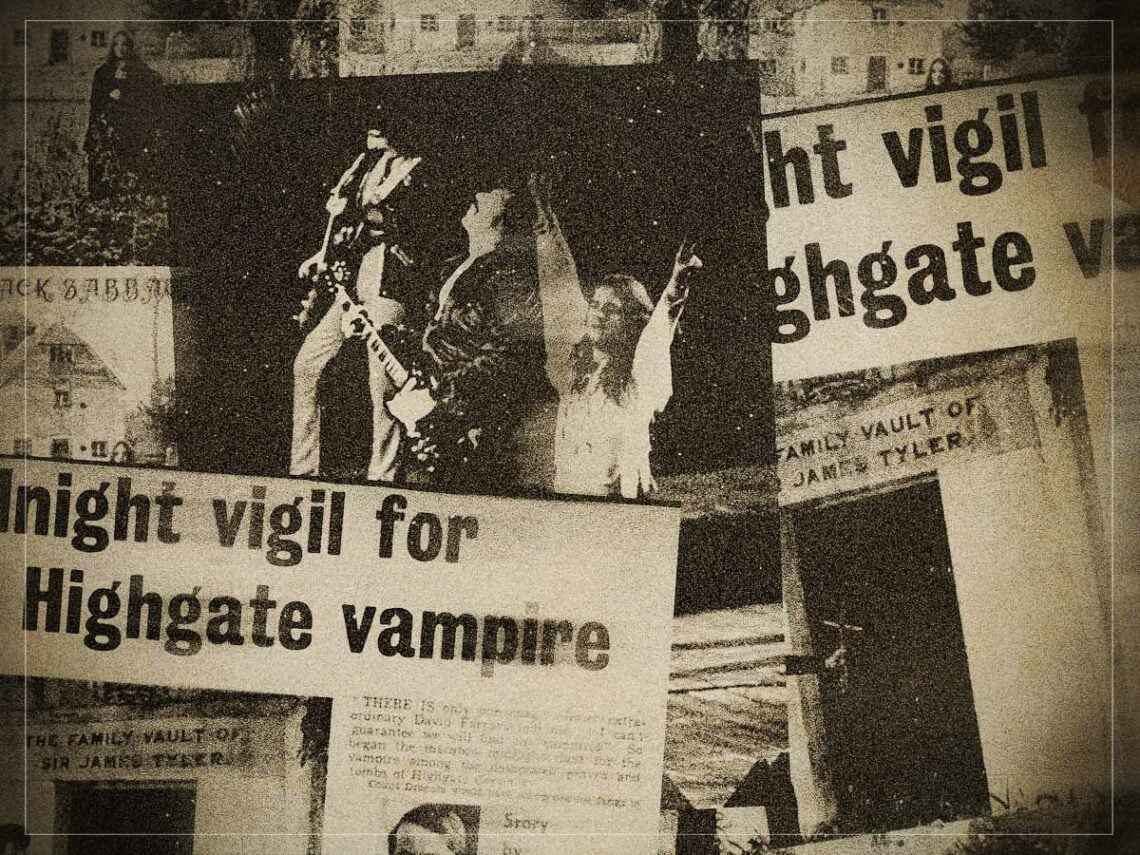
Out of the Ordinary: Black Sabbath, British Youth, and the Highgate Vampire

For the working-class British youth of the 1960s, life was doggedly knowable. You’d spend your youth kicking an empty can of baked beans along a cobbled street, drop out of school at age 15, get a job in a factory, and retire with a bad back and a penchant for cheap beer about half a century later. There was an eerie certainty to this forecast, no matter how dazzling the uproarious counterculture movement suddenly seemed. For instance, The Beatles might have offered promise, but Ozzy Osbourne‘s life was destined to be entwined with heavy metal in one way or another.
After all, the local heavy metal industry was the main area of employment for young kids leaving school in the Birmingham area. Through a quirk of fate, the Prince of Darkness would somehow end up in a heavy metal industry of an entirely different variety, and, in turn, he made life suddenly less knowable for many of his fellow disenfranchised young friends the world over. But even that unlikely oddity would help to define the climate of the era and how the band shone like a beacon during it.
The grisly group brought a sense of escape to the masses. Much has been made of their heavier sound, but beyond the musicology, one simple tenet that had a major impact was simply how far away from the mainstream it seemed. By avoiding the platitudes of pop, the band welcomed their new fans into a different world – a world full of intoxicating weirdness and heady otherworldliness. That was a boon that brought a joyous sense of mystery and magic to a grey old Blighty, shackled by heavy industry and limited social mobility.
In short, they were, quite simply, out of the ordinary. There was a thirst for that among the masses at the time. And soon, the influence of Sabbath would make itself known in strange ways as the pursuit of weirdness swept through the youth of the day. One such phenomenon occurred almost immediately following their debut album. Their self-titled first record was deeply entangled with the occult, even accompanied by a ghostly cover, and it served as a come-hither to curious fans.
So, on the day of the album’s release, a group of kids became entranced by a decidedly Black Sabbath-like incident unfurling in the local press in the north London area, where an occult tale was grabbing headlines. A letter published in the Hampstead and Highgate Express described the sighting of a grey and ghostly figure lingering in the dark and decrepit Highgate Cemetery. The stark, stony and overgrown spot is spooky enough for an arse candle to autograph the gusset of your undergarments at the best of times, but this tale of a terrifying apparition, floating in the mist, suddenly upped the underpant desecrating ante.

Young kids, inspired to seek out the strange, thanks to the drama that Black Sabbath imbued it with, responded to this letter with a string of their own claims. Suddenly, Highgate Cemetery and the surrounding area became the world’s most haunted spot. There were claims of a ghoulish cyclist, a tall man in a hat (too tall and hat-dependent to be human), a disembodied face that glared through the bars of the cemetery fence, the sound of rogue bells, and strange whispers. As the tracklisting to the band’s debut record had prognosticated, this sleeping village was beset by a strange evil on the very day the album was released.
Chief among the spectres of Highgate was a supposed vampire. So, exactly one month on from the release of their debut album, on the first Friday the 13th of March 1970, a man by the name of Sean Manchester said he would seek out and slay the vampire. When news of his planned slaying hit the press, a mob of young, burgeoning heavy metal fans descended on the cemetery on the night in question to assist with the dispelling of the evil spirits. The influence of the Prince of Darkness on the youth of the day was already clear.
This boneyard bonanza was the sort of upheaval to the maudlin march of grey, boring and knowable life that youngsters, shackled to a prefabricated future, had been craving. It offered the same sense of high-octane escapism as the music of Black Sabbath, Led Zeppelin and the other emerging bands who were steadily ditching the peace and love platitudes that offered little direct hope for the youth of the day in favour of something entirely more visceral and immediate.
The tale of the Highate Vampire even touched upon the same hint of comedy in the midst of heavy metal. Two rival vampire slayers, David Farrant and Sean Manchester, found themselves embroiled in a feud. For decades, the pair would deride each other’s credibility – the proverbial Ozzy Osbourne and Ronnie James Dio of the spectre slaughtering trade. In the process, both would build up the lore of mystery and mirth that allowed people to forget the world and have fun, much like the heavy metal bands before them.
Yes, it seems that almost immediately, as Black Sabbath arrived on the scene, Britain became gripped by the otherworldliness that they had to offer. The Brummy pioneers were not just a great group, but a bristling new subculture of their own, primed to turn the greyness of reality a more alluring shade of black when the brightness that their peers promised seemed to suddenly be misplaced. All you need is love? Sure, but ghosts are sometimes easier to come by… especially in Highgate Cemetery, swept up in the aftermath of a brand-new kind of masterpiece.
