


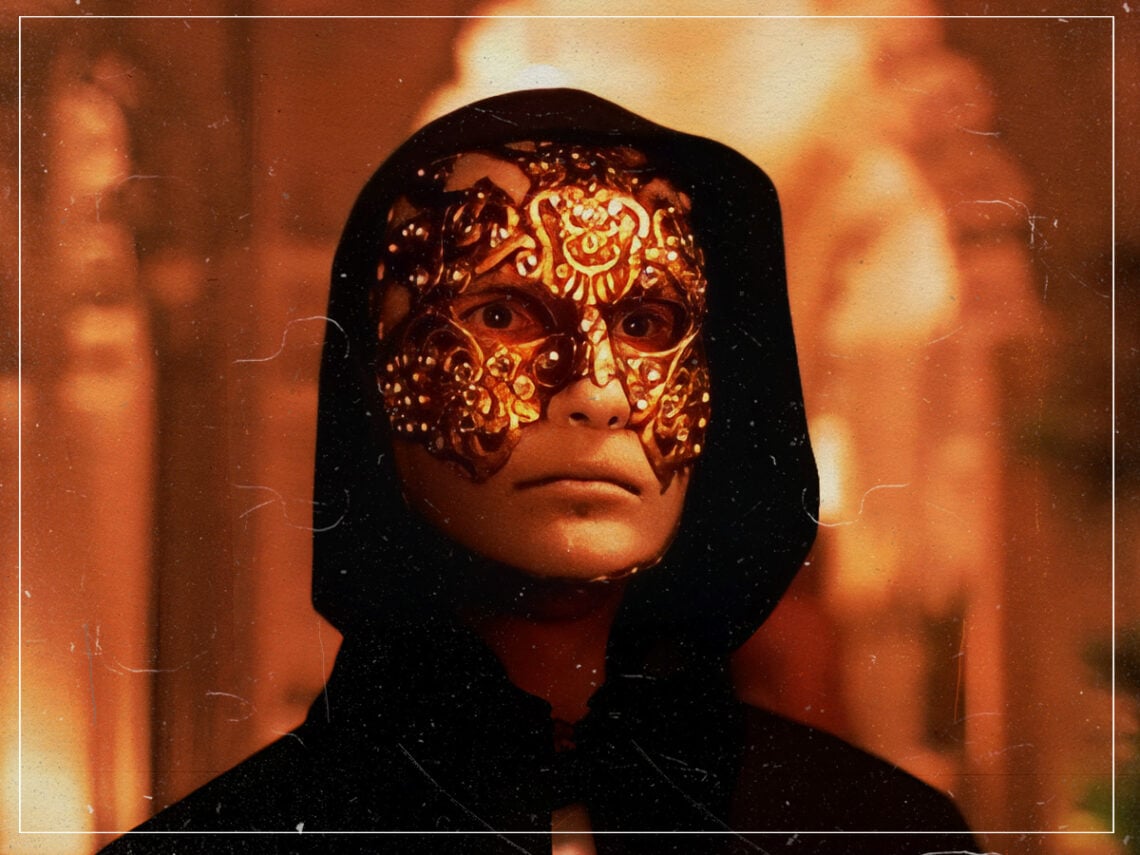
Shrouded Identities: the inherent mystery of the occult in cinema

The mysterious allure of the occult, ever shrouded in enigmatic shadows, has long been an attractive prospect for the guiding fingers of the cinematic medium. Defined by a sense of secretive knowledge, a power hidden from the everyday citizen, and a deep respect for forces of the supernatural, countless filmmakers have dived headfirst into the dangerous seduction of the occult over the years, leading to some of the most mesmerising horror films of all time.
Many occult horror movies tend to blend the boundaries of reality and fantasy, taking lay folk and exposing them to the misdeeds of paganist secret societies, otherworldly instances that are so shocking to them that they question whether they are indeed happening. This also leads audiences to ask what might be an illusion and what might be a reality, impacting not only their viewing experience but their real lives in the process.
But the fact that such unknown and oft-forbidden occurrences lie just out of sight creates our intrigue with the occult in the first place. Take, for instance, Stanley Kubrick’s Eyes Wide Shut, in which Tom Cruise’s Dr Bill Harford already knows many of the members of the occultist secret society orgy he finds himself a part of from his personal life, fellow doctors, lawyers, members of the middle and upper classes with whom he has a strange affinity without ever really knowing why.
It’s that very mystery, though, our near ability to reach out and touch a logical understanding that always somehow remains out of sight, that is essential to any film wishing to make half an attempt to expose the strange horrors that lie beyond our everyday perceptions. Throw in the extraordinary symbolism associated with such groups – all hoods and bonfires, crowns of thorns, pentagrams and nude worshippers – and it’s easy to see why occultist cinema tends to be some of the most captivating of its kind.
It’s easy to want such facets of a film explained to us, but directors and writers must exercise restraint if they are to portray the occult accurately and artistically. No occultist or member of a secret society would be likely to admit it, perhaps perceiving such terms as crude and misunderstanding of their personal purpose, and to elucidate or shine a light upon their deeds would be to forgo their very essence and eerie allure.
Take Ben Wheatley’s Kill List, for example. What begins as a gritty crime thriller slowly paves the way to a pagan folk horror, and it’s that slow and patient reveal that sees Wheatley masterfully toy with his genres. However, the occultist facets of the film are almost always slightly obscured, never thoroughly interrogated nor logically explained, and it’s that restraint from Wheatley that helps to reinforce the strange and eerie atmosphere that creeps throughout the movie.
When making Kill List, Wheatley had been inspired by Kubrick in that he first searched for the imagery of the film rather than any particular plot and then worked backwards from there. This facet alone suggests that a sense of mystery will always pervade occultist cinema in that the plot plays second fiddle to symbolism always and that to try and carve out a logical narrative would be arbitrary.
In that light, there is indeed an inherent quality of the unknown, of the mysterious, to the occult itself, one that finds its most profound expression in the medium of cinema, a format of art through which we seem to want everything explained to us in a way that makes sense. But when the occult is the focus of a narrative, films must eschew such explanations in favour of mystery.
During an interview with Bloody Disgusting, Wheatley explained that directors are drawn to cults because they are perceived as ‘other’. “I suppose it’s trying to find villains that don’t have as much resonance in the real world,” he said. “People have got a general unease about the world, and they feel that they’re being moved around by forces that they can’t understand or control and are trying to give a face to that force, whatever it is. They’ve got their own rules and their own credo, but you don’t know what it is. That’s what’s scary about them.”
Indeed, what is fear but an anticipation of what could feasibly happen? In the same vein, what is it to have fear satiated but to remove its potential through surety and explanation? That’s what makes films like Kill List, Eyes Wide Shut and Rosemary’s Baby so terrifying, not because there are moments that catch you off guard, but because they instil a sense of the unknown deep within the hearts and minds of their audiences.
The occult in cinema finds its analogy in our real lives too, for where might secret organised societies exist but within our everyday cultural and political institutions as shown through some of the aforementioned films? The mystery of the occult and the insistence on partially obscuring it from full view in such movies is essential to any narrative exploration of such a target and provokes thought and introspection, surely the highest of all art’s aims.
Wheatley, Kubrick et al. have used the occult as a means to weave narratives that challenge our views of power and our perceptions of reality by merely teasing us with the unknown and exploring the depths of our darkest fears rather than revealing all in logical exposition. In that way, such filmmakers are able to reflect our societal anxieties and our personal consciousnesses, undoubtedly entertaining, whilst simultaneously inviting audiences to question their beliefs and tear down the comforting veil of the familiar once and for all.
