


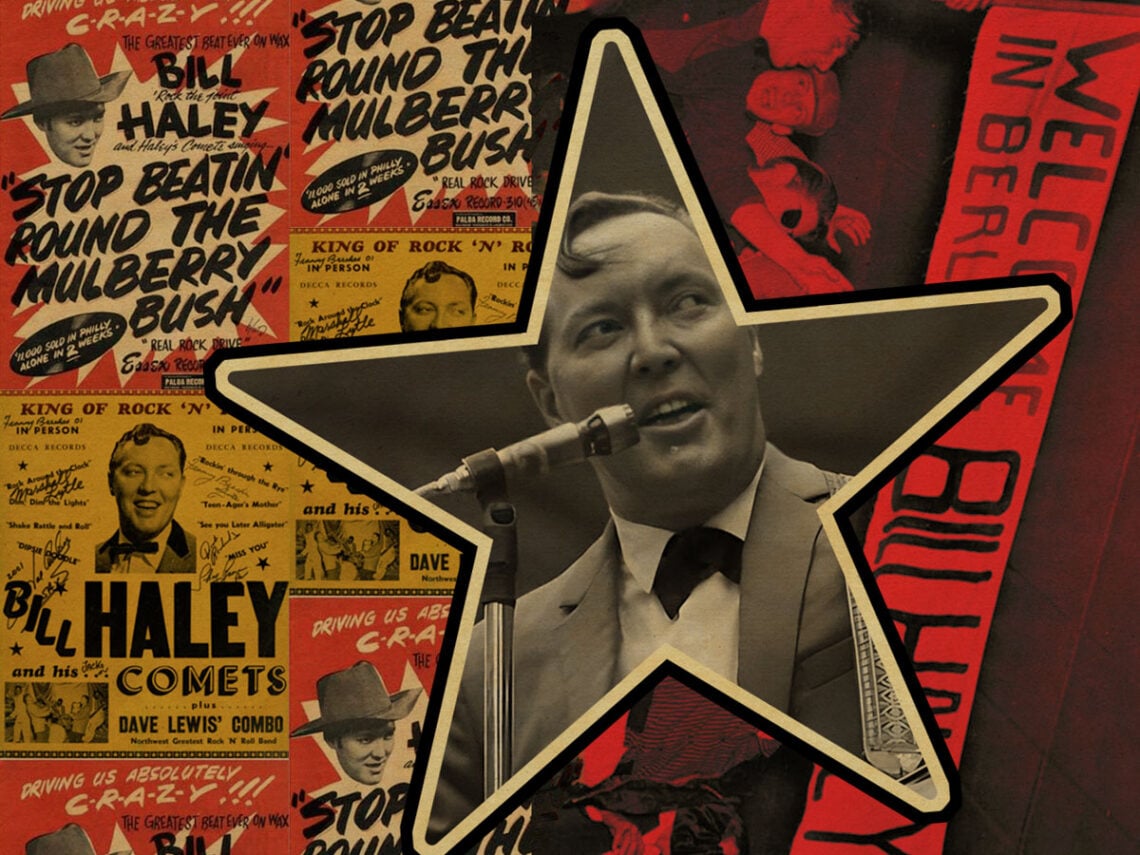
Bill Haley, Berlin and the infamous 1958 riot at a Comets gig

Rock ‘n’ roll may not seem to be the beacon of rebellion that it once was, but for a time, the sound of a guitar signalled to paranoid parents and authority figures everywhere that trouble was brewing among their teenagers.
The supposed ‘trouble’ was not always extreme; some defiance against authority, surely, mixed with the shocking embrace of a new sound defined by guitars and drums that provoked people to dance and shout beyond comprehension. Think of videos and photographs that captured the hysteria of Elvis Presley fans, showing them pulling their own hair, bursting into tears and screams, practically convulsing at the sheer sight of him. The hysterics of fandom may not have a simple explanation, but in some way, shape or form, it has always existed.
But for full-on riots to ensue? That was an unprecedented reaction to rock ‘n’ roll that even the most frantic Presley fan may not have considered. Even more, an early riot was incited during a performance from Bill Haley and His Comets, ‘The King’ before Presley took the title. The madness began once Haley and his band scored a hit with their song ‘Rock Around the Clock,’ a song that dates back to late 1952, written by songwriters Max C Freedman and James E Myers (credited as Jimmy DeKnight). According to Haley’s biographers, Myers first offered the musician the song after his hit with ‘Crazy Man, Crazy’ in 1953.
Haley and his Comets began playing ‘Rock Around the Clock’ on stage, though Haley’s producer, Dave Miller, refused to allow him to record it for his label, Essex Records; Haley even claimed that Miller twice ripped up the sheet music when he tried to bring it into the recording studio. Once Haley left Essex the following year, in 1954, and signed with Decca Records, their first recording session ended with him finally being able to record ‘Rock Around the Clock’.
A final version came as a B-side that May, and it took a slow but steady road to the top of the Billboard charts, peaking by July 1955 and becoming what is considered the first rock ‘n’ roll recording to hit the top of the charts. It was a hit in the UK first, peaking at number 17 on the UK Singles Chart that January. Haley’s rendition, in turn, became an anthem for teenagers worldwide: in Australia, for instance, ‘Rock Around the Clock’ was the biggest-selling recording in the country; while in Britain and Germany, it became the first record to sell over one million copies.
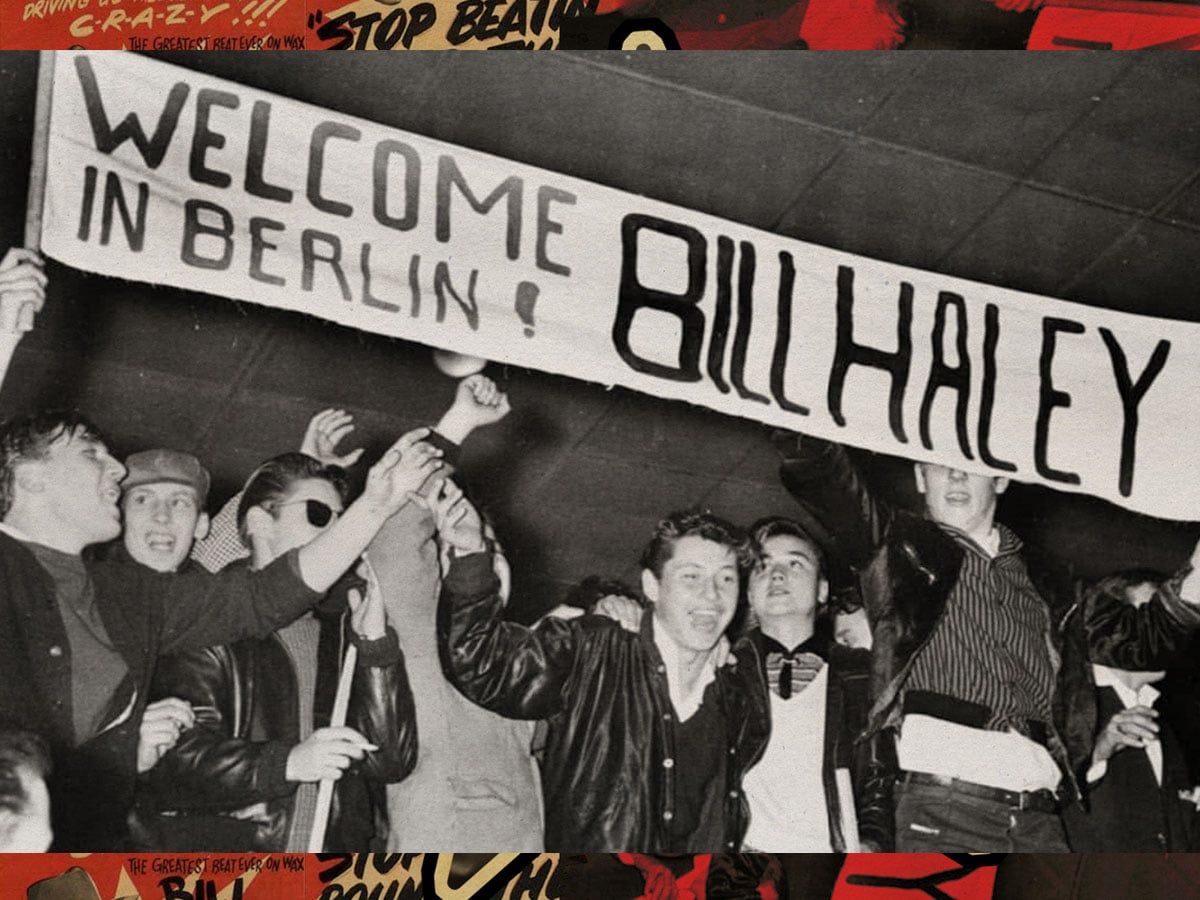
The song became such a sensation that he and the Comets travelled to Europe, with Haley becoming the first major American rock singer to tour the continent, and bringing with him an early introduction of rock ‘n’ roll. On October 26th, 1958, the group performed at Berlin’s Sportpalast arena, which held roughly 7,000 eager fans. The two nights before, Haley and his band performed in Hamburg and Essen, respectively, where rumblings of a rowdy crowd ensued, but it was in Berlin that chaos would break loose.
Grainy, black-and-white 16mm footage from the infamous show captured the view from the stage: fans crushed against every side of the stage, no barricade, madly waving their arms, and some even sat on their friend’s shoulders. Haley and His Comets continued to play their instruments, but the fans got increasingly restless, one even lying backwards onto the stage, seemingly overcome by the music, before playing along to the drums with his own drumsticks.
Then, fans began to rush the stage, attempting to dance and twirl before the police pushed them aside. Eventually, the police were outnumbered as the fans stormed the stage, seats in the audience cast aside, and the stage itself torn apart and destroyed. Even the band’s instruments were left in the wreckage. Five policemen were left beaten, six audience members were severely injured, and the damages amounted to tens of thousands to repair.
In the aftermath, newspapers in East and West Berlin reported that the riot was “the worst disturbance of its kind that Berlin has seen”. Neues Deutschland from East Berlin called Haley “an agent of so-called aggressive Western politicians who were seeking to exploit rock ‘n’ roll to create an atom war psychology among young people”.
But was Haley really to blame for the riot that took place? Surely, the kids that made up the audience that night in Berlin were just itching to let loose (granted, in an extreme, unwarranted and destructive way), but by no encouragement from Haley nor His Comets, directly. A rock concert was a place where teenagers could exist with reckless abandon, outside of the confines of their parents, but the effects of the music that night in Berlin were just unprecedented.

Never Miss A Tale
The Far Out Classic Rock Newsletter
All the latest Classic Rock content from the independent voice of culture.
Straight to your inbox.