


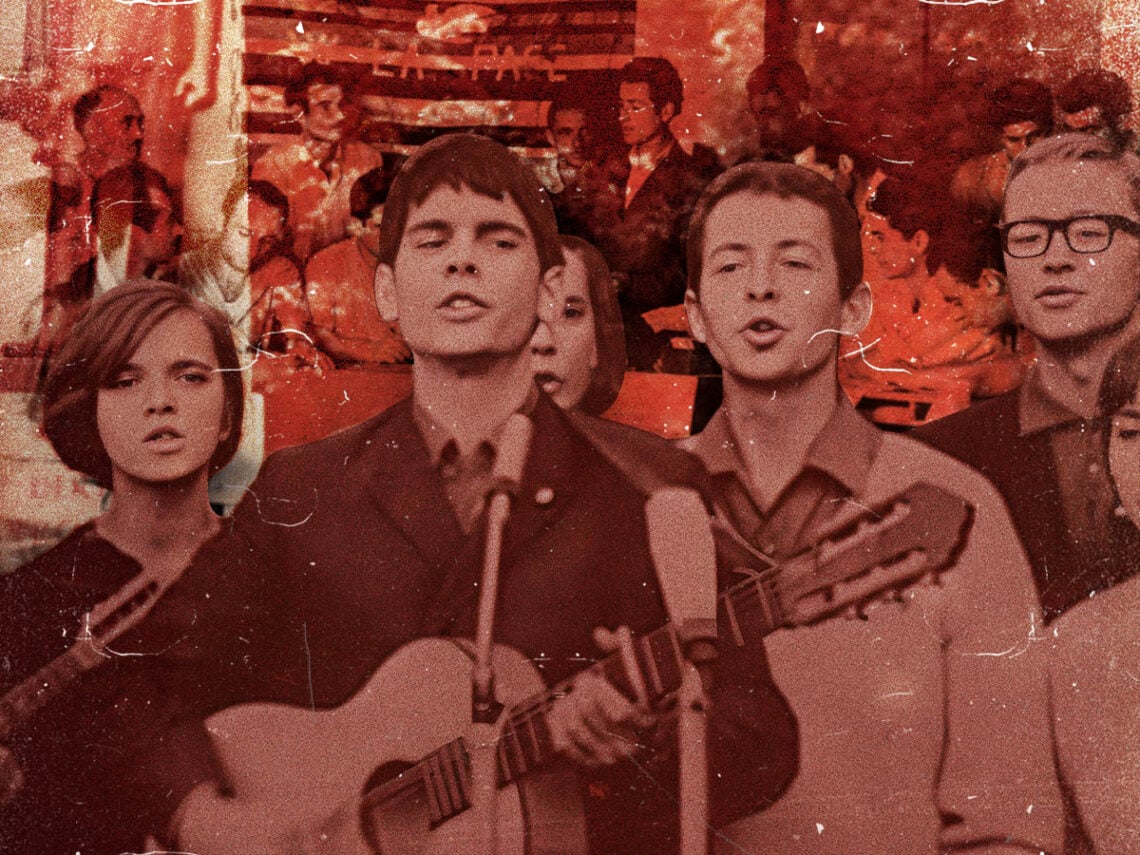
‘Bella Ciao’: From Italian worker’s song to TikTok craze

Over the last few months, TikTok users have been dancing to ‘Bella Ciao’ like its going out of fashion. The track started doing the rounds on social media following the death of 22-year-old Mahsa Amini in 2022, who was visiting family in Tehran when Iran’s Gasht-e Ershad arrested her for allegedly wearing an inappropriate hijab. Amini was transferred to the ‘Moral Security’ agency but died in custody on September 16th, 2022. A Persian version of ‘Bella Ciao’ was released as a tribute to Amini and subsequently went viral. It has also been adopted by Ukrainian women serving in the country’s military, who have been heard singing the song from the trenches. Now, TikTokers are dancing to a remixed version of the track, perhaps not realising that ‘Bella Ciao’ has its roots in the rice fields of northern Italy.
Every year, on April 25th, Italians come together to chant “Bella Ciao” half a dozen times with their right hands on their hearts. Over the years, this small act of remembrance has come to form an essential part of the Festa della Liberazione. During the Second World War, the song was sung by anti-fascist partisans and is still performed to mark the anniversary of the end of Nazi occupation.
But its roots go back even further than that. Back in the 19th century, ‘Bella Ciao’ was sung by the Mondine, female agricultural labourers working in the rice fields of the Po Valley in Northern Italy. The original lyrics describe their harsh working conditions, with particular emphasis placed on the “insects and mosquitoes” flying all around, the “cane” of their master and the “curved” backs of the Mondine. In this original version, the “Bella” of the title is probably a reference to the Mondine’s younger selves, as the lyrics acknowledge the “torment” of wasting one’s best years in the fields.
In the 1940s, the identity of Bella shifted when an anonymous author adapted Mondine’s lyrics to tell the story of a young partisan leaving his girlfriend behind to join the militia. In this context, the line “ciao, bella” – recited thrice – takes on a much darker meaning. “Take me,” the speaker declares, “because I feel death approaching.” Though this is the couple’s final goodbye, there is poetry in the partisan’s sacrifice. “If I die as a partisan,” he continues, “you must bury me/ up in the mountain/ under the shade of a beautiful flower/ and all those who will pass by/ will say ‘What a beautiful flower/ This is the flower of the partisan/ who died for freedom'”.
‘Bella Ciao’ is constantly being appropriated and reappropriated, especially in its country of origin. In 2019, it was adopted by the Bolognese organisers of the Sardines protests, which were held against right-wing leader Matteo Salvini in one of Italy’s most left-leaning cities. A politician for The League was later condemned for posting a cartoon on social media depicting gunmen aiming at people singing “Bella Ciao’ on Liberation Day.
During the Covid-19 lockdown of 2020, however, the song could be heard floating across the empty streets of Rome, Milan, Bologna, Naples and Florence as apartment-bound Italians did their best to reassure themselves that normality would one day resume. ‘Bella Ciao’s continual evolution reminds us of music’s true purpose: to offer solace in times of hardship, connect us to the past and remind us what we truly value.
