


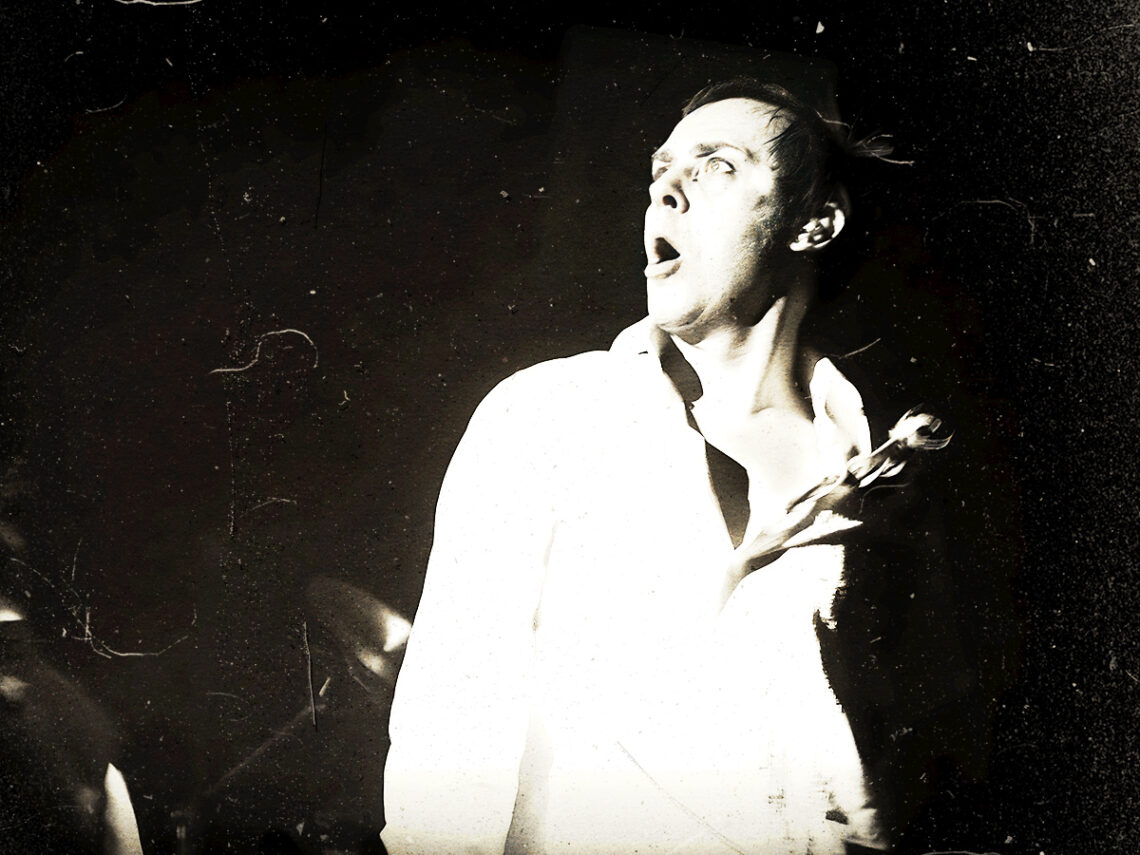
‘Bela Lugosi’s Dead’: The self-proclaimed ‘Stairway to Heaven’ of the 1980s

Led Zeppelin’s ‘Stairway To Heaven’ is in the musical canon for several reasons, but perhaps most notably for Jimmy Page‘s iconic solo, the jewel in the band’s eight-minute epic. Played up and down the country by tribute bands, kids on Guitar Hero, and at weddings with the odd groomsman on his air guitar, the track is synonymous with the face-melting riffs that defined an era of 1970s classic rock. So, if you were to be told about a 1980s counterpart, you would expect similar sensibilities?
During a 2019 interview with Uncut, Bauhaus singer Peter Murphy spoke of the band’s single ‘Bela Lugosi’s Dead’ and referred to it as their seminal song and the “‘Stairway To Heaven’ of the 1980s”. A point to which drummer Kevin Haskins agrees by saying, “It definitely has a timeless quality”. And on the latter point, it’s hard to argue with them.
The experimental live take of a band figuring out their rhythms in real-time, with a vocalist moulding the delivery of a particular phrase, blazed a trail for a post-punk movement that has clear influences on contemporary releases—it could sit quite comfortably next to Idles’ ‘MTT 420 RR’ on a tracklisting for an album titled ‘Post-Punk Hymns’.
What Murphy speaks of in relation to ‘Bela Lugosi’s Dead’ is a cultural impact on music at that point. So, where did ‘Stairway to Heaven’ sit culturally in 1971? In a preceding decade dominated by The Beatles, music had witnessed a shift from 4:4 pop to psychedelic-infused anthems that boasted varied time signatures, arbitrary lyrical content and, in the case of ‘Tomorrow Never Knows’ by The Beatles, melodies played backwards. The goalposts had widened significantly, and the scope for interpretation was vast.
Where ‘Stairway To Heaven‘ saw a page upon which to stamp their legacy wasn’t the introduction of scene-stealing guitar solos but instead the progressive unravelling of sonic layers that trace a song’s story out bare. Ultimately, the song would set the stage for the future of rock operas and rock ballads that became so beloved thereafter. Somewhere in there is the timelessness of a song that Kevin Haskins refers to.
After an eight-minute, story-telling ballad era, Bauhaus were aiming at what was an equally large but albeit completely different target. Not only had musical culture changed, but so had visual aesthetics, and there was an opportunity to pull references from everywhere.
When discussing the delivery, Murphy said: “The vocals come in about half an hour after everything else. Those two verses are like, ‘Who is that speaking?’ There was an oracular aspect to it. That voice had to come from the spirit of that beautiful, erotic, enigmatic character. That’s how the vampire worked in terms of alluring audiences. That particular monster of the Hollywood period was actually very beautiful.” Delving back this far was actually a symbol of how far culture had come, and yet, in the unfurling progress, how inescapable the golden advancements of old remained.
It isn’t until the third minute of the song that Murphy’s vocals begin. At which point, ‘Stairway To Heaven’ was on its second verse, and every song on Beatles’ Revolver had finished. And when those vocals finally present themselves, it’s a jarring introduction into the world of gothic lyricism that should ordinarily feel out of place on a sonic landscape composed of bossa nova rhythms and jazz melodies.
While Joy Division, New Order and The Cure may have defined the mainstream chart that this track missed and therefore carried the torch that ‘Stairway To Heaven’ lit, there is a case to be made that Murphy and Haskins were indeed correct that, like the great Led Zeppelin track, they played an indisputable part, in the navigation of music evolution in Britain.

Never Miss A Beat
The Far Out Led Zeppelin Newsletter
All the latest stories about Led Zeppelin from the independent voice of culture.
Straight to your inbox.