


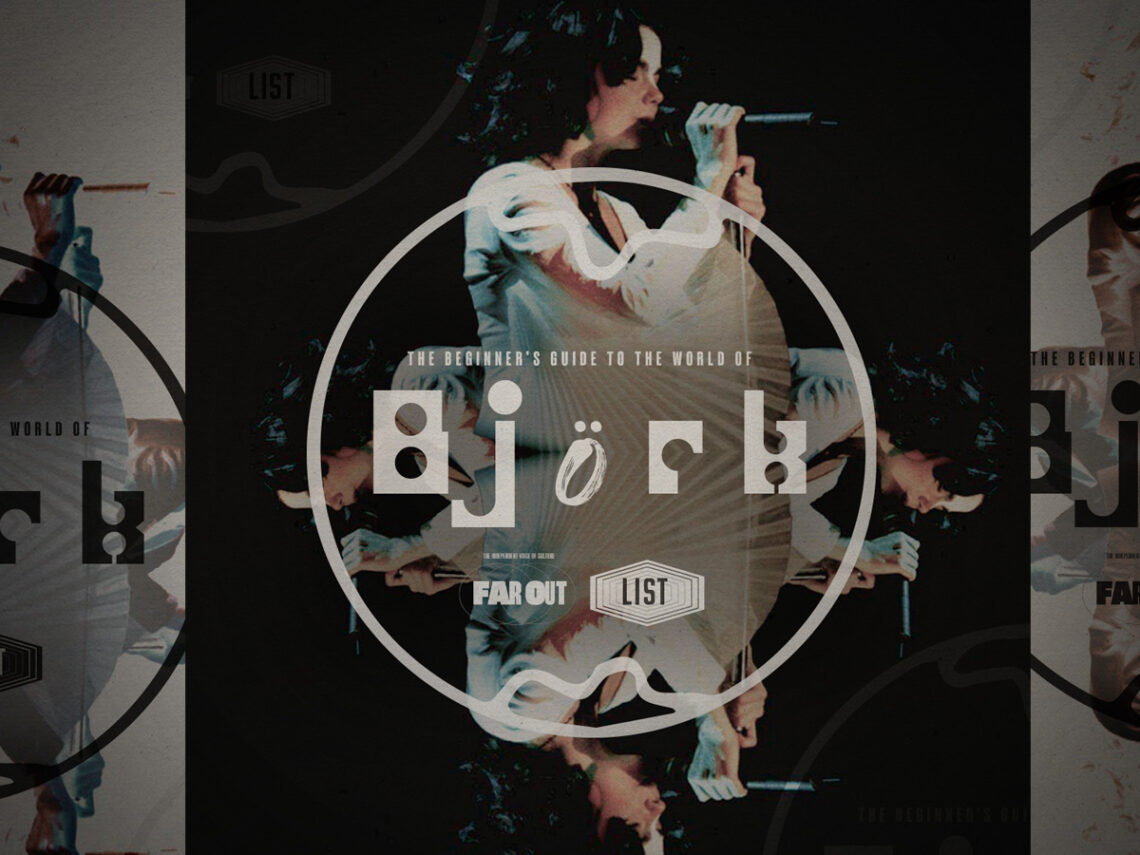
The beginner’s guide to the world of Björk

Few names in popular music evoke such a standard of consummate artistry as Björk.
Across her 30-odd-year career, not to mention the litany of bands and projects in her native Iceland before her 1990s stardom, an unerring creative intuition guides every album or broader conceptual endeavour she attaches herself to. An ear to the ground to pop and the underground’s evolving changes never result in calculated hijacks of on-trend scenes but always feel utterly her own, the steady rollcall of producers that help realise her visions never seem to step in the way of her bristling originality.
There’s not necessarily a lot of Björk to rifle through, but what can make approaching her work daunting is the rich density of each album, which only ever gets more grander and dynamic as the obsession with technology imbues deeper later records. From the relative pop vantage point of the early 1990s, a weird, moving, and eternally electric creative terrain seems to have been spotted by Björk way ahead of anyone else, following that path toward the avant-garde compositions as recent as 2022’s Fossora.
Always different, always the same. Björk, as much as the likes of Radiohead, Talking Heads, or even The Beatles, has taken the mainstream on one end and the leftfield unknown on the other, and brought those worlds that bit closer together, a feat she still possesses even today. With her 60th birthday’s arrival, we take a look at five entry points for the uninitiated that serve the perfect pull to her dazzling experimental pop oeuvre.
Your guide to Björk’s body of work:
The perfect introduction: ‘Debut’
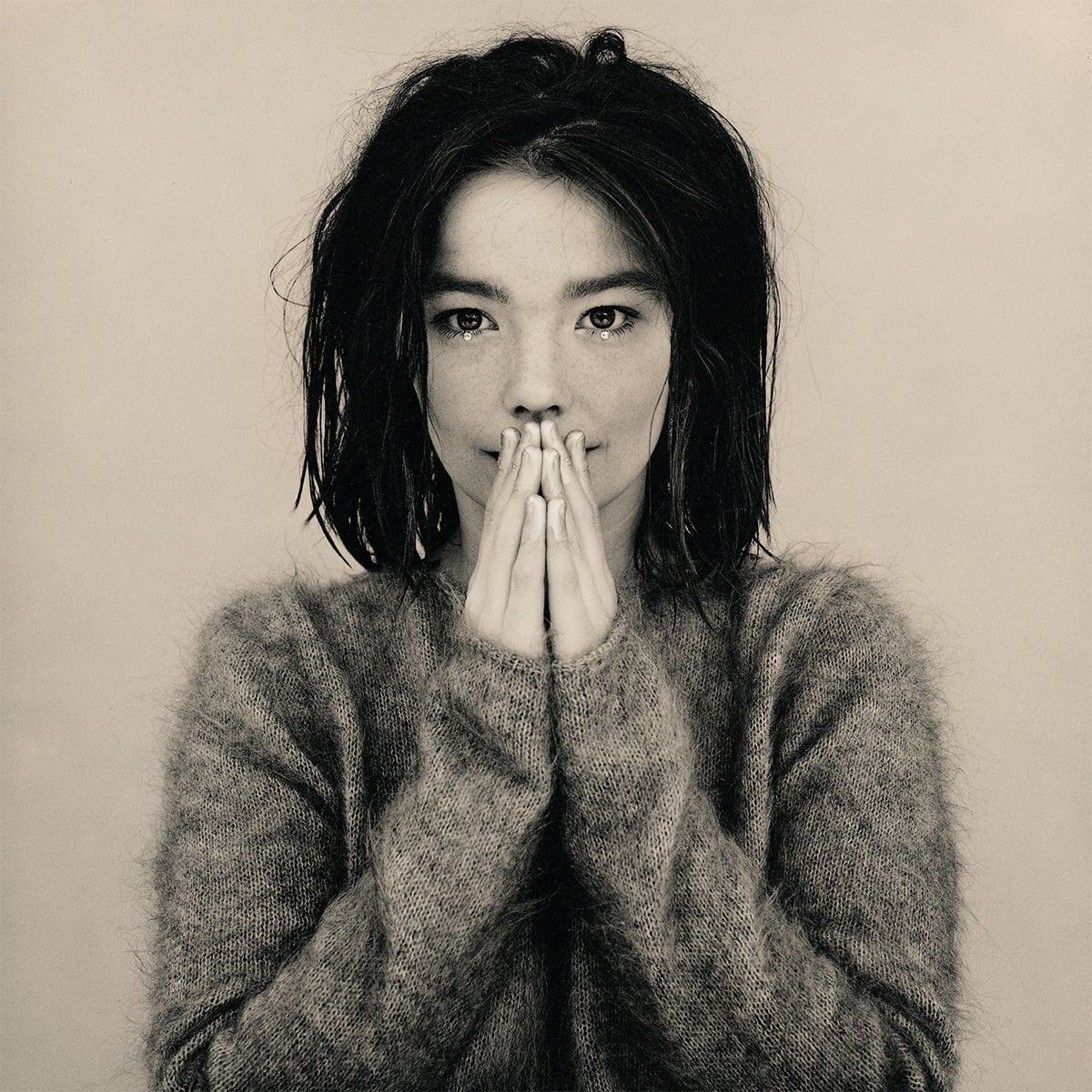
Release Date: July 1993 | Producer: Nellee Hooper and Björk | Label: One Little Indian
It’s likely that even after 30-odd years, Björk’s international solo entry is the image most will cast their mind back to. Shaking off the former band set-ups and soaking up the underground acid house and Warp Records electronica, Björk scored her moving and idiosyncratic lyrical lens on the human condition to a bouncy and leftfield marriage of club big-beat and dreamy synth washes.
It was an explosive introduction to a music world that hadn’t been paying attention to the Icelandic scene across the 1980s. Boasting canonical numbers like ‘Human Behaviour’, ‘Big Time Sensuality’, and ‘Play Dead’ on later issues, Björk unleashed a first record packed with originality and inventive popcraft, an album that still shimmers with infectious transport and the best port of entry to her dazzling oeuvre.
Defining track: ‘Human Behaviour’
The most pivotal album: ‘Homogenic’
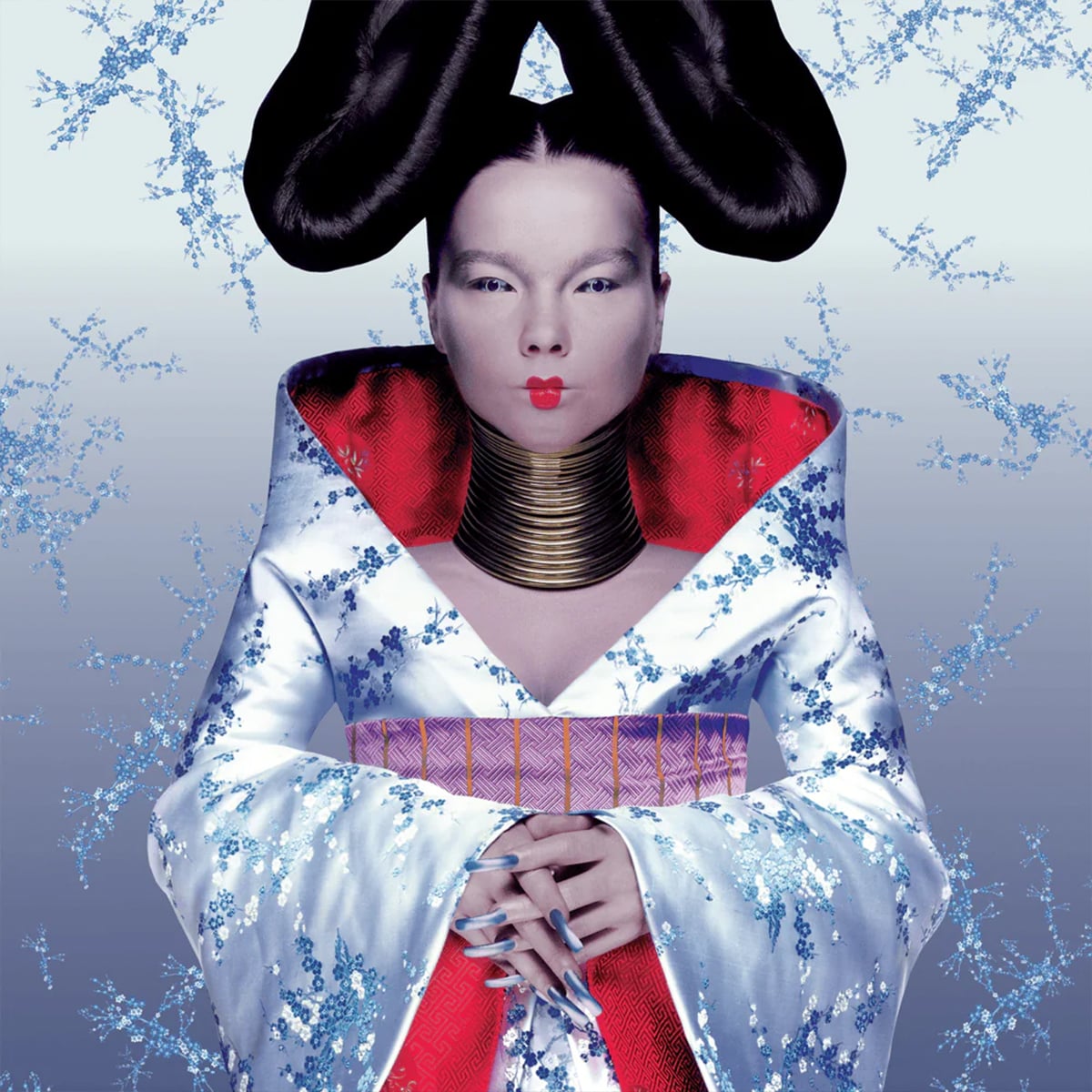
Release Date: September 1997 | Producer: Björk, Mark Bell, Guy Sigsworth, Howie B, and Markus Dravs | Label: One Little Indian
Following the stresses brought by the swarming media attention in the aftermath of a near-fatal targeting of an obsessed stalker, a greater degree of escapism was sought during the Homogenic sessions. Departing with former producer Nellee Hooper, Björk corralled a production team to help realise her thematic vision for album three, a sonic marrying of her home country’s Nordic tundra and the plethora of digital tech that seized the Icelandic culture by the 1990s’ close.
Such fraught waver yielded electric frissons of chilly electronica and soaringly gorgeous string-laden valleys, scoring Björk’s synergy with the natural world. Shaking off the pop expectations and stepping into a new frontier, Homogenic stands as a key chapter in Björk’s creative evolution, marking a trajectory that would only plumb deeper into her wildwood of avant-garde soundscapes.
Defining track: ‘Jóga’
The indie rock album: ‘Life’s Too Good’

Release Date: April 1988 | Producer: Ray Shulman and Derek Birkett | Label: One Little Indian
Björk’s career had, in fact, stretched back to the late 1970s. First achieving national stardom with her child pop album, Björk’s nose for music’s off-beaten track would lead her through punk rock, playing with a string of confounding DIY groups that incorporated jazzy experimentalism to their work, and even supporting the anarchists Crass in the mid-1980s.
It was The Sugarcubes that would first push Björk toward the international limelight, as well as put Iceland on the musical map. Shaped by the ethereal sounds pumped out of 4AD’s roster of swirling psych-guitar groups, The Sugarcubes would borrow the Cocteau Twins’ avant-garde wanderings but inject them with a feverish sense of humour and joyous splurge of effects-heavy shoegaze. Already present was Björk’s distinctive voice, flexing a dextrous expressivity from serene croon to feral rage with ease. While further albums would follow, and a one-off reunion show in 2006, the Life’s Too Good debut still stands as The Sugarcubes’ finest hour.
Defining track: ‘Birthday’
The jump into musicals: ‘Dancer in the Dark’
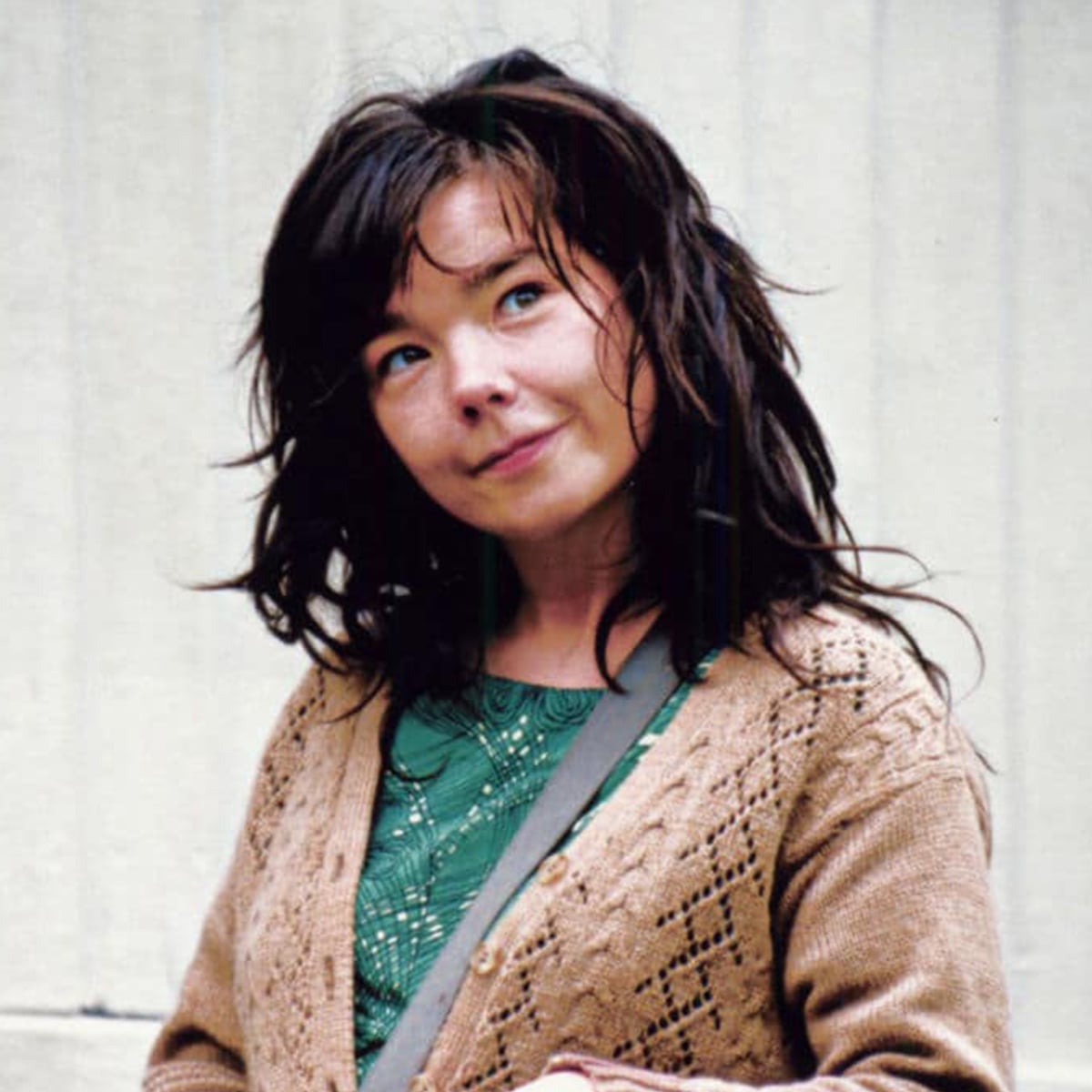
Release Date: May 2000 | Director: Lars Von Trier
Reportedly, Björk had always longed to feature in at least one musical. She’d dipped her toe with the all-singing, all-dancing ‘It’s Oh So Quiet’ cover four years previously, but Danish filmmaker Lars Von Trier, after initially proposing to just score the soundtrack, proposed Björk play the central role of his upcoming psychological musical feature to best immerse herself in the story.
She agreed. Released in 2000, Dancer in the Dark would showcase Björk’s natural presence in front of the camera, playing the daydreaming factory worker Selma Ježková and veering across escapist whimsy and tragic anguish with ease. Professing the shoot to be an exhausting experience, and later hinting at misconduct interpreted to stem from Von Trier, Björk for the most part avoided further Hollywood beckon. But Dancer in the Dark would stand tall in her creative body of work, and its accompanying score, Selmasongs, would enjoy equal acclaim.
The multi-media experience: ‘Biophilia’
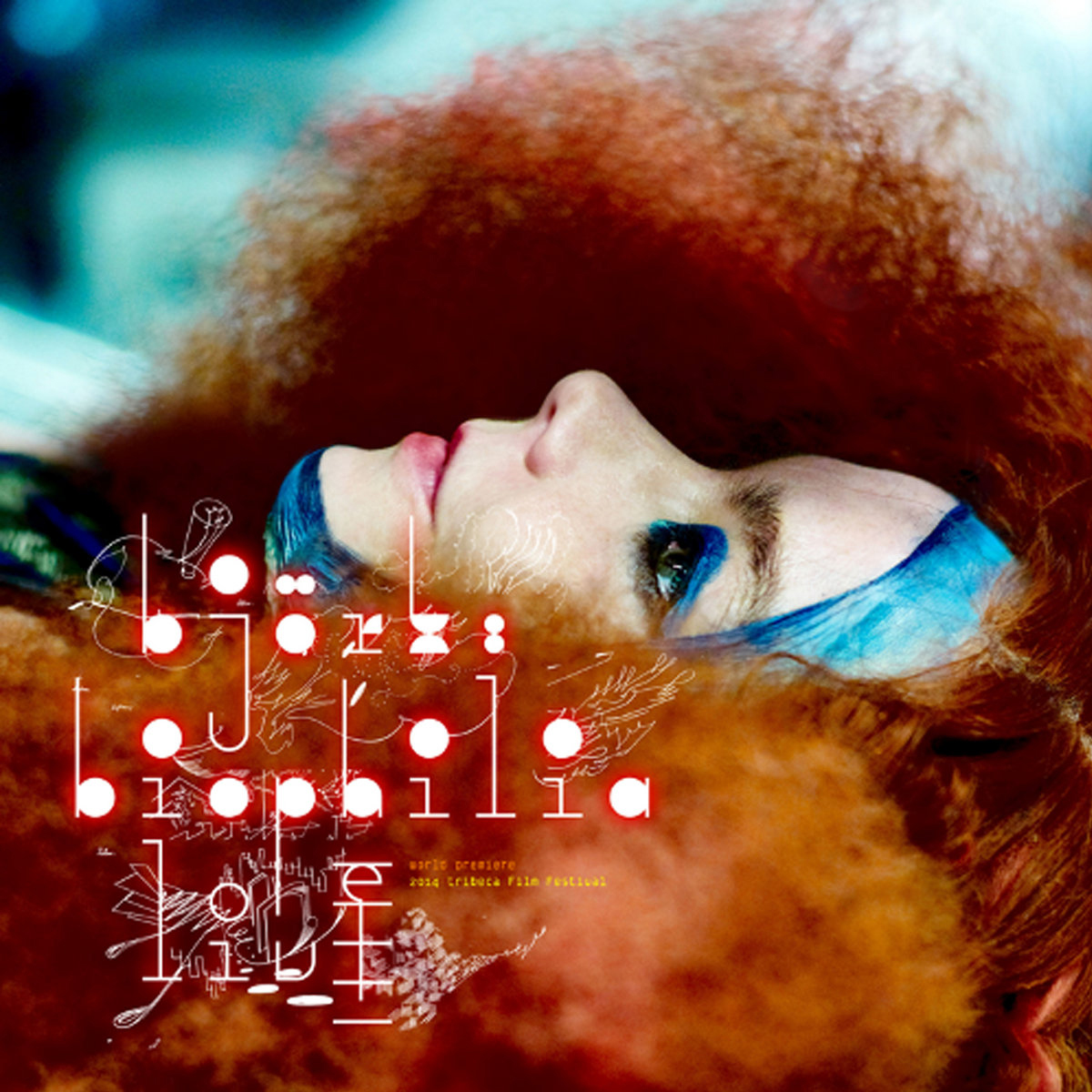
Release Date: October 2011 | Producer: Björk and 16bit | Label: One Little Indian
Björk had always held a fascination with the lines between the organic and synthetic. Such terrain took on a greater degree of pertinence in the dark days of the late 2000s, when the financial crisis clashed with the accelerating urgency of environmental erosion, spelling the dwindling faith in the global political institutions. Such troubled subject matter would fuel 2011’s Biophila project.
In the lead-up to the album, Biophilia was served by an app that featured individual interactive art pieces for every song, boasting an introduction by David Attenborough when first launching. Across the Biophila apps were games, music sequencers, and animations in an interdisciplinary effort to teach musicology and environmental issues, expanding the peripheries of the album format, and the first to wield digital technology for such a high-profile release. Technology would continue to play a prominent role in future projects, Björk always gleaning a story from the ever-evolving digital developments of her forward-thinking conceptual reaches.
