


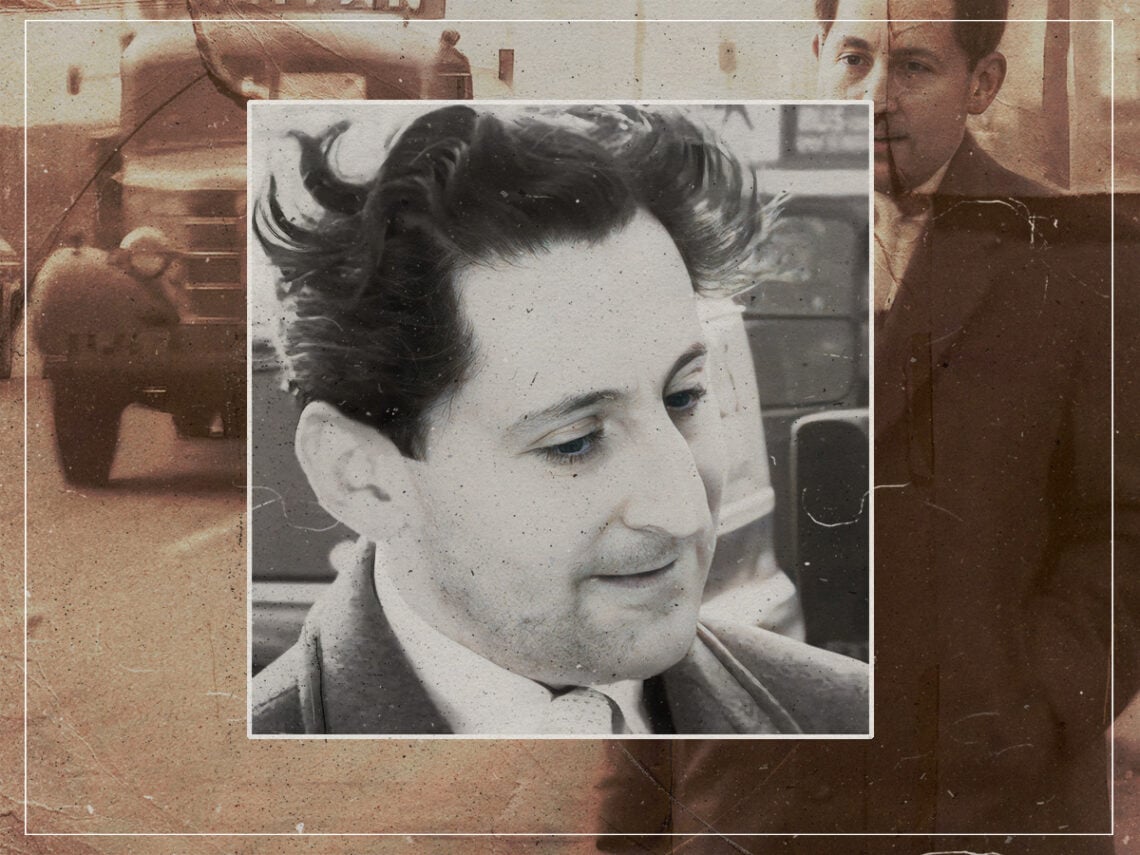
Barry Ross: Barber, genius, and traffic musician

It’s a stuffy day in 1961, and a man in a trench coat is strolling along the side of the North Circular ring road in London. He’s whistling to himself like a bird with hypomania. He ignores the bemused glances of the motorists and occasional honking horns. Those travelling slow enough will notice something even more peculiar: in his wake is a lead connected to a field recording device. The man is Barry Ross, a full-time barber and a part-time musical genius.
These days, outside of anecdotes that circulate in the late composer’s home suburb of Neasden, you won’t find much information about this visionary hairdresser. His legacy is humble, but his work was profound. Ross would turn the sounds of traffic into music. This might seem like the sort of commonplace avant-garde experiment you find in plenty of record shop’s ambient racks these days, but in 1961, Ross barely even knew what he was doing himself.
“For some unknown reason,” he once told the BBC, “It gives me inspiration, the noise of the traffic. It may be psychological, I don’t know. Maybe I hum above the traffic to block the noise out.” And so, he strolls casually along the busy road, coated in fumes and errant hairs from his day job, and composes pop songs from the cacophonous rumble of congestion and whatever his musical mind chooses to paint over the top of it.
This is, in truth, what composers have done some time immemorial. He’s just one of the first to adapt the process to perhaps the most pervasive noise in the industrial age. No matter where you are in the modern world, you can’t escape the background rumble of traffic. Even in the countryside’s far-reaches, the engines’ chug mutates into a lower-frequency echo. So, old Ross figured – whether unconsciously or otherwise – that this ubiquitous vroom should play some part in the music of the era.
Mozart and Mouton would try to mimic the wonderful sounds of nature, so why shouldn’t modern composers try to conquer and incorporate the rather ugly sounds of industrialisation? “It sets some inspirational motive going,” Ross figured, back in his bedsit, desperately trying to abate the unceasing blare of the outside world with beauty.
So, he’d weave his melodies into that rhythmless roar endlessly, return home and play the racket back, much to the chagrin of his neighbours. And anything worth keeping, he’d expand upon acoustically, honking horns suddenly rendered as billowing tubas and a speeding Austin Healey 3000 Mk2 conjuring lyrics of a company man trying to make it home in time to see his daughter blow out her birthday candles. Simple as that.
The poor old barber had still failed to get a single song published by 1961, with producers admiring his songwriting but explaining that his peculiar ballads weren’t right for the rock ‘n’ roll age that was unfurling before them. But he kept on going, looping the ring road of North Circular exclusively, with traffic as his muse, occasionally interacting with a curious motorist, with dreams of nothing much spurring him on. The word in Neasden is that he did this long after his final short-back-and-sides was shaven.
But a good few years further down the line from when he first started his odd experiment, an assortment of groups from Birmingham would pick up on the trick that Mr Ross had missed—they’d pair industrialised sounds of society with the rather more contemporary foil of rock ‘n’ roll rather than ballads, turning the literal heavy metal sounds of their town into, well, heavy metal music.
Ross was, of course, onto this long before them. But he had hairs to cut by nine.
