


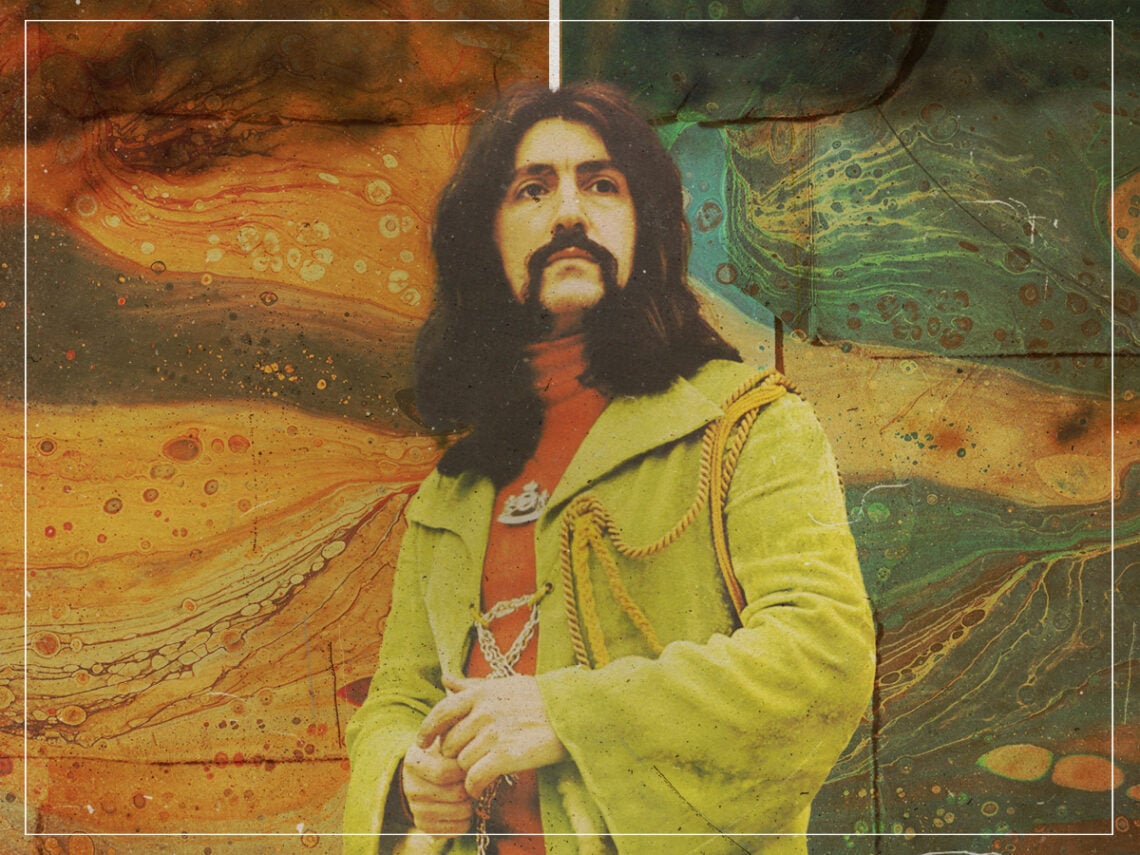
Barış Manço: the mastermind of Anatolian rock

Rock and roll music might have been an invention of the United States, but the defiant musical style soon spread to virtually every corner of the globe. Quickly, each country began to develop their distinctive style of rock music, incorporating the styles and influences of its own national identity with the modern sounds of rock and roll. Among them, the nation of Turkey – more specifically, the region of Anatolia – managed to produce some of the world’s most inventive, mind-bending rock records thanks largely to the influence of one man, Barış Manço.
The son of a famous Turkish vocalist, Manço was born into an inherently artistic family during the tumultuous time of the 1940s. Pretty early on in his existence, it became clear that music was the way forward for Manço; even during his childhood, he was noted for starting bands with his school friends and performing covers of popular rock ‘n’ roll songs of the 1950s. Even more impressive, Manço quickly began to write his own material, taking colossal influences from American rock music, which so heavily influenced his early years.
As you might imagine, the impact of rock on Turkey was not quite as all-encompassing as it had been over in the United States. As a result, Manço and his various groups were often forced to play on improvised or homemade instruments, adding a certain DIY quality to his outlook on music, which continued into his professional career. Although he made a name for himself within his local community as a beacon of musical expression, it was only when he formed the group Harmoniler during the early 1960s that he became recognised on a national scale.
Harmoniler covered a variety of American rock and twist tracks, but their appeal largely came from their rock renditions of traditional Turkish folk songs. These new arrangements took the essence and tradition of the nation’s folk sound and updated them for modern audiences, giving the songs an entirely new layer of intrigue and appeal. Admittedly, Turkish folk seemed to fit naturally into the rock and roll world, but the resulting sound was unlike anything audiences in Turkey had heard before.
Manço continued this trailblazing experimentation for years, crafting a unique style of music which blended the spirit of Turkish folk with the high-energy sounds of Western rock and roll, which soon became known as Anatolian rock. Travelling to Western Europe during the late 1960s, the songwriter found an opportunity to spread the gospel of this exciting new style, which seemed to go hand-in-hand with the blossoming hippie counterculture and psychedelic rock movement.
Given that the psychedelic rock scene, particularly in the United States, often relied on instruments and folk sounds from the Middle East, the genre already borrowed heavily from Turkish folk. As a result, Manço’s brand of Anatolian rock sounded far more psychedelic in its offerings than much of what early American psych bands were recording. This helped Manço to bolster his reputation as a global force for rock music and something of a cultural ambassador for Turkish music and art in general.
Over the course of his extensive discography, Manço carved out the sounds of Anatolian rock and roll, leaving his mark both on the early origins of the style and its continued development. Manço was instrumental in popularising synthesisers and electronic music within Turkey, too, thus paving the way for the nation’s dance scene. Aside from his own body of work, the songwriter also wrote and produced music for a variety of other artists, showing his commitment to the cultural landscape of his home nation.
Outside of Turkey, the image and music of Manço continue to be celebrated by fans and artists across the globe. There is no shortage of groups indebted to the music pioneered by Manço, and global levels of appreciation for the musician’s far-out psychedelic sounds have never waned in the 25 years since his time on Earth came to an end.
