


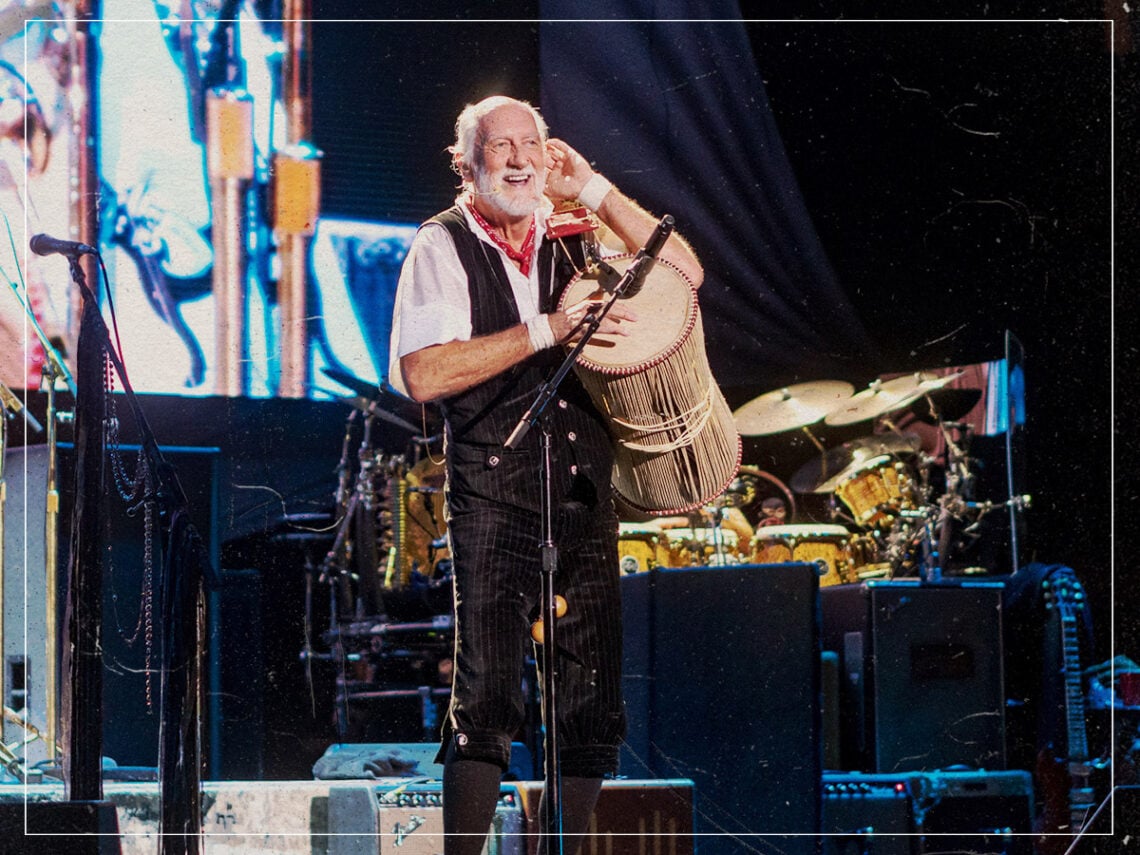
“We weren’t doing our jobs”: The band Mick Fleetwood said he was useless in

Before Fleetwood Mac made their global name as the dream-pop known for their dramatic and intertwining love stories, the band’s theatrically came from it’s revolving door of members. While drummer Mick Fleetwood and bassist John McVie are known as the band’s cornerstones and namesakes, there was a time when they were the group’s fresh-faced musicians, hoping to give some creative contribution to one of the many burgeoning 1960s London bands.
In terms of Fleetwood Mac, Mick Fleetwood is often praised for his drumming contribution, bringing order to the narrative chaos around him. In their seminal album Rumours, Fleetwood’s parts ground the songs and gave them a sort of hypnotic groove that allowed the rest of the band’s more ethereal melodic tendencies to flourish. Despite his obvious role as band leader, his contribution to some of the band’s records is primarily overlooked, and you could make a far case for him as the band’s unsung hero.
But this wasn’t always the case in his career. Like all good musicians, he had to cut his teeth and earn respect from musicians far more advanced than him. One of which was John Mayall, the legendary British blues artist who recruited Fleetwood in the early days of his career.
“I was only with John Mayall for about five or six weeks and Peter Green and John McVie were both playing in the band. I took over from Aynsley Dunbar, who was a great drummer but who was getting a little too flashy, I guess, for Mayall’s and Peter’s sensibilities” Fleetwood recalled to Record Collector in 2003.
It was a short exposure to the coal face for Fleetwood, whose residency in the band didn’t last long: “I was going “Why the hell do you want me in the band?” I can’t do the big drum solos that Aynsley does”.
He continued, “I prefer to say I was ‘let go’. Because I remember I passed John a little note in the back of the van. John used to give us a calendar with the gig dates written in it, and as I looked through the calendar, I put “1 think I’ll be gone by now”. And I handed it to John in humour. But it was only like two weeks later, and I was gone. Me and John McVie were getting too drunk and Mayall couldn’t control both of us. And hey, we weren’t doing our jobs properly.”
A baptism of fire for Fleetwood and McVie, as well as an introduction to the ruthlessness of showbusiness, was an experience that informed their incoming future. In 1967, Fleetwood Mac was officially formed, with Peter Green joining the band as a guitarist and vocalist. With the three of them as the band’s bedrock, they began to make a name for themselves as a raucous and exciting blues band before Green’s overindulgence on LSD marked his departure from the band.
In the years that followed, the revolving door of Fleetwood Mac kept turning before McVie’s partner Christie joined, soon followed by the impactful Lindsey Buckingham and Stevie Nicks. The five of them would go on to change the course of classic rock and etched their names into the touchstone of history. But make no mistake, Fleetwood Mac’s success story wasn’t built on overnight success. Rather Mick Fleetwood and John McVie’s necessary exposure to the ruthlessness of failure.
