


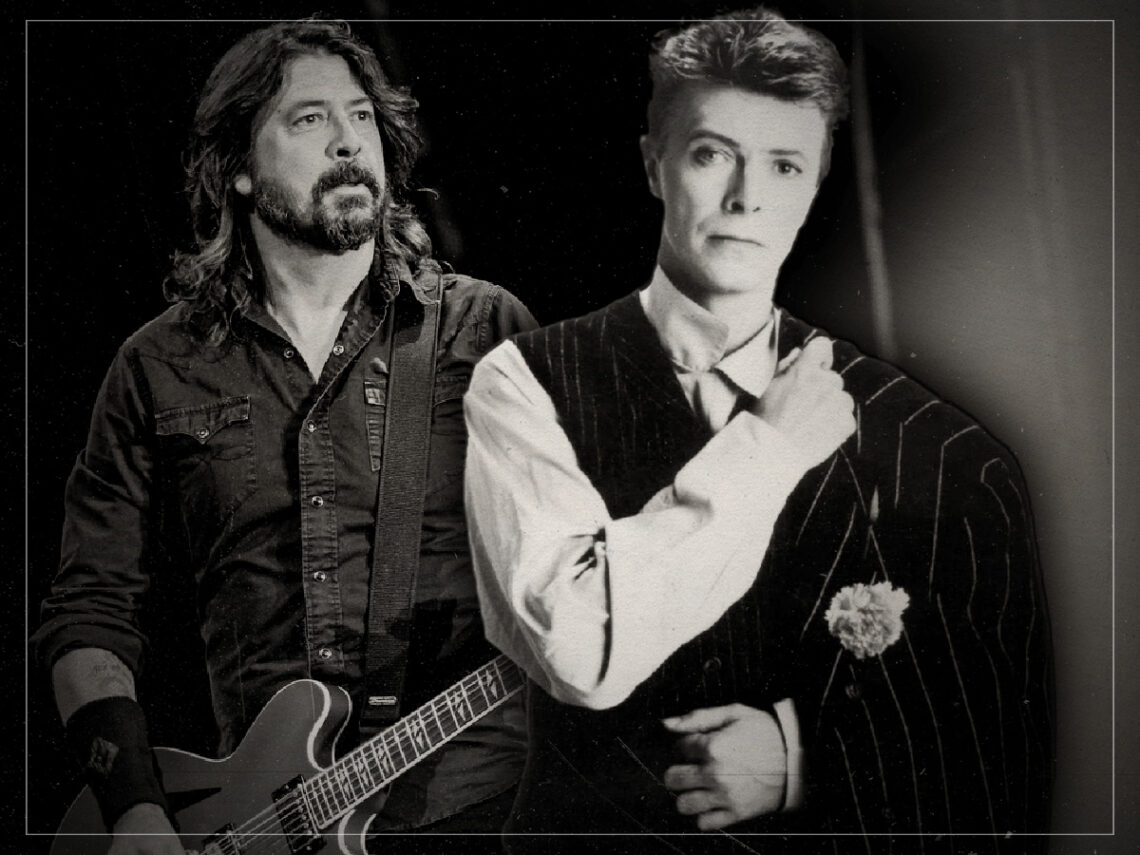
The band Dave Grohl and David Bowie agreed were the most important of the 1980s

The 1980s meant many things to many people: fashion, hair, and new wave ruled supreme in the mainstream. But in the worlds of Dave Grohl and David Bowie, there was only one band obscuring their vision.
Grohl and Bowie obviously had very different visions of what rock and roll was. One was a singular vision of how art, culture, and the world at large could crash and combine into an individual, essential being. The other remains at the forefront of that massive stadium rock band appeal, whipping up the masses through the speed of guitar or the force of the drums.
Of course, this doesn’t mean that there isn’t crossover in some important elements of each of their work. Grohl has always been quick to pour praise over Bowie, saying, “When David Bowie walked in the room – and you always felt his presence no matter how far away he was – there was a sense of feeling blessed.”
For his own part, however, Bowie was always a little less forthcoming in heaping the lavish compliments over Grohl in return. He famously once turned down an offer to collaborate with the Foo Fighters frontman, and for the rest of his life, their orbits never seemed to cross again. Maybe they just needed the magic of Pixies to have them spinning back on the same axis.
The Boston four-piece, formed in 1986, were the absolute definition of unsung heroes for their time and generation. Only ever gathering the most success outside of their home nation, in the UK and Europe, years after they had initially broken up, they could have easily been a band who passed without fanfare. But their retrospective impact was one that sent the two Daves into a total musical tailspin that shaped their sonic visions significantly in that moment.
As Grohl once opined, “Face it, the quiet/loud dynamic that’s dominated alternative radio for the last 14 years can be attributed to one and only one band, the Pixies. Undoubtedly one of the most influential groups of the new rock generation, they are back on tour to reclaim their status as the coolest American band since, well, possibly ever.”
For a band like Nirvana, this sound was quintessential in pioneering the alternative rock movement that spearheaded the 1990s, as was often cited by Kurt Cobain. Bowie, however, didn’t seem to fall inside that bracket. But it goes without saying that he was an avid listener, and after discovering their 1988 album Surfer Rosa, he said Pixies were “just about the most compelling music outside of Sonic Youth in the entire 1980s. I always thought there was a psychotic Beatles in them.”
While in both camps, Pixies may have been the influence of very different results, their effect remained unparalleled on the rest of the course of alternative rock. In Grohl’s case, it was the making of Nirvana. For Bowie, it was the less-than-successful Tin Machine. But in either case, the impact was clear: the 1980s was pivotal, and the Pixies were here to stay.
