


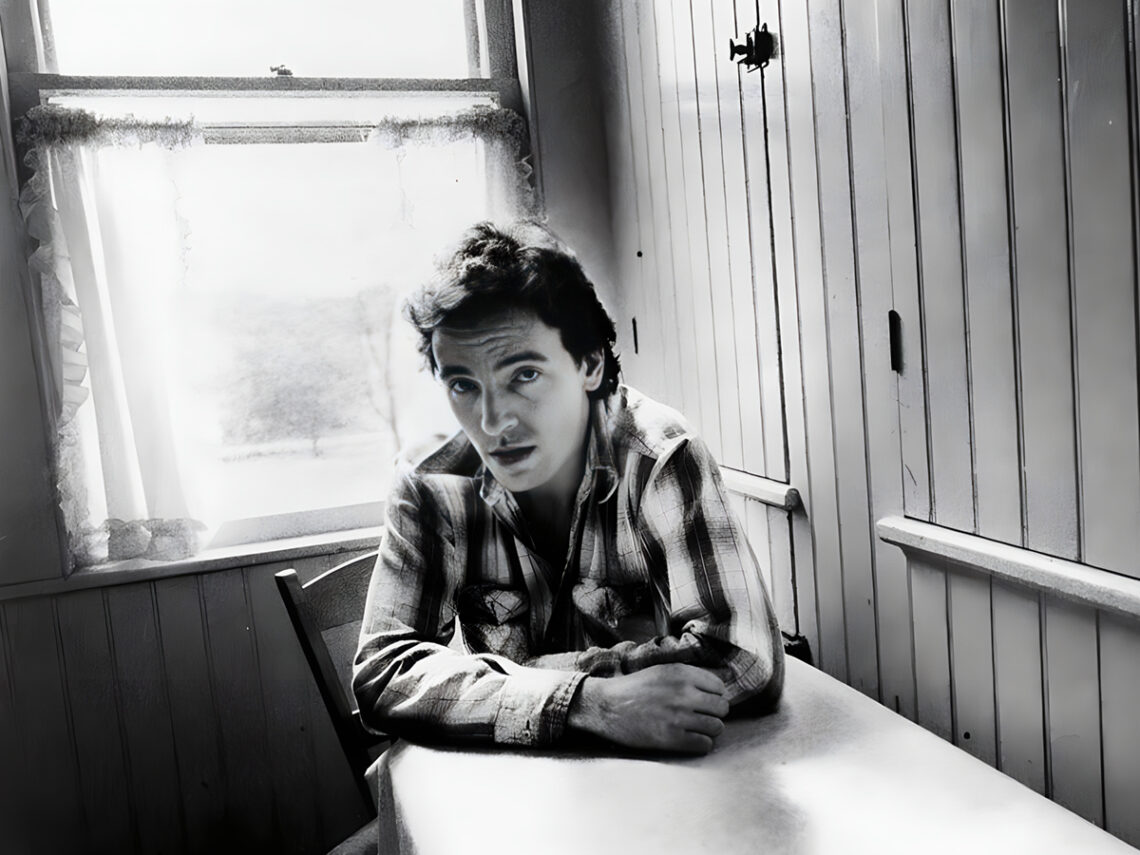
Why Bruce Springsteen called Suicide the true “underground masters”

By the end of the 1970s, Bruce Springsteen had never been bigger. Spearheading the so-called heartland rock that ushered a new wave of rootsy, blue-collar anthems capturing the spirit of America’s vast, working-class expanse between the country’s urbane coasts, ‘The Boss’ and his E Street Band’s Born to Run and Darkness on the Edge of Town, coupled with a reputation for powerhouse performances on the records’ tours, cemented themselves as the era’s icons of arena rock.
Initially intending his sixth LP to be another full E Street Band rock record, the hauntingly stark demos recorded at his ranch in Colt’s Neck, New Jersey, had taken a darker turn both in their arrangements and subject matter.
Exploring serial killers, outlaws, and the dashed dreams of the working-class midwest scored with Springsteen’s austere Gibson J-200 and DIY overdubs of basic harmonica and mandolin, the sketches contained on his home tape were possessed with such desolate energy Springsteen made the bold move to release ten of the sessions’ cuts as his much-awaited follow-up to The River.
Dropped in 1982 to scant promotion or press appearances, Nebraska was lauded as a powerful piece of lo-fi folk exorcising the ghosts of a scarred Americana, lyrically imbued with his admiration for Flannery O’Connor’s southern gothic short stories. Another major source of influence for Nebraska‘s barren country came from the eerie and combative electronics of the New York post-punk duo Suicide.
Formed in the early 1970s and becoming a fixture of CBGBs along with Ramones and Richard Hell, Suicide cut an imposing and highly unorthodox presence in the punk scene. Martin Rev‘s cheap synths and brittle rhythm boxes scored frontman Alan Vega’s combative, chain-whip-wielding provocations that would routinely trigger near riots with their ready embrace of violence. Among their acclaimed 1977 self-titled debut, the ten-minute ‘Frankie Teardrop’ proved their most terrifying and consequential: a nightmarish document of a young man who kills his wife and infant child before descending into hell swallowed in Rev’s white noise and radio feedback.
“They had that two-piece synthesiser-voice thing. They had one of the most amazing songs I ever heard. It was about a guy that murders,” Springsteen revealed to Rolling Stone off the back of his monster-selling Born in the USA. “Oh, my God! That’s one of the most amazing records I think I ever heard. I really love that record.”
‘Frankie Teardrop’ made such an impression on Springsteen he evoked the track’s paranoia on ‘State Trooper’, mimicking Suicide’s gristly monotony and his unnerving yelps into the mic. Springsteen continued bestowing high praise: “[Suicide] are underground masters… they should be in the Rock and Roll Hall of Fame.”
Springsteen remained a committed fan throughout their career. Seizing the opportunity to join a playback meeting of their second album in 1980, a muted response from the label bosses anxious about its commercial appeal was interrupted by Springsteen’s emphatic reception, “He made a point of telling us how much he loved it,” Vega recalled fondly.
Notably covering their 1979 single ‘Dream Baby Dream’ and playing extensively on his Devils & Dust tour, Springsteen summed up his deep admiration for Suicide in Vega’s 2015 eulogy: “The bravery and passion he showed throughout his career was deeply influential to me. I was lucky enough to get to know Alan slightly and he was always a generous and sweet spirit. The blunt force power of his greatest music both with Suicide and on his solo records can still shock and inspire today. There was simply no one else remotely like him.”
