


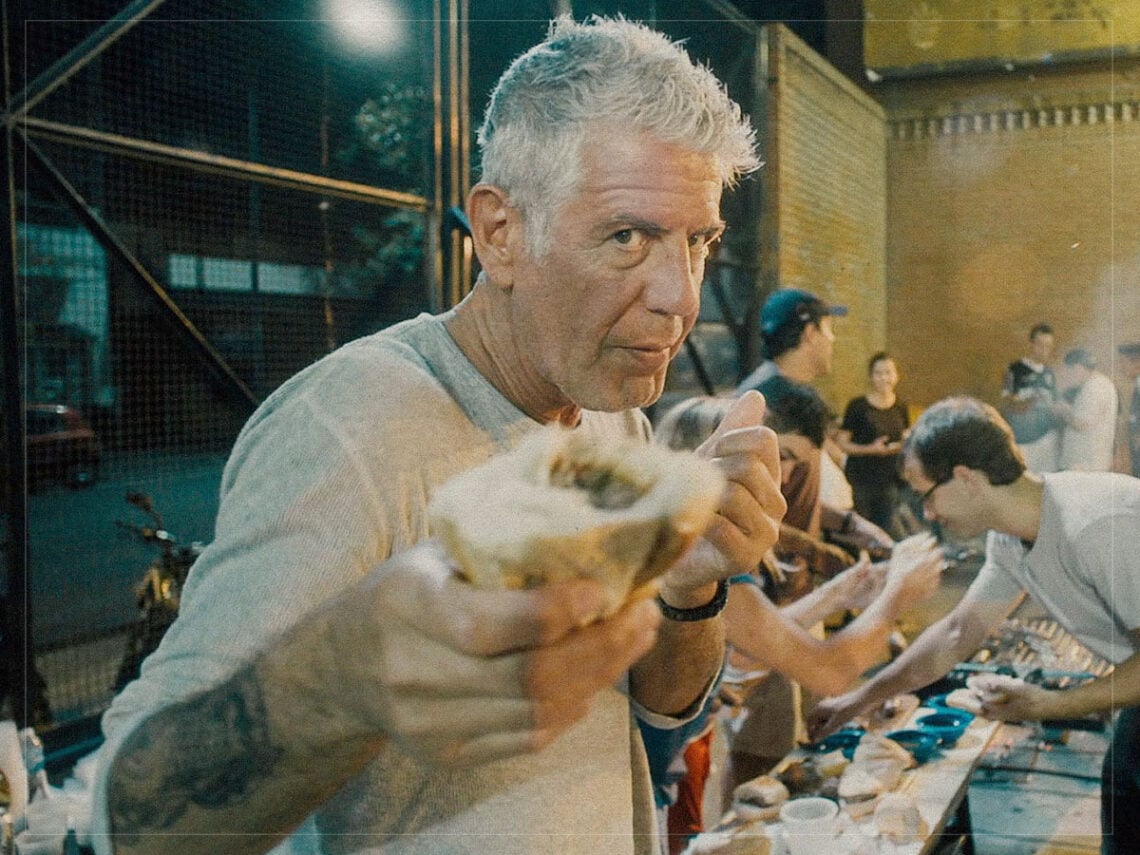
The band Anthony Bourdain believed was “too good to last”

In Kitchen Confidential, Anthony Bourdain’s Bible of a culinary memoir, he chronicles his pursuits in the food world, exposing its seedy, unappetizing lifestyle.
Not one to be blinded by glamour, Bourdain wrote with particularly enticing detail about his era as a downtown Manhattan chef, rising to prominence adjacent to the then-nascent punk scene of the 1970s.
His love of the culinary world began with a childhood trip to his father’s native France, where, as a young kid growing up in the suburbs of New Jersey, he was first exposed to fine cuisine. With aspirations of becoming a writer, he fell into the restaurant business when he needed work. Summers spent in the seaside town of Provincetown, Massachusetts, and later, the beginnings of a career in downtown New York City, allowed him to cut his teeth and expand his culinary understanding, operating as a kind of everyman chef.
Across various stints as a chef and manager across Manhattan, Bourdain enacted fine dining with a no-bullshit attitude.
For a while, Bourdain indulged in the debauchery, finding himself surrounded by a new burst of energy from the music scene that had been taking shape right in his backyard. Using his powers as a chef, Bourdain would enact a deal: in exchange for free admission to rock shows, he and his friends would provide the doormen with steak sandwiches and free snacks.
As he recounts in Kitchen Confidential: “A squadron of punk rocker junkie guitar heroes ate for free at Work Progress,” he writes, “So we got free tickets and backstage passes to the Mudd Club, CBGB, Tier Three, Hurrah, Club 57 and so on. And when the clubs closed it was off to after-hours where we’d drink and do more drugs until, weather permitting, we’d hit the seven o’clock train to Long Beach… When we finally arrived back at work, sand in our hair, we looked tanned, rested and ready.”

Bourdain’s immersion in the punk rock scene began earlier, with the emergence of the New York Dolls. Forming in 1971, the band was unlike anything seen before: appearing in purposefully imperfect drag, complete with dresses, makeup and platformed boots, the Dolls foretold glam rock with an early metal edge. “Punk” before the term was invented, their androgynous appearance mixed with their performance style, seeped in the grime of the city and the seething anger of disillusionment, produced an unprecedented shock value. At a time when it was still considered illegal to be homosexual, the Dolls were a direct threat to authority, and did so with a dramatic flair that was both exciting and terrifying.
For a young Bourdain, seeing the New York Dolls shifted something in him. In a 2009 episode of his television show No Reservations, he explains: “Sometime in 1972, I think it was, it became clear that something was terribly wrong. The dream of some kind of flower-powered revolution was long dead. The airwaves were filled with saccharine, easy-listening, country-inflected puke, lumbering pretentious, over-the-hill stadium bands like Led Zeppelin, the Allman [Brothers and] Jethro freakin’ Tull. Suddenly, there were the New York Dolls.”
Soundtracked to the Dolls’ classic, ‘Jet Boy’, Bourdain reflects on when he first heard their music, describing the sensation as “something exciting and dangerous”.
Humourously, he knew that the Dolls’ influence was one to fall under, thanks to the girls: “All the girls at my school were suddenly bouncing into walls and spending their nights in New York, chasing after their gigs!”
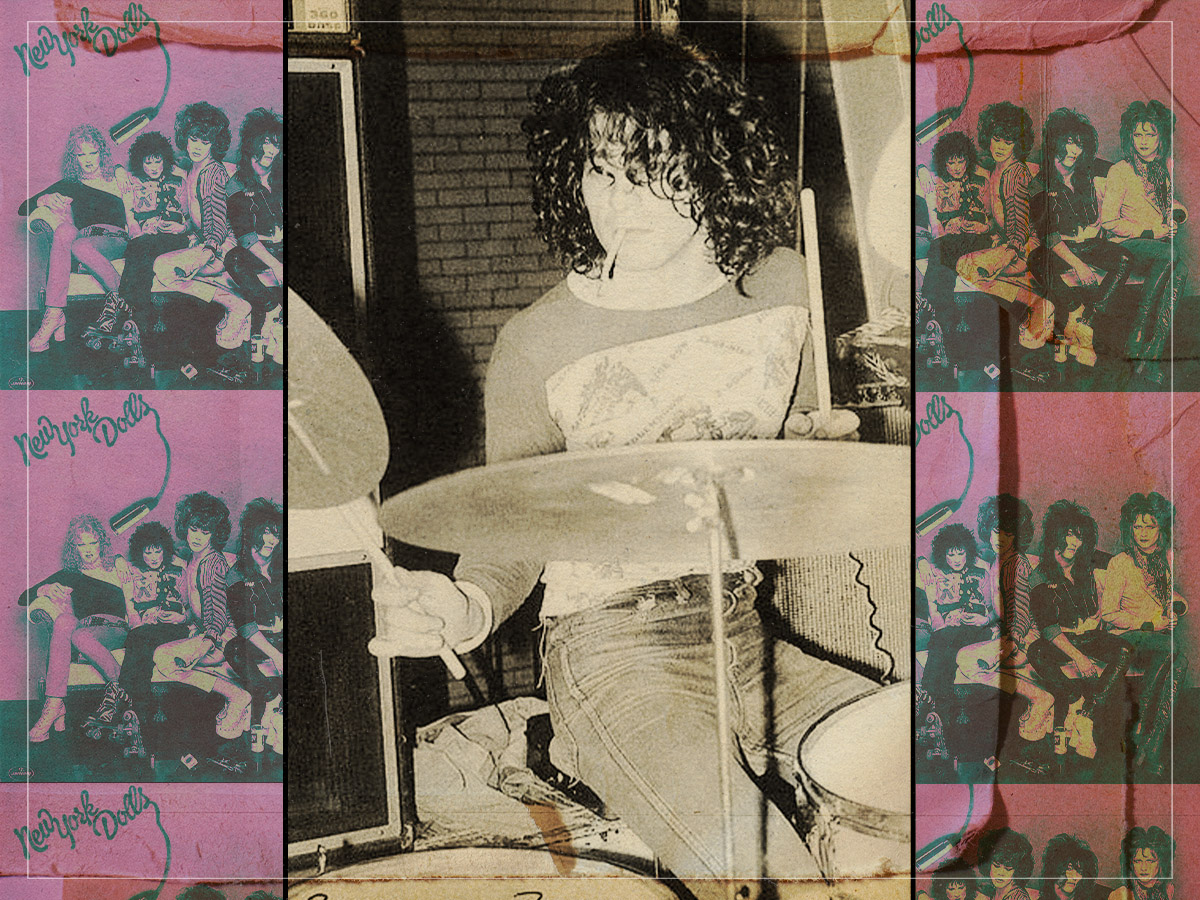
A bona fide fan from the beginning, Bourdain was enraptured by the confusing, but enticing, mystery that the Dolls conjured, plagued by questions such as, “Were they serious? Did they mean it? Was it all a cosmic joke? Did they mean to play those sloppy, nasty notes like that?” His No Reservations episode sees him meet the Dolls’ singer, David Johansen, for the first time, venturing to Johansen’s native Staten Island (New York’s often-forgotten borough). Trying some of the musician’s favourite local cuisine, Bourdain’s fanatic side emerges, sharing stories of friends who had gone to see the Dolls in concert and “came back traumatised, in a really, really good way”.
They also reflect on the Dolls’ short-lived reign in punk’s pantheon, lasting a solid five years before disbanding in 1975. “By the time the world had figured it out, that something important and incredibly influential had happened, the Dolls were gone,” Bourdain mourns, “Imploded in an anticlimactic non-nova of deaths, addictions, personality conflicts, and just being too good to last… They were the greatest band that never sold.”
Johansen maintains that he had no clue what would evolve from the Dolls’ campy rendition of garage rock. “Of course, it was the greatest thing,” he says with a laugh, “But it was just us doing what we did. We weren’t really contriving anything… I think of music in a Dawinian sense; it’s evolving all the time.”
Watching Bourdain and Johansen in conversation is to see two facets of New York’s history, immortalised, and shows how punk’s radicalised beginnings reverberated beyond the insular music world into neighbouring sectors of American culture.
