


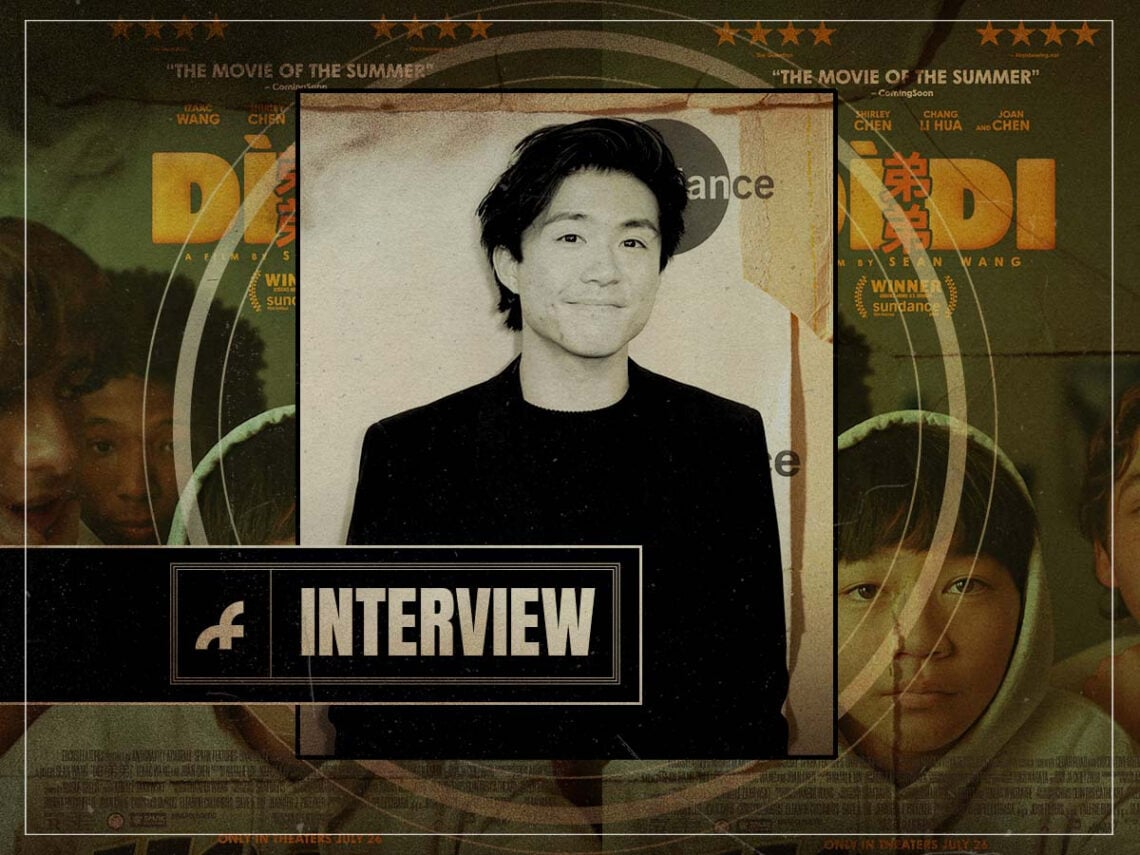
Bafta Breakthrough Sean Wang and the loaded sentiment behind calling yourself “an artist”

When you’re a teenager, it feels as though there are few adults who give weight to the coming-of-age experience. People will jokingly brush off your angst as a “mood swing”, dismissing the painful mortification of merely existing. Sometimes, you’re aware that what’s happening to you will one day be significant, but you don’t quite have the brain cells to see it yet. You convince yourself of the craziest truths in an attempt to blend in, not realising that they make you stick out like a sore thumb. Everything your parents say is absurd, and you silently commiserate in their ignorance over what it’s truly like to be young, all while they yearn to bond over the shared pains from a past life.
But the greatest trick of adolescence is that you believe you’re the only one going through it, convinced you’re being hoodwinked by the highest of powers as you wallow in its transitory embarrassment. And in Sean Wang’s 2024 film Didi, he captures the euphoric turbulence and heartache of being a teenager, all shown through the eyes of a young Asian-American boy called Chris (otherwise known as Didi).
Didi is like no coming-of-age film I’ve ever seen in that it shows the divine chaos of growing up with the internet: the cringey MySpace slang (XD), cryptic Facebook updates about your romantic life (because sometimes “it’s complicated” is the best description) and grainy photos with your tongues sticking out. It feels like a time capsule to a moment in time we forgot about, reminding me of the universality of experiences like watching slimy YouTube videos on how to kiss, bullying your siblings in borderline criminal ways and the sting of being excluded by people you desperately admire.
After Sean Wang was announced as being part of this year’s BAFTA Breakthrough, I was delighted to chat with the filmmaker about the importance of creative communities and his relationship to being an artist.
The BAFTA Breakthrough has launched and elevated the careers of many artists over the years, and I asked Wang how he feels about being included among some of his heroes: “I think the thing that excites me the most is being a part of this class of other creative people who are all doing different disciplines and sort of on their own path, but getting to grow together.”

Wang’s cohort is joined by the likes of Luna Carmoon and Erica Tremblay, each carving their own slice of the film industry with daring and authentic new stories. “Creative community is so important to me”, Wang continues, “so anytime I can be part of that space is really special to me.”
Everyone has their own individual journey with creativity and discovering their voice, either finding their craft very early on in life or much later on. I’m curious, I ask Wang, when was the first time you felt like an artist? It’s a loaded question, and I momentarily feel guilty as I realise that it’s actually quite a personal thing to ask. Wang raises his eyebrows as he ponders in silence for a while, perhaps thinking the same thing as me. “Oof”, he says, “well, that’s both a simple question and a big question. I would say I probably wasn’t that comfortable calling myself an artist until recently.”
It’s a loaded question because creativity is intrinsically tied to our own self-worth; some create without having the confidence to consider themselves as artists, some long to be considered as such while being stuck doing something else, and some desperately struggle to be an artist and watch their dreams slowly fade.
“For some reason, always, like, I felt like you had to be such a such a prominent figure to be like, I’m an artist”, says Wang. “I felt that same way about calling myself a director. I associated those words with such importance… directors are like, you know, Spielberg. And so even when I was younger, I’d be like, I like making stuff, but I’m not a director. But I think the thing I tell myself now, or the thing I believe in, is that, like, I really love making stuff.”
Maybe Wang has cracked the formula, as this is ultimately what being an artist is all about. The grandeur behind the label of being a “director” is a slightly different way of saying the same thing and adds a somewhat intimidating prophetic value to a simple sentiment. But sometimes, we work best when these labels are stripped to their core – we are makers and nothing more. Didi is a love letter to the art of ‘making stuff’, the seemingly inconsequential moments from our youth that shape our voices, the mischief and joy of breaking the rules, and a beautiful ode to the chaos of creating.
BAFTA Breakthrough is supported by Netflix.
