


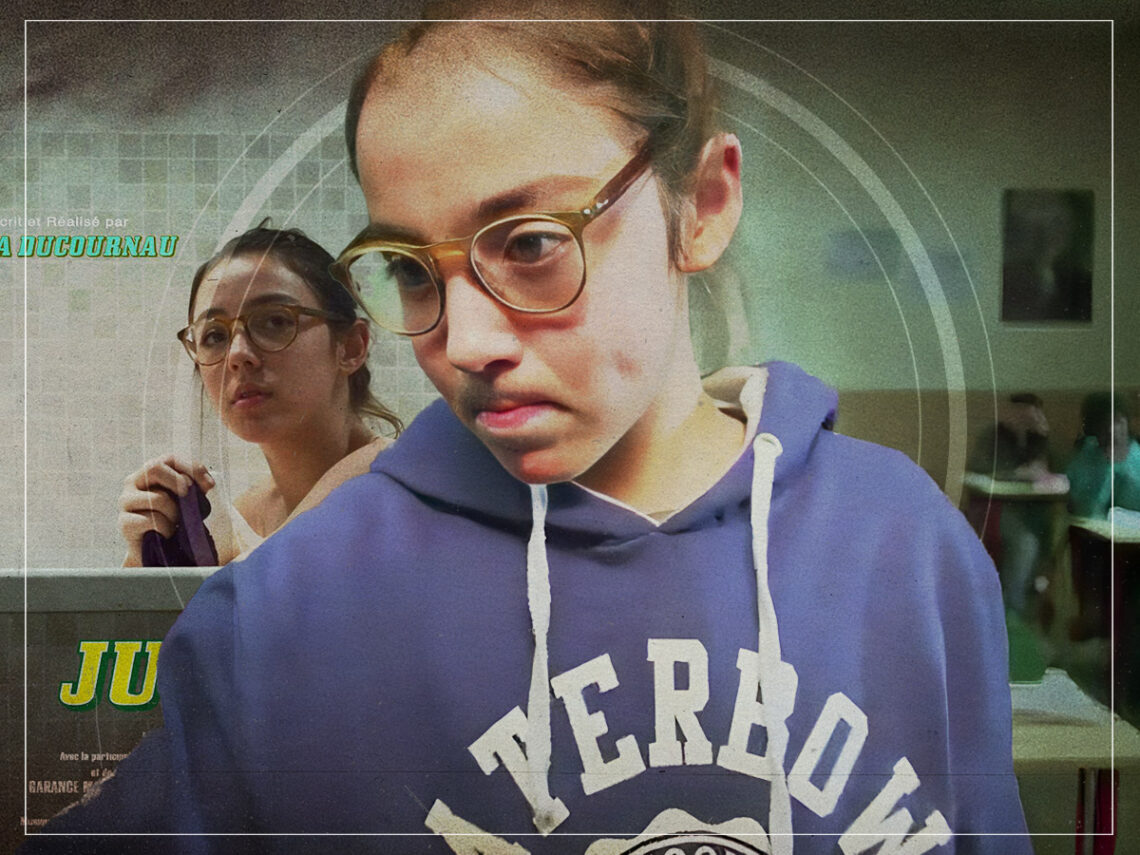
‘Junior’: Julia Ducournau’s grotesque yet essential exploration of female coming-of-age

The experience of hitting puberty can be terrifying, no matter how much your parents try to prepare you for it. The physical changes can feel drastic, and for girls, not only do developing body parts and periods occur, but we’re also exposed to misogynistic thinking, perhaps for the first time in our lives. In Julia Ducournau’s clever body horror short film Junior, we watch a young girl’s metamorphosis and the subsequent reactions from the outside world, specifically her male friends, that she encounters.
The filmmaker released her debut feature, Raw, in 2016, which saw its lead character, Justine, develop a craving for flesh. She is played by Garance Marillier, who also plays Justine in Junior. They’re not the exact same character, but they might as well be – Junior shows the early rumblings of Ducournau’s thematic interests, with both female characters undergoing a transformation involving their bodies.
In Junior, the young Justine is shown as a classic tomboy type, repulsed by the notion of feminine clothing, makeup, and even the idea of hanging out with other girls. Instead, she wears baggy, boyish clothes and spends her time with the opposite gender. She finds herself more at home with boys, even if they encourage casual sexism and only treat Justine a certain way because they don’t consider her attractive.
The director posits interesting questions here about how boys are socialised. From a young age they classify girls in categories and treat them differently as a result. Yet, Justine soon gets a shock when she begins to experience a strange bodily transformation that separates her from the body she once inhabited.
Ducournau uses body horror to convey the intensity of puberty for many girls. Justine starts to become unwell, and her skin peels – she literally sheds her prepubescent skin and eventually begins to look prettier and more feminine, although in the meantime, what she undergoes is grotesque and ugly. Her abject transformation is shocking to everyone around her, including herself, because the visceral nature of what is happening is, according to society, the opposite of how women and girls should present themselves.
The fact that Justine is a girl is vital here; rarely do we get to see women placed in such disgusting positions on screen. Ducournau emphasises the fact that female coming-of-age can be extremely gross, messy, and uncouth – but that’s completely normal.
All of a sudden, her male friends don’t know who she is anymore. She’s still the same girl; her body has just changed, and this leaves them questioning how to categorise their friend. There is a moment where Justine overhears other girls experiencing similar skin peeling to her, emphasising the potency of taboos and the danger they can cause. Justine thinks she is seriously ill when she starts to undergo puberty, yet because no one else around her is talking about this natural metamorphosis, her situation is made scarier and more confusing than it needs to be.
Junior seems to suggest that if the stigma surrounding female puberty wasn’t as prominent – and young boys weren’t socialised into thinking that women’s bodies and appearances dictated their worth – then young girls would have a much easier time navigating such a strange part of life. The short film paved the way for Ducournau’s next films, Raw and Titane, both of which continue themes of female sexuality, bodily transformations, and grotesqueness.
Ducournau’s filmography has created a necessary cinematic world where women’s bodies aren’t objectified, but the complete range of their functions, gross or otherwise, are explored with complexity.
