


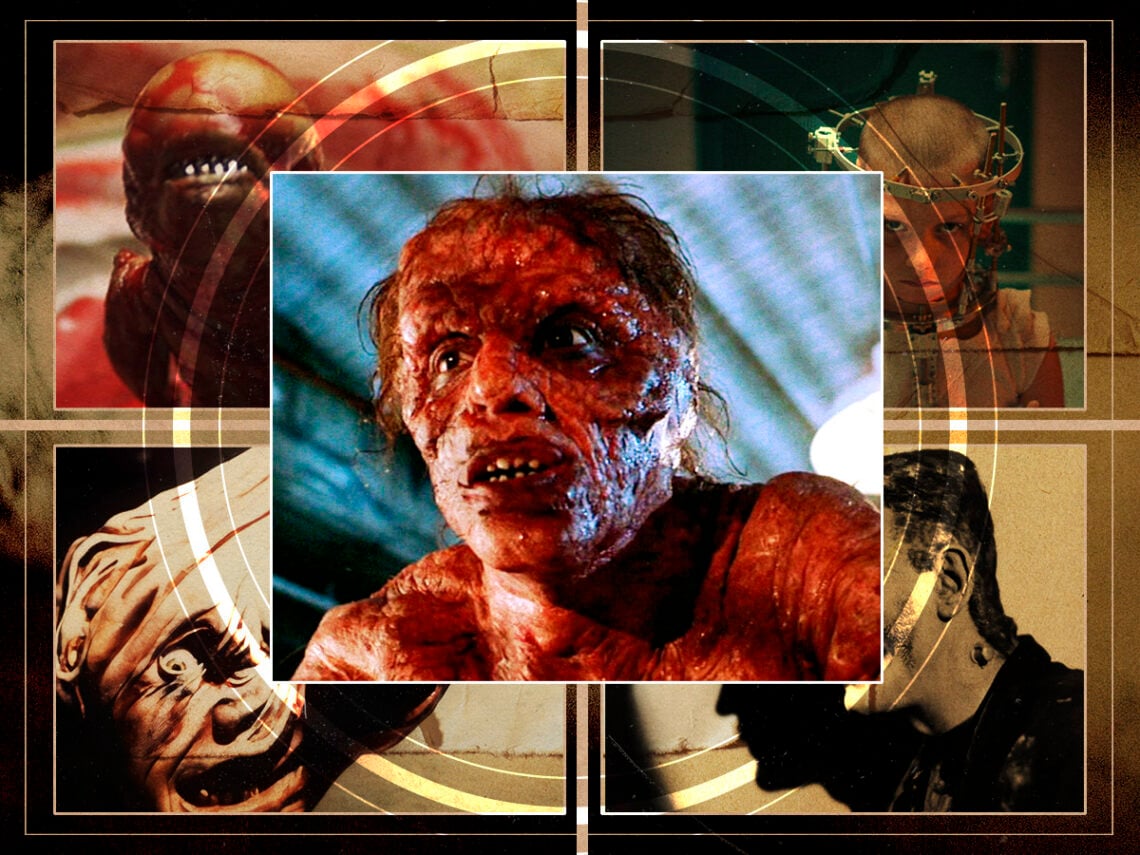
What is “body horror”?

There are many different subgenres of horror, including science fiction horror, gothic horror, zombie horror and slasher horror. The list can seemingly go on forever, but one of the most fascinating subcategories of the horror genre is body horror, a truly grotesque and disturbing manifestation of the most fearsome kind of narrative art.
But what exactly is body horror? Well, simply, body horror is the subgenre of horror that explores the potential transformation, mutation or degeneration of the human body in a graphic and grotesque means. By focusing on the human body, body horror artists create a sense of fear and anxiety over the physical quality of human existence and show the limitations of the corpse that can lead to disease and unsightly and painful experiences.
In many of the best works of body horror, characters are subjected to horrific physical transformations that occur as a result of disease or scientific experiments gone wrong. In addition, body horror works will often detail the disintegration of the human body, exploring the universal fear of ageing and physical unwellness. Occasionally, this sense of fear is heightened by a lack of control over one’s body as it starts to react beyond the limits of a character’s agency.
Body horror is often associated with the cinematic medium, particularly a series of works that emerged in North America in the 1970s and 1980s, but in hindsight, the subgenre can really apply to many works of literature that predated the era. For instance, Mary Shelley’s 1818 novel Frankenstein certainly fits into the category with its focus on reanimation, while Franz Kafka’s The Metamorphosis sees its protagonist transform into a large bug, undoubtedly influencing some of body horror cinema’s greatest works such as David Cronenberg’s The Fly.
It was the writer Phillip Brophy who coined the term “body horror” in his 1983 article ‘Horrality: The Textuality of the Contemporary Horror Film’, where he discussed the subgenre that had emerged around the time. As briefly stated, it was Canadian director David Cronenberg who had served as one of the progenitors of body horror, especially with his films Shivers, Rabid and The Fly, the latter of which was actually a remake, showing that body horror on film had been around for many decades before the 1980s.

Fellow North American directors David Lynch and John Carpenter had also explored the body horror genre with their respective films Eraserhead and The Thing, while outside of the Western continent’s cinematic landscape, Japanese directors had also toyed with the subgenre. For instance, Shinya Tsukamoto’s Tetsuo: The Iron Man remains one of the category’s most memorable and experimental efforts, later matched in the anime realm by facets of Katsuhiro Otomo’s Akira.
Elsewhere, we find body horror in mediums beyond literature and cinema. Say in the art of H.R. Giger, which fused the mechanical and human and was admittedly used by Ridley Scott in his science fiction horror classic Alien. In video games, body horror found the perfect medium, too, particularly in the influential works Resident Evil and Silent Hill, which both detail strange and monstrous human physical transformations as a result of either disease or supernatural occurrences.
Body horror is one of the most beloved subgenres of horror art. It creates an unbridled sense of anxiety about the bodies that house the human spirit and consciousness. As we move into increasingly digital times, this sense of unease about the worth of our physical bodies is only increasing and by using this fear as its central motive, body horror serves as a crucial facet of art that forces us to ask essential questions about our physical existence and just what it means to be a human being.
…but what are the best body horror movies?
In terms of the best body horror movies of all time, there naturally ought to be a healthy dose of David Cronenberg, so we’d recommend his 1986 classic The Fly, which sees Jeff Goldblum slowly transform in a fly-human hybrid creature, while the Canadian director’s Videodrome and Crimes of the Future are also well worth viewing.
Elsewhere, Ken Russell’s 1980 film Altered States is an examination of the effects of drugs and sensory deprivation that’s well up body horror fans’ street. Considering the best Asian body horror movies, then look no further than Shinya Tsukamoto’s experimental and bizarre Tetsuo: The Iron Man, which sees a man haunted by metal-sexual fantasies while he has pieces of metal growing out of his body.
French director Julie Ducournau has made a big impact on the contemporary body horror scene with her films Raw and Titane, and with Coralie Fargeat also making waves at the 2024 Cannes Film Festival with her film The Substance, it looks as though the French filmmakers are those making the biggest splash in modern body horror cinema, and the subgenre certainly looks to be in safe hands.
