


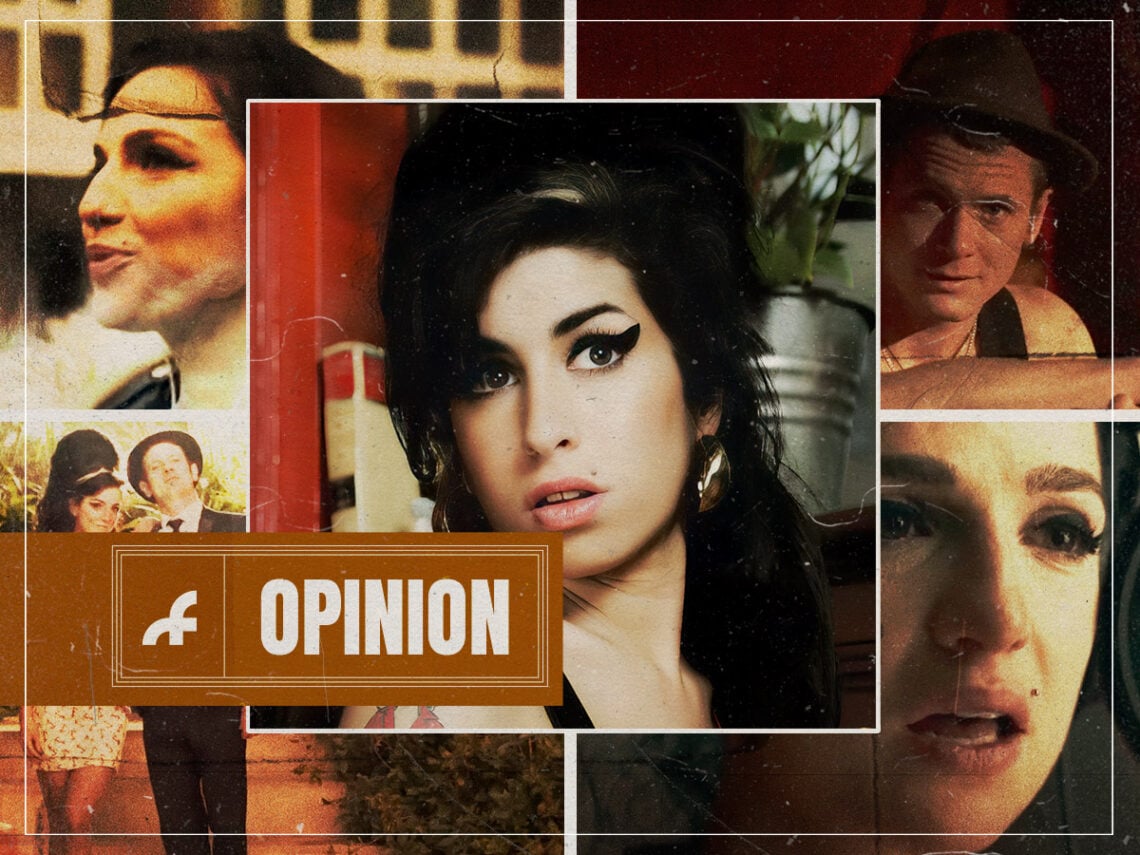
‘Back to Black’ repeats the cycle of exploitation Amy Winehouse endured

Can a teaser trailer alone tell you if a film is going to be bad? Of course not – but last year’s announcement that an Amy Winehouse biopic was in the works alone was all I needed. Between then and the eventual release of a teaser trailer, pictures from the set showed Marisa Abela as Winehouse, dishevelled and in tears, recreating press intrusion on a Hollywood scale. I don’t find it a coincidence that Abela, a relative newcomer, was chosen to play the artist. It’s hard to imagine a higher-profile actor wanting to sign on to a movie that seemingly revels in repeating a cycle of media fascination with her fragility and chaos. When Sam Taylor-Johnson’s biopic is released in April, I imagine Abela will shoulder most of the criticism, which is better levelled at Taylor-Johnson for entertaining the idea of such an exploitative, unnecessary project.
In that sense, Abela is set up to fail because not only is retreading the tragedy of Winehouse’s story extremely contentious, but the simple fact is that nobody can fill her shoes. Right out of the gate, people pointed out that the likeness wasn’t there. And going off of the trailer alone, it seems little has been done to rectify that. Yes, there’s the signature beehive and eyeliner, but it does little more than reduce Winehouse’s spirit to a retro aesthetic.
There’s no effort to embody her mannerisms either. If you watch the hilarious AP interview done early on in Winehouse’s career, in which she grows increasingly irritated about the onslaught of questions about Dido, you’ll see how expressive her mouth was. There are countless paparazzi pictures of her snarling a lip, something she often did onstage as she sang. But these small details have been overlooked in favour of showing her tattoos and ever-changing hair, both of which are paraded through the trailer to show they’ve done their homework on Winehouse’s highlight reel.
In that sense, the film looks to be suffering from the Priscilla problem of getting lost recreating old iconic footage. The trailer leans heavily on videos taken from a Glastonbury set – which is so famous I knew the opening was replicating the 2008 show, and not the 2007 one, based on the blue dress and cocktail umbrellas in her hair.
That alone speaks to the fact her stardom inspired a certain kind of obsessive quality among fans, fans who are fiercely protective of her legacy, and many of whom are already anticipating the tone of the film is off. It’s the same story with the Grammy Award moment, and the Shepherds Bush show we see recreated. Because fans know these performances so well, it just feels like an exercise in highlighting the talents of the hair and makeup department. It’s a lazy way of creating intimacy with a complicated woman.
And you have to think, to what end? Winehouse was hounded by the press so viciously in her lifetime that creating another circus of her feels cheap, even if it is done with an accurate wardrobe. If the movie somehow manages to chart her rise to fame and struggle with substance abuse with stunning nuance, it will still be exploitative. We don’t need to see someone at their most vulnerable twice. Equally, Abela’s comments that losing weight for the role, an experience she described as “really positive“, don’t fill me with hope that Winehouse’s lifelong struggle with bulimia, the illness her brother Alex once said “really killed her”, will be delicately handled either.
In her lifetime, Winehouse was a talent of such immense proportion that people thought just being in her orbit might mean it would rub off on them. Sometimes, it was with the purest intentions – and it allowed her to collaborate with her heroes and create timeless music. Other times, it manifested in desperate hangers-on treating her like a cash cow. Mitch Winehouse’s hand in the film, notably done with the blessing of her estate, may well complicate which camp he falls into.
It seems Taylor-Johnson is just the latest in a long line of people capitalising on the talent and tragedy.
