


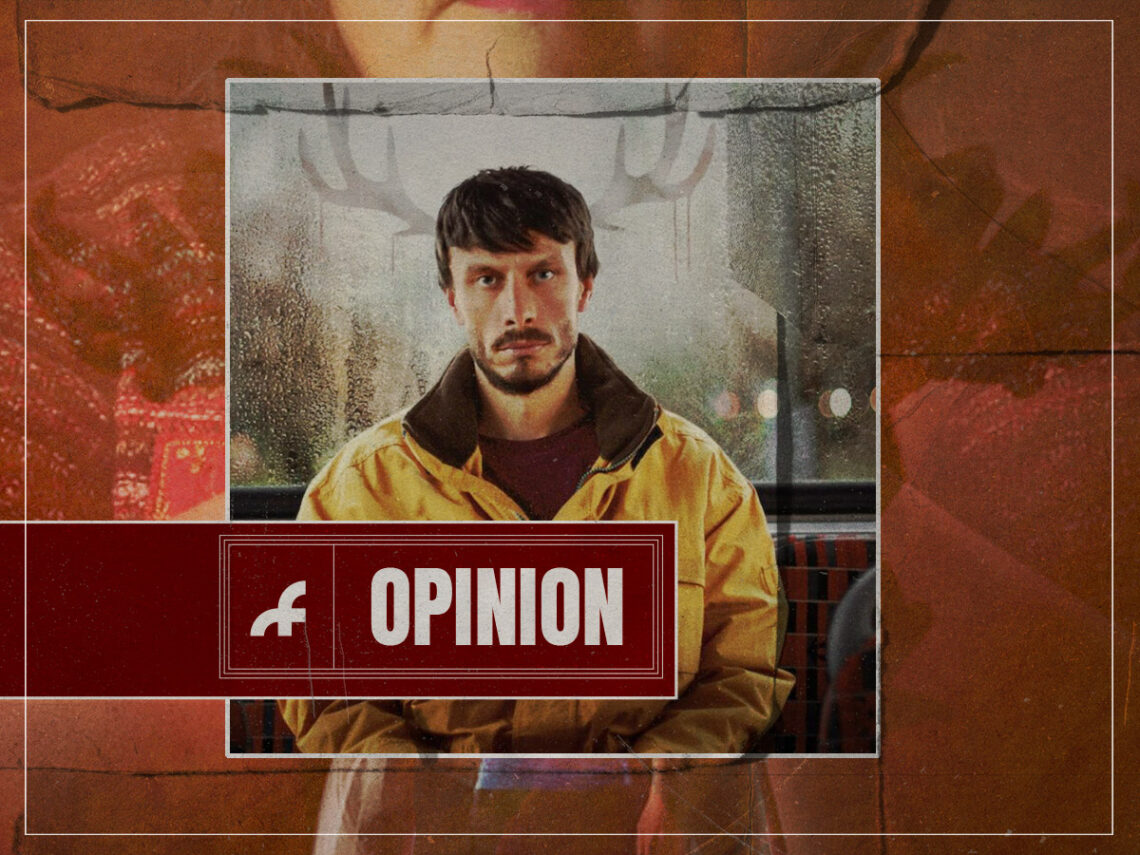
“This is a true story”: How the ‘Baby Reindeer’ lawsuit is putting the ethics of television on trial

For about two or three weeks, it was all anybody spoke about. Conversations in living rooms, pubs, bars, and restaurants were all directed towards the same few facts. “Yeah, so it’s about this guy being stalked, and it’s the guy who was stalked that wrote it, and he stars in it, too.” While there’s not a lot to go on, there is certainly something in that pitch that immediately draws you in; the idea of a person not only writing about their trauma but reliving it through a drama makes for something worthy of a watch. Then, if you’re still unconvinced, the blank screen that starts the series with nothing other than the words: “This is a true story” was enough to get anyone hooked.
You’ve no doubt heard of Baby Reindeer by now. It’s one of Netflix’s most popular dramas, amassing 56.6 million views within 26 days of its release. It follows Richard Gadd, a struggling comedian working behind a bar and his encounter with a woman called Martha, who he serves a free pint out of pity. That pint invokes an unhealthy attachment that Martha feels towards Gadd, which forms the foundation of the whole show. It follows her obsession with Gadd, their complicated relationship, Gadd’s obsession with Martha and Martha’s eventual arrest.
“This is a true story.” The words are brandished across the screen before every episode before diving into a show that paints Martha as a stalker who messaged Gadd non-stop, sexually harassed him, waited outside his house day and night, followed him to work and threatened him and his loved ones. It also said that Martha had previously been convicted of stalking and served four years in prison, and it concluded with Martha being convicted once again and sentenced to a further nine months in jail.
The series is excellent. Well-written and well-acted, Gadd performs a 25-minute monologue in the penultimate episode where he talks about obsession, a need for validation, and sexual abuse, which are some of the most engaging television programs put out in a long time. You can’t take your eyes off it. And you can’t stop yourself from becoming immersed in the story, either. However, despite this dramatic series being rightfully nominated for plenty of awards, the actual drama didn’t start until after the show’s release.
In an ideal world, people would be able to watch the show, enjoy it, and then move on. That’s not how people think, though, especially when they have become a part of a story that is continuously pushed on them as true and gives them tools to identify the actual people involved in the narrative. In Netflix’s case, they included the genuine tweets that Martha, or rather the person she is based on, sent in the series, so all anybody had to do was search those tweets to find who the real-life Martha was. It was soon uncovered to be former solicitor Fiona Harvey.
“I have no doubt that the character of ‘Martha’ in Baby Reindeer was intended to be a portrayal of me,” she said in a statement filed by her lawyer. Harvey said since people have identified her as the antagonist in the series, she has received an onslaught of abuse and threats.
Fiona Harvey has now filed a lawsuit against Netflix for $170million. This includes $50m for actual damages, $50m for compensatory damages for “mental anguish, loss of enjoyment and loss of business”, $50m for profits from Baby Reindeer and $20m for punitive damages.
Harvey has also appeared as a guest on Piers Morgan’s talk show to make her complaints about Baby Reindeer known. She says that it isn’t an accurate portrayal of what happened, that she never stalked Gadd, that she was never convicted of a crime and that she doesn’t believe Netflix did enough to keep her identity private. As her case goes to court and evidence steadily comes to light, we are left with a lot of questions, which don’t only stem from a legal point of view but an ethical one as well, putting the whole concept of morality within entertainment on trial.

Netflix’s duty of care to Fiona Harvey
“The internet sleuths tracked me down and hounded me and gave me death threats, so it wasn’t really a choice. I was forced into this situation,” explained Harvey when she appeared on Piers Morgan Uncensored to deliver her half of the story. Netflix never called Harvey by name on the series, and they believe they did all that they could to protect her identity.
The senior director of public policy at Netflix, Benjamin King, spoke in parliament and said, “We did take every reasonable precaution in disguising the real-life identities of the people involved in that story.” Netflix states it tried its best to keep Harvey’s identity secret while not censoring so much that the show became generic and lost all of Gadd’s authenticity.
The show blatantly didn’t do enough, though. By including the actual tweets Harvey had sent, it took the most basic of Twitter users minutes to track her down. On top of that, by revealing it was a show based on Gadd’s life, if Harvey had been convicted for stalking him, that conviction would have been on public record and easy to track down, too. It turns out Harvey hasn’t been convicted, complicating matters immensely. While Netflix might say it tried its best, that doesn’t seem to have been the case.
The defamation case
The legal definition of defamation is relatively straightforward: “An imputation which is likely to lower the person in the estimation of right-thinking people; an imputation which injures a person’s reputation by exposing them to hatred, contempt, or ridicule; an imputation which intends to make a person be shunned or avoided.” Essentially, if you publish something about an individual that will likely harm their character without just grounds, that is defamation.
Fiona Harvey is accusing Netflix of doing just that. She says that she didn’t harass Gadd and has never been convicted of stalking, either. This is the foundation of her claim, saying that the way she was portrayed on Baby Reindeer and the show’s lack of duty of care to keep her identity secret has changed the way the public perceives her.
The defence to defamation is equally as straightforward as its definition: it’s not defamation if it’s true. Therefore, whether you agree with how it handled keeping identities secret or not, the entire show would have been well within its rights to broadcast what it did if everything Gadd had written and everything that was filmed either was true or expressed as fiction.
There’s a stark contrast between the 41,000 emails, hundreds of voice messages and 106 letters, as Gadd states, and a few emails, one letter and 18 messages on social media, as Harvey states. It seems the truth will come out later in court. The major development recently comes from the fact that the UK government has revealed that Fiona Harvey has never been convicted of stalking Richard Gadd. This massive news leads to considerable development in the case, as it essentially nullifies the “this is a true story” statements at the beginning of each episode, which means Harvey is likely to win – at least in part – her defamation case.
“The problem for Richard Gadd and now for Netflix is that Baby Reindeer is not a true story at all. I am not a ‘Convicted stalker’. I have never been charged with any crime,” wrote Fiona Harvey in a statement filed via her lawyer. “Nobody ever approached me for any comment on the accuracy of Baby Reindeer or the very serious and damaging allegation that I am a convicted criminal, with a serious criminal record, who has spent time in prison. Nobody ever asked for my permission to present me in this way or to use my image at all.”

Ethics on trial
The legal debate surrounding Baby Reindeer will go on, but with this newest development regarding her alleged conviction, regardless of the number of emails and messages Harvey might have sent, it’s unlikely she’s going to walk away from this case with nothing. It probably won’t end up going to court, and it shouldn’t surprise people if some form of settlement is reached later down the line, but that shouldn’t be seen as the end of this debate.
The bigger issue here is one of ethics in entertainment, and companies put viewing figures and dollar signs before the human beings who create them. This is in reference to both Richard Gadd and Fiona Harvey, who are clearly two troubled individuals exploited by the entertainment industry for profit.
Gadd recently spoke out about the case, saying that Baby Reindeer wasn’t a true story but was based on true events. He described the show as a “fictionalised retelling of my emotional journey through several extremely traumatic real experiences”.
Gadd continued: “The series is a dramatic work. It is not a documentary or an attempt at realism. While the series is based on my life and real-life events and is, at its core, emotionally true, it is not a beat-by-beat recounting of the events and emotions I experienced as they transpired. It is fictionalised, and is not intended to portray actual facts.”
You might wonder why, if that is the case, the show’s writer, Gadd, was so adamant about asserting that it was a true story at the beginning of every episode. However, he may not have been responsible for this insistence. An original script from 2022, found online, reveals Gadd’s initial attempt to bring his story to the screen. While many lines from the show are included, what can’t be seen are the directions, “Fade to black, superimpose – ‘This is a true story’.” While this doesn’t prove anything, as it remains unknown who was so insistent on including this detail once the script was picked up, it could suggest it was a production point added later by Netflix.
The streaming Goliath certainly was adamant about reinstating that the show is based on a true story when Benjamin King said in parliament, “Baby Reindeer is an extraordinary story. And it is obviously a true story of the horrific abuse that the writer and protagonist, Richard Gadd, suffered at the hands of a convicted stalker”, despite contrasting words from Gadd.
As more information about the series emerges, questions arise about whether Netflix emphasised the “true story” element to attract viewers and generate buzz. This approach appears ethically questionable, particularly concerning Richard Gadd and Fiona Harvey, especially if this aspect was imposed on the audience without their full endorsement.
However, at least Richard Gadd is walking away with a lot of money. Harvey, as it stands, has an ongoing court case against an entertainment giant and an alleged £250 that she received after appearing on Piers Morgan Uncensored. In an interview dubbed by some as a low point for television, Morgan defended having her as a guest.
“I don’t take any of these things lightly,” he said, “If she was a convicted stalker who had gone to prison and put his life through hell, clearly, we had to think long and hard about the public interest justification in giving her the platform. But I felt that there was enough question marks surrounding that part of the story to justify at least giving her side of the story.”
He continued: “There were obviously other reports of her having stalked people, but again, nothing that led to any apparent conviction. And I think that is a crucial distinction I would draw here, which is that there is a big difference, legally, never mind anything else, between somebody who may have been obsessive towards some people, may have even harassed them, but if it hasn’t crossed the bar of a crime, then to call them in a series where they’ve been immediately identified, ‘A convicted criminal’, is a serious failure by Netflix.”
The show and the fallout following it highlight an ugly side of today’s media, which is happy to treat emotions and health as an afterthought to clicks and money. Neither Gadd nor Harvey will leave this process smelling of roses, and here’s hoping they are both getting help and talking to the right people in what will undoubtedly be an extremely stressful time for them.
The moral integrity of the entertainment industry is perfectly personified in the fact that while Harvey was identified easily, the TV executive who Gadd admits drugged and raped him in the series remains a well-kept secret. Despite people high up in the entertainment industry saying off-hand that many claim to know who it is, the rapist remains at large, with the conversation now steered entirely away from them.
A duty of care only matters when it applies to those the entertainment industry deems worthy of it, and protection is a privilege few can afford. Regardless of your opinion on Baby Reindeer or the outcome of the court case, that remains the only true story here.
