


‘Babette’s Feast’: the most upsetting dinner party of all time

There is nothing more infuriating than watching a film and coming away from it completely baffled as to why people like it, feeling lonely in your reaction to it and wondering if there is something wrong with you. It could be a film that is widely proclaimed as a cinematic masterpiece, or the highly anticipated release Barbie, which may make you cry on the way home because Barbenheimer turned out to be the biggest let-down of the 21st century.
After loving films like The Taste of Things, Tampopo and The Cook, The Thief, His Wife and Her Lover, I soon developed an appetite for stories in which characters communicate through the act of cooking. The marriage of food and sensuality is a match made in heaven, with the simple image of an egg cracking or onions frying in oil becoming strangely hypnotic, transfixed by the mundane rituals that mark our daily lives by relishing in each detail of the process. Suddenly, scrubbing dirt off a mushroom or shelling peas seems like the most magical act in the world – washing dishes doesn’t seem like a bad price to pay for the simple comfort of a home-cooked meal. All kitchen-related chores are now in aid of a worthy cause, because if you set your mind to it, you too can be like Jon Favreau in Chef, and isn’t that what we all want?
It was for this reason that I became intrigued by one film, a fellow food porn masterpiece that was described as one of the main influences for the entirety of this genre. It was, of course, Babette’s Feast, and I was miserable to discover that I not only didn’t like it, but it royally pissed me off.
When kindness becomes exploitation in Babette’s Feast
Dinner parties are a wonderful way to show care for the people you love. Over the years, it’s become one of my favourite things to do for my friends and the reluctant recipients of my culinary experiments; a tart that was accidentally peppered with broken glass, a chocolate cake with no sugar. It might not always be tasty, but it at least shows that you tried, and my loved ones are usually grateful (or at least, excellent actors). However, this is absolutely not the case for Babette, with the guests at her dinner party remaining as some of the most undeserving and ungrateful of guests, leaving me wondering how anyone could be warmed by such a cynical tale.
After fleeing a war-torn France, Babette seeks refuge in France and begs two old, unmarried sisters for shelter, offering to earn her keep by cooking for them. The women say they can’t afford to pay her, but Babette accepts the position regardless, desperate for safety. But the true evil of this situation comes from the fact that the sisters are deeply religious yet exploit Babette for their own personal gain, knowing they can afford to pay her but opting for free labour to spend more on themselves.
Throughout the entirety of the film, the sisters are painted as being the pinnacle of goodness and morality, arising from their devotion to their faith and relation to the town’s former minister. However, the film critiques religion and how their particular beliefs are entirely self-motivated, caring more to appear as being good than actually putting these ideas into practice. However, their shallow belief system and morals are put into a harsh spotlight when Babette comes into their lives, someone who is truly kind and giving, highlighting the evil that exists even in those deemed most ‘good’.
Babette lives with the sisters for many years, showing nothing but loyalty towards them throughout her stay as she tirelessly cooks and cares for them. But the turning point of the film comes when Babette miraculously wins the lottery, choosing to use all her winnings to cook one extravagant meal for the sisters and members of their church, importing only the finest goods from France and devoting herself to the act of preparing one beautiful feast.
She spares no expense, with the villagers observing the boats that bring everything from champagne, baby birds and turtles. While you’d presume their reaction would be one of curiosity and intrigue, the sisters cannot comprehend a selfless good deed, instead coming to the conclusion that Babette is a witch and preparing for an insidious ritual or dark spell, watching in horror as ingredients are loaded into the house, anticipating death and other violent disasters.
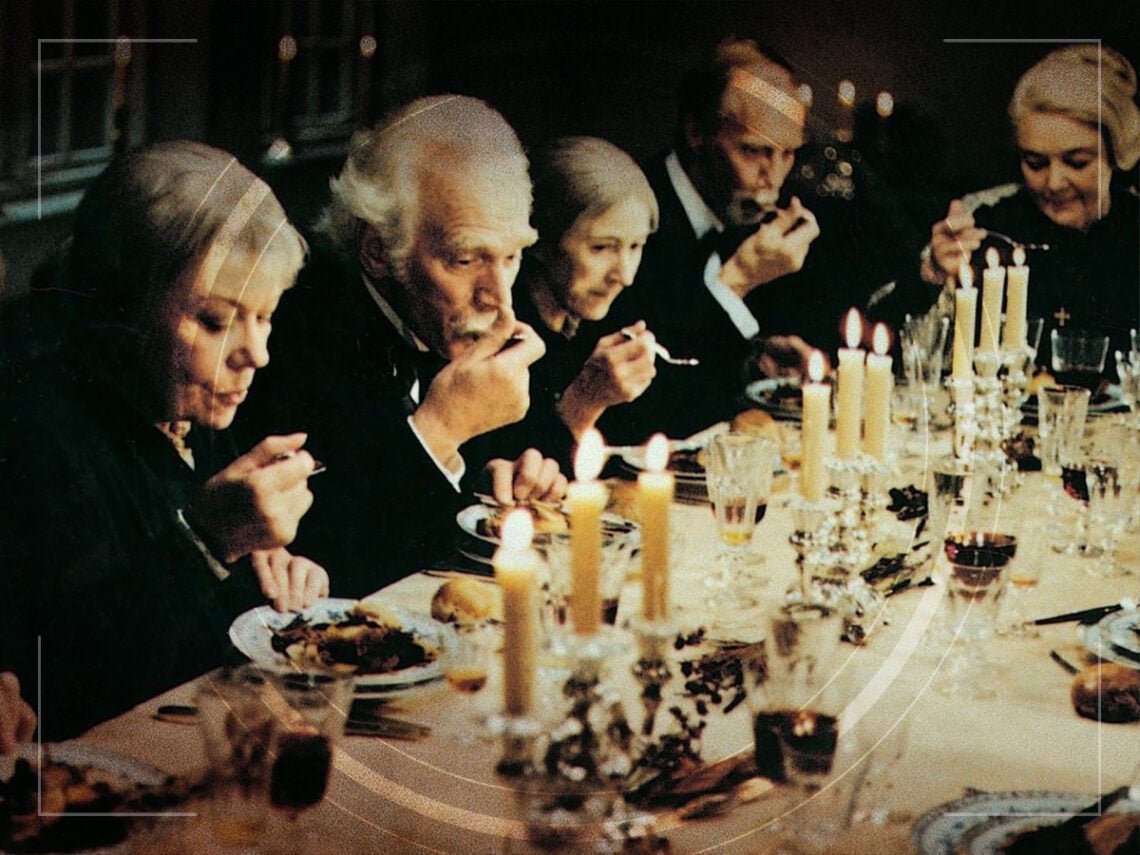
And then, after days of preparing for the meal, with Babette tirelessly working to prepare countless courses and delights for the dinner guests, the evening finally rolls around. Each person at the table is subjected to the most exquisite dishes they’ve ever eaten, with handmade quail pies, sparkling champagne and mock turtle soup.
While any sane person would express gratitude for such extensive efforts, the guests barely nod a head in her direction or express a single word of gratitude. The scene is full of close-up shots as each guest devours and certainly enjoys their food, but nary a word of genuine thanks is expressed, besides occasional yet pathetic mumblings about the quality of the food.
If these were my dinner guests, I’d subject them to a Tarantino-esque dessert, and by that I mean setting them all on fire and gladly watching them burn. Babette worked day and night to do something truly beautiful, sparing no expense to bring joy to others for no reason other than it being a kind thing to do. But these ungrateful people react almost indifferently to her kindness, showing just how far removed they are from their humanity and ability to act without their own interests at heart.
Babette’s Feast haunted me to my very core. It is a harrowing film about the decline of kindness and compassion, and the people who hide behind religion to manipulate others into thinking they are good and using it to manipulate their own self-image. The film should have ended with Babette poisoning every guest at that table as revenge for being exploited and treated like a slave, which would perhaps have made the story a little easier to swallow. But Babette’s unwavering kindness and lack of annoyance at their reaction only make it an even more challenging watch, knowing that she will continue to serve those who don’t deserve it and be used until her final dish.
