


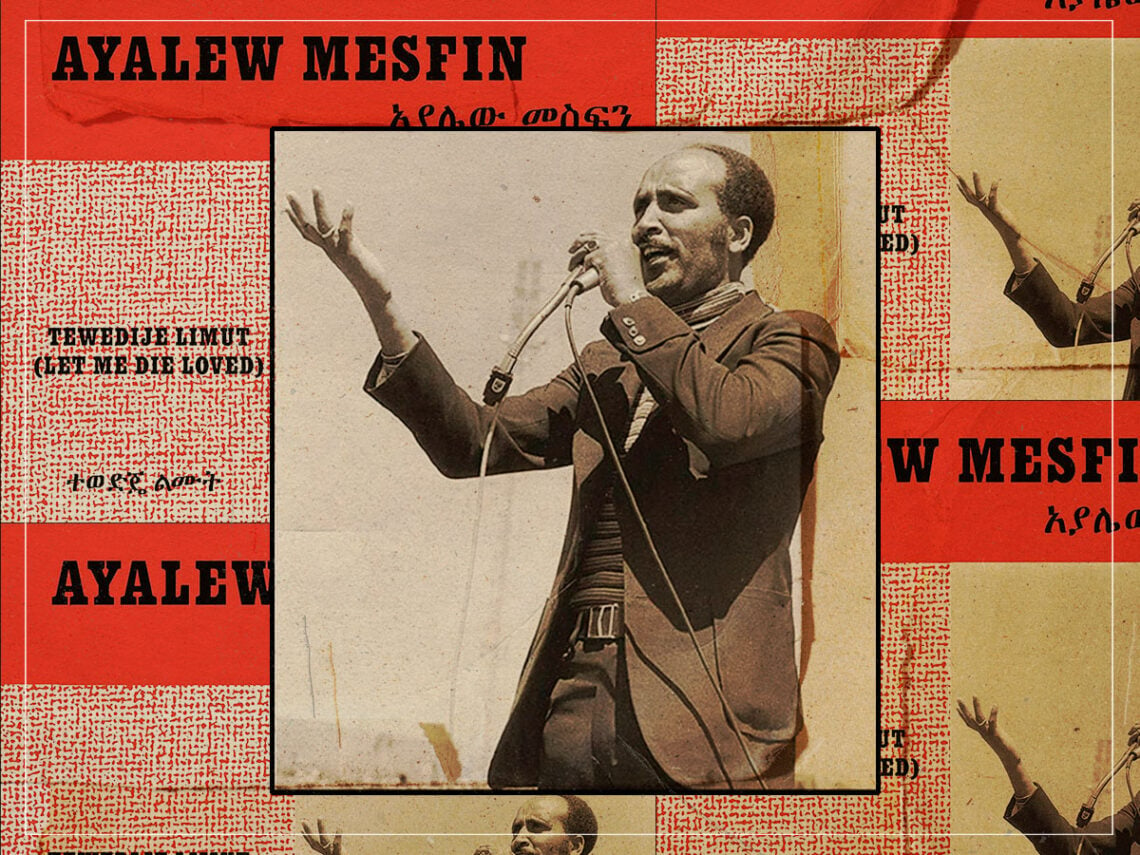
Let Me Die Loved: Ayalew Mesfin and the Derg regime

On the Horn of Africa sits the landlocked nation of Ethiopia, a vibrant and fascinating nation that has been the cultural epicentre of East Africa for hundreds of years. The unconquerable nation is one of only two African nations to have never been colonised, which means that Ethiopia has been able to preserve its cultural heritage much more effectively than its surrounding nations, which were hijacked by European powers. Even in the midst of Ethiopia’s domestic conflicts, artists like Ayalew Mesfin continued to further that cultural and artistic heritage.
After fleeing his home in the small town of Weldiya, in the north of Ethiopia, at the age of only 11, Mesfin always had his sights set on musical greatness. Coincidentally, this period in the 1950s and 1960s witnessed a cultural boom for the East African nation, storied by countless innovative artists blending modern musical styles with traditional Ethiopian sensibilities and instruments. Mesfin was captivated by this scene, particularly by the celebrated vocalist Gétatchèw Kassa and his Soul Ekos Band.
Eventually, Mesfin was able to take his first steps into Ethiopia’s incredible music scene, joining the lineup of Kassa’s Soul Ekos Band. Soon, though, the songwriter began to yearn for something more. Opening up his own independent music venue, Stereo Club, and a record store, Ayalew Music Shop, Mesfin established himself not only as a prominent musician within Ethiopia’s funk movement but an integral part of the local music scene, too.
The songwriter would go on to form the Black Lion Band in 1973 and quickly became one of the most important artists within the Ethio-groove landscape. With this group, Mesfin’s lyricism became increasingly politically charged, criticising authority and discussing various social issues under the guise of seemingly simplistic pop lyrics. This political angle came to define the musical output of Mesfin, though it would also cause him to be targeted by successive governments.
In 1974, a coup d’état overthrew Emperor Haile Selassie in Ethiopia, sparking a bloody civil war which would last decades and cost the lives of millions of people, either through direct conflict or by the resulting famine. The revolutionary military junta, the Derg, became increasingly authoritarian during its tenure and soon set its sights on the politically charged music of Ayalew Mesfin. The regime seized the songwriter’s property, imprisoned him for three months and banned his music for 13 years.
Even the all-encompassing power of the Derg regime could not stifle the musical expression of Mesfin, who continued to distribute cassettes of music critical of the new regime. At one point, he attempted to flee from Ethiopia and was subsequently placed under house arrest, which severely limited his musical output. Even after the fall of the Derg in 1991, when the Ethiopian People’s Democratic Movement came to power, the songwriter was still not in the clear. After releasing the album Peace for Ethiopia, the government attempted to assassinate the musician.
Understandably, Mesfin relocated to the United States in the late 1990s following the assassination attempt by the EPDM. The musician continues to create incredible art and music, in addition to criticising Ethiopia’s current government from his newfound home in Denver. Regardless of his location, though, the songwriter is rightly hailed as one of the most important musical figures to ever arise from that landlocked country on the Horn of Africa.
