


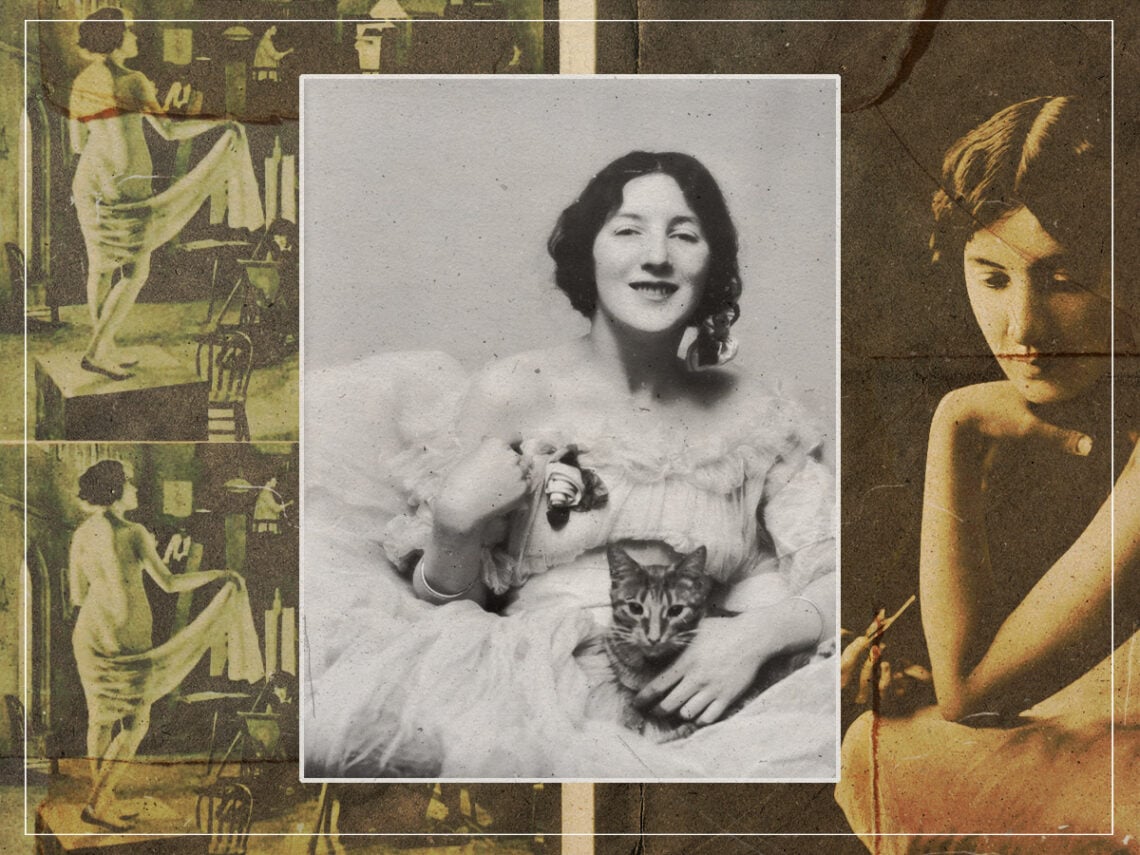
Audrey Munson: the tragedy of Manhattan’s greatest muse

Audrey Munson, though now less recognised, once stood as a towering figure in art history and culture—a luminary whose brilliance has been dimmed by the passage of time and overshadowed by her male counterparts. Yet, her tale remains a compelling narrative of beauty, tragedy, and the relentless quest for artistic enlightenment. Today, hidden in plain sight, Munson’s story continues to captivate, offering a poignant reminder of the enduring power of artistic expression.
Although Munson’s beautiful physique and enduring legacy have been immortalised over New York City and in other places across the United States, her story cuts much deeper. Hailed America’s first supermodel, Munson’s fame and accompanying achievements sit dignified, the full beauty of her journey ready to be explored by those who pause amid life’s hustle and bustle to fully appreciate the richness of her impact.
Born on June 8th, 1891, in Rochester, New York, Munson possessed a natural allure that captured the attention of artists from a young age. Blessed with striking features and a graceful presence, she quickly became a sought-after model for prominent sculptors, painters, and photographers of the early 20th century.
Munson’s ascent to fame began when she caught the eye of renowned sculptor Isidore Konti, who recognised her potential as a muse. Under Konti’s guidance, Munson embarked on a prolific career, posing for some of the era’s most iconic works of art. Her likeness graced public monuments, architectural designs, and sculptures across the country, earning her the title of “America’s Venus”.
Munson was also the ultimate female trailblazer: she became the first American leading lady to feature nude scenes in a film, marking the first of three silent movies that would include “daring” and unconventional scenes. Beyond her work as an actor, she also advocated for greater gender equality, joining Helen Sargent Hitchcock’s Art Workers’ Club for Women and championing a more liberated appearance.
Rather tragically, however, Munson also recognised her powerlessness when it came to receiving the appropriate credits, while her peers would gain recognition just by being directors and actors. The model, Munson argued, “remains ever anonymous. She is the tool with which the artist works, though she provides the inspiration for a masterpiece and is the direct cause of enriching the painter or sculptor.”
Her personal life proved to be even less fruitful. A purported romance culminated in her unleashing a vehement and highly public tirade, following which a Manhattan doctor was accused of murdering his wife, and authorities eyed Munson as the sought-after woman entangled in his love triangle. Then, after a failed suicide attempt, Munson’s mother attempted to get her institutionalised.
While many deem her a misunderstood feminist powerhouse, her latter years and ultimate death became the most seemingly calamitous chapter in her story. While the 1920s saw Munson become Miss Manhattan, a fire set ablaze by her unrelenting passion for arts and the greater good, her final moments were marked by perceived mundanity and even forgottenness.
Still, her sculptures remain a staple of New York, one of which is the second largest statue after the Statue of Liberty. Another sits at the intersection of Broadway and 106th Street, depicting a bronze rendition of Munson, which extends gracefully, embodying a water nymph overlooking a serene fountain. This symbolises Memory in Henry Augustus Lukeman’s sculpture in honour of Isidor and Ida Straus, who died when the Titanic went down.
