


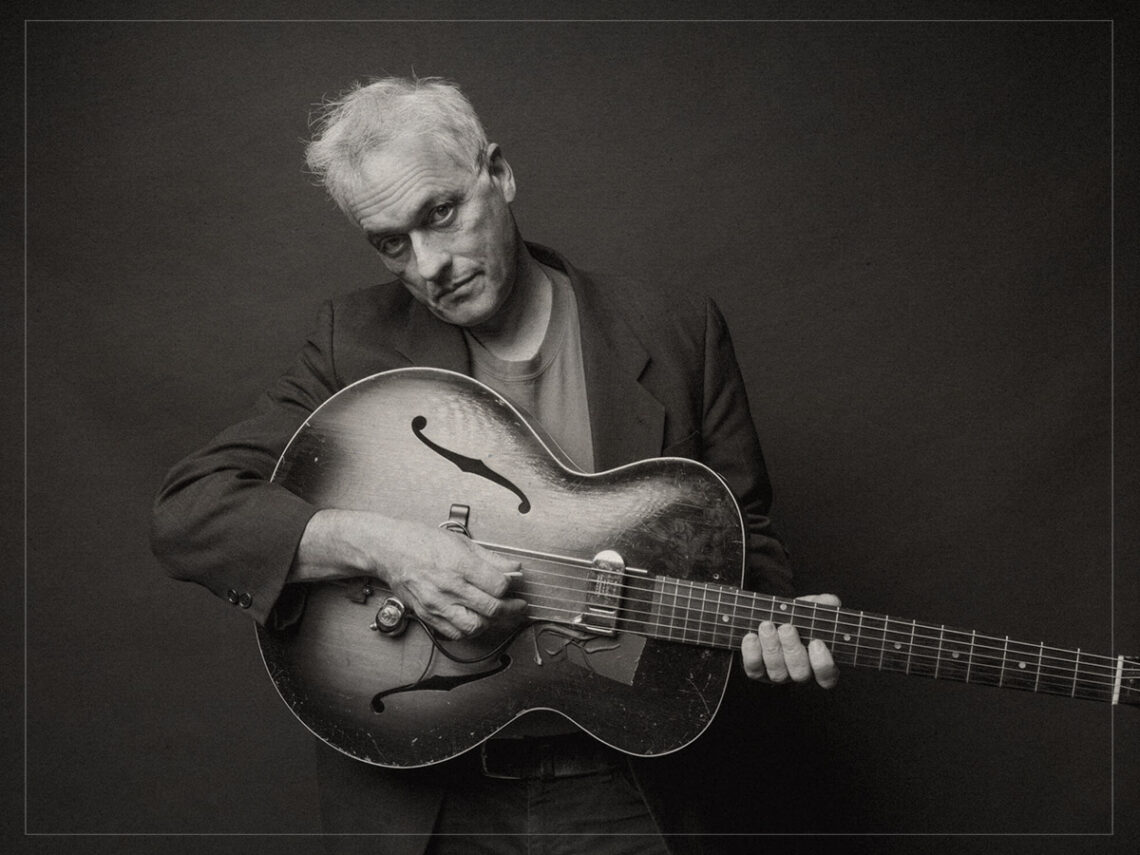
Marc Ribot names the artist creating a new voice for guitar: “I don’t know how he does it”

When Tom Waits turned his career on its head with the release of his glorious and maddening 1983 album Swordfishtrombones, so much of the change in style was put down to the new musical collaboration between Waits and his wife Kathleen Brennan.
For the follow-up album in 1985, the somehow-even-better-than-Swordfishtrombones Rain Dogs, Waits would introduce the world to another of his most important musical collaborators.
Unlike most performers in the rock music world, or whatever world it is that Tom Waits’ music hails from, Waits hadn’t featured the electric guitar as a focal point in his work until his sixth album, Blue Valentine. His work became a little more guitar-centric two years later on Heartattack and Vine, but Waits never really settled on a guitar player who gave him the sound he must have heard in his head until he found Marc Ribot, with the pair working for the first time together on Rain Dogs.
Ribot undercuts the sound of the underworld all across the album, cutting against the tuned percussion and rhythmic pulses with a clear and clean singularity that would go on to become a trademark of his playing. He bites into a solo halfway through the hypnotic ‘Clap Hands’, perfectly heightening the feeling of unease and disturbia which had until that point been supplied by mallets, drums, bells and Waits’ snakelike voice.
Elsewhere on the album, his guitar propels tracks like ‘Jockey Full of Bourbon’ and the titular ‘Rain Dogs’. In an album of remarkable components, one of the most remarkable is Ribot’s playing. Angular, gritty, industrial, futuristic, guttural and gothic, his guitar parts are as essential to the album as Waits’ grizzled voice, the crazed percussion, brass and organ sounds.
It’s not often that Waits brings back the same session men and guitarists on future albums, always looking to forge on to his next and freshest experiments, but he has returned to Ribot time and time again, for seminal albums like Frank’s Wild Years and Mule Variations, as well as more recently on Real Gone and Bad As Me.

There’s something of the underground and of the underworld in Ribot’s playing, something uniquely American, but also, thanks to his early tutelage from Haitian classical guitarist Frantz Casséus, something of the wider world, as well. Casséus had arrived in New York City in 1946 with the intention of composing music which was distinctly Haitian yet which was fused with the European classical tradition.
With such a teacher, it’s no wonder that Ribot became such a proficient player, and combined with his ear for the avant-garde, even less of a wonder that he became such a uniquely talented and interesting guitarist.
Alongside his work with Waits, Ribot has had both a stellar solo career and worked as a session musician with some of the biggest and best names in contemporary music history. He’s recorded with luminaries like Caetano Veloso, Wilson Pickett, Allen Toussaint, Elton John, Elvis Costello, Diana Krall, Marianne Faithfull and Madeleine Peyroux, as well as people like Robert Plant and The Black Keys.
His former colleague from The Lounge Lizards, John Lurie, once said of Ribot: “Marc is a musical genius. So many ideas are coming out of that guy that it is actually often a problem.”
As a man of such a fine mind and such a fine ear, and with such a strong track record in the studio and on stage, any endorsement that he gives to a fellow guitarist carries heavy weight. Over the years, he has spoken of his appreciation for guitarists like Bill Frisell or Ava Mendoza, and more recently has had a new guitarist on his radar.
Speaking to The Observer in mid-2025, Ribot said that he has been spending a lot of time listening to the 2022 album In the Swarm by Seabrook Trio, explaining, “I really like this record. Brandon Seabrook plays guitar and banjo, which is an instrument that is really easy to annoy people with, but he manages to make it work. He records with Cooper-Moore, who is a great keyboard player, and Gerald Cleaver, one of the most inventive drummers out there. Seabrook is doing something very difficult, which is creating a new voice for guitar. I don’t know how he does it – I keep listening in the hope I’ll figure it out.”
Brandon Seabrook’s music, for want of a better word, sits somewhere between sounding like the far out fairground instrumental sections of The Beatles’ ‘Being for the Benefit of Mr Kite!’ and Lalo Schifrin’s excellent and unnerving scores from the early parts of the Dirty Harry film series or else the similarly brilliant Billy Goldenberg scores from Columbo, if they were transposed entirely to guitar. His playing recalls, at times, Tom Verlaine or Nels Cline, and, perhaps most of all, Marc Ribot cutting, slashing and etching guitar playing from all those Tom Waits albums.
Ribot might be listening in the hope that he’ll figure out how to play like Brandon Seabrook, but the rest of us are still just trying to catch up to Marc Ribot himself.
