


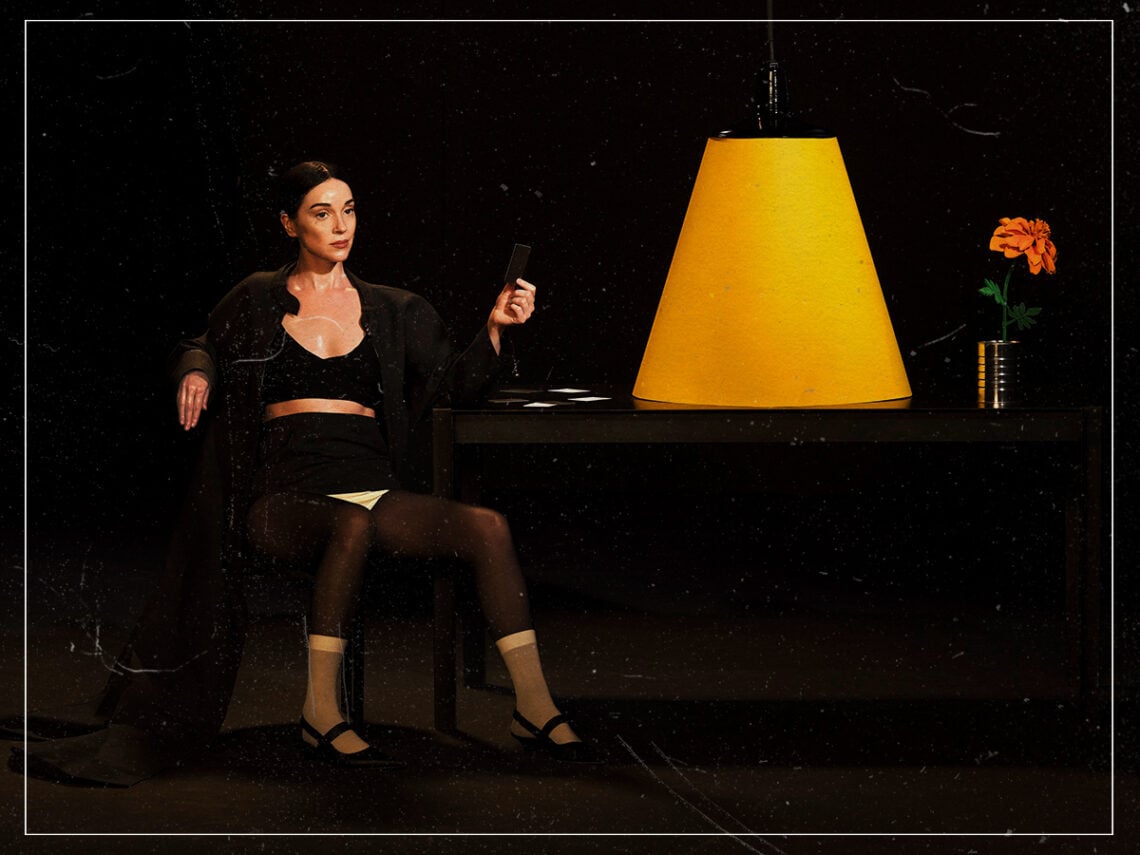
‘Clap Hands’: St Vincent discusses the greatest guitar solos

The electric guitar might be the instrument that is most synonymous with rock music, but it wasn’t until his sixth album, Blue Valentine, that the instrument took centre stage on a Tom Waits record.
Up until that point, Waits’ songs had been built around jazz-style piano, bass, and brass. His early voice was tender and smooth, but as the decade wore on, it upgraded and degraded into the sandpaper-like instrument we are more familiar with now. If any guitars were on his songs, they were acoustic and there to add warmth and shade to songs like ‘Ol 55’ and ‘(Looking for) The Heart of Saturday Night’.
Midway through recording Blue Valentine with his signature set-up, Waits decided to change tack and brought in a new batch of musicians; among them was Ray Crawford, who added an electric guitar to seven of the album’s ten songs. Waits himself switched from piano to the electric guitar on a further four.
By the time he got to his next album, Heartattack and Vine, Waits was in transition. He had begun to move away from his down-on-his-luck-in-a-dive bar Jazzbo persona and was shifting more towards his experimental grave-yard shift showman character. He kept the electric guitar from Blue Valentine, and this time, his own playing was complemented by Roland Bautista. The best example of his new sound is found on the album’s title track, which is driven by a chunky and chopping blues riff and Waits’ devilish growl.
On his next record, Swordfishtrombones, the new Tom Waits was truly born, and he perfected his new style on the follow-up, Rain Dogs. On these latest releases, the electric guitar was firmly established alongside his piano playing as an important feature of his sound but was now complimented by all sorts of other instruments, like marimbas, aunglongs, accordions, harmoniums and saws.
A restless and wandering spirit, Waits not only experiments with new musical instruments, styles and forms but frequently tries out new musicians on each album, as well. While most of his band changes from album to album, he has had some frequent collaborators over the years, including Bones Howe, Derrick Gee and, starting with Raindogs, the guitarist Marc Ribot.
Waits has played with some of the greatest guitarists around, like Fred Tackett and Keith Richards, but it is Ribot who is the perfect foil for his indomitable style. Speaking to Derrick Gee in a recent backstage interview for his YouTube channel, lifelong Tom Waits fan St. Vincent described Ribot as being “one of the coolest guitar players to ever walk the planet”.
Almost at a loss for words to translate the genius of his playing, she added that “he plays in and out and in and out, he’s like a master of tension and release” and said, “I go back to his playing, definitely on solo records, but I go back to his playing on Rain Dogs. There’s a song called ‘Clap Hands’. This is one of my top three favourite guitar solos ever. He’s virtuosic, but he’s an outsider artist”.
The ‘Clap Hands’ solo combines moments of BB King blues with the punk and grit of Tom Verlaine’s best playing and tonality, but as much as you can pinpoint similarities or influences, it is instantly recognisable as entirely Ribot’s own angular sound and style. He attacks the space with a dissonance that befits a Tom Waits song and lets the notes hang in the air, never quite landing when or where you expect them to. It’s no wonder Annie Clark is so impressed.
Waits brought Ribot back on his next album, Franks Wild Years, and the pair also worked together on Big Time, Mule Variations, Real Gone and Bad As Me (Ribot also appears on the outtake compilation Orphans: Brawlers, Bawlers and Bastards). Alongside his work on Swordfishtrombones, Ribot’s most exciting, cutting and enervating work with Waits can be heard on the 2004 album Real Gone, as he tears up songs like ‘Hoist That Rag’ and ‘Make It Rain’.
Waits’ most recent recording to see the light of day was the anti-fascist anthem ‘Bella Ciao (Goodbye Beautiful)’ for Marc Ribot’s Songs of Resistance 1942-2018 album. The songs on ‘Real Gone’ were written partly in protest against President Bush, and their Bella Ciao recording came in the midst of Donald Trump’s first term in the Oval Office. Perhaps, with Trump on his way back to the White House, we can expect new resistance music from Waits and Ribot again before long.
