


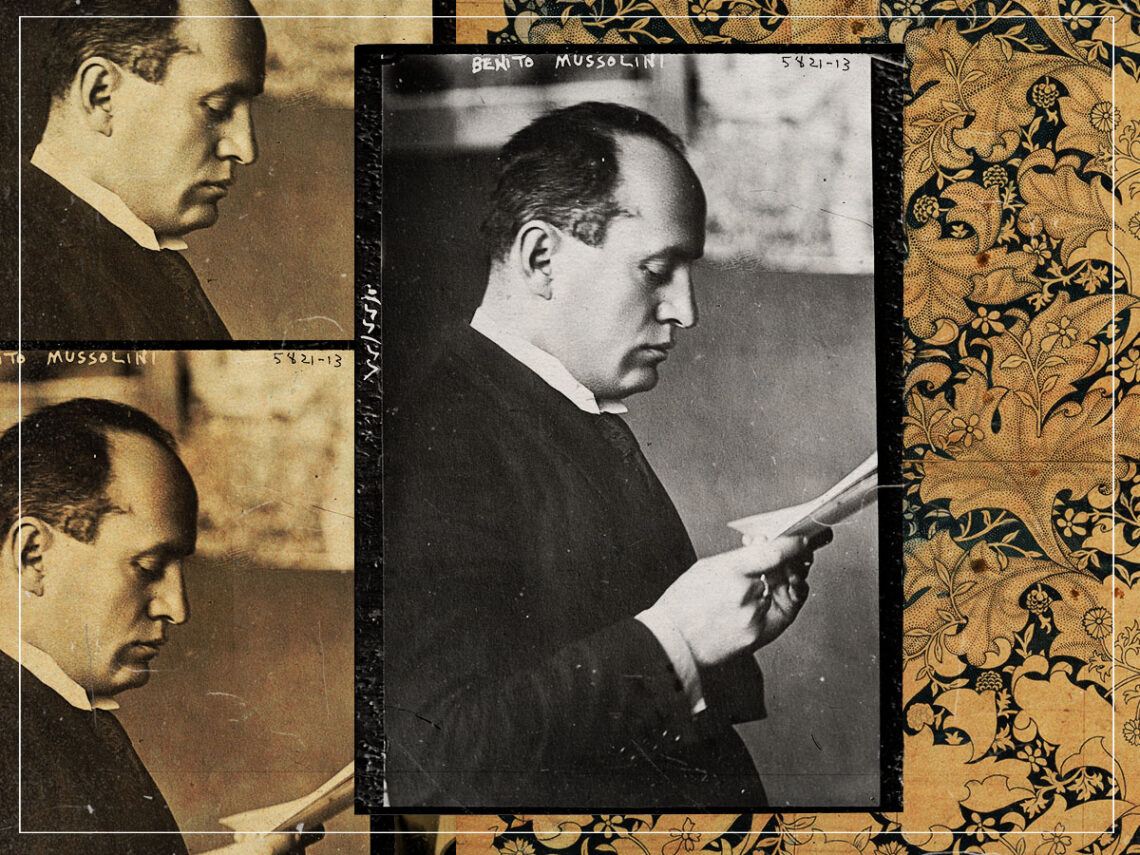
The art exhibition connected to Benito Mussolini

Dictators have a storied history with art. From Adolf Hitler’s failed career to Joseph Stalin’s enforced Socialist Realism, art has consistently been seized on and abused as a political tool because to connect with art is to connect with culture at large, something politicians have been mindful of throughout history. Renaissance art often got swept up in the mess, touted as an example of classical ideals in the face of modernist movements threatening to undermine fascist regimes. In 1930, one exhibition did just that, with the crucial support of Italian dictator Benito Mussolini.
The Royal Academy’s ‘Exhibition of Italian Art’ was an unthinkable showcase of talent, boasting nearly 100 works by the most influential artists in history in London. Works Leonardo da Vinci, Michaelangelo, Raphael, Sandro Botticelli, and Donatello were all featured. The show was so popular, such a celebration of the finest talents the art world had to offer, that over 500,000 attended. Something that might not have been immediately obvious to the half a million viewers in attendance was that Mussolini was the show’s Honorary President.
His connection to the art world was tied to propaganda efforts, which also saw the Ministry of Popular form formed years later, in 1937. Artwork from the Italian fascist regime depicted him as a Renaissance man and proclaimed he was “always right”. Under his rule, Italy was a police state, and freedom of thought and expression did not exist. But there he was in the official exhibition catalogue, named its most prominent supporter.
It was a blatant attempt at associating himself with Italian culture’s most profound achievements, something he’d been doing for years. He decided teachers had to swear an oath of loyalty to the regime and soon extended that rule to university lecturers.
All of Italty’s learning materials were reviewed, banned, and then replaced with government-issued books that praised him. He named the ship that carried the loaned Italian artworks from Genoa to London the “Leonardo da Vinci” after the same man famously quoted as saying: “One has no right to love or hate anything if one has not acquired a thorough knowledge of its nature.”
Bizarrely, the public was more concerned about the prospect of valuable paintings being damaged in transit than the involvement of a dictator. Very few publically addressed it, and the works on show enthralled the art press so much that they hurried to highlight Mussolini’s generosity in lending the Italian pieces. It didn’t help that the exhibition was an absolute hit either because that tended to be the focus of reviews.
Modern revisits to the infamous show have been less kind. In Kenneth Clark’s 1974 autobiography, Another Part of the Wood: A Self-Portrait, he questioned his role in organising the event, frankly describing it as “basically, a piece of Fascist propaganda”.
