


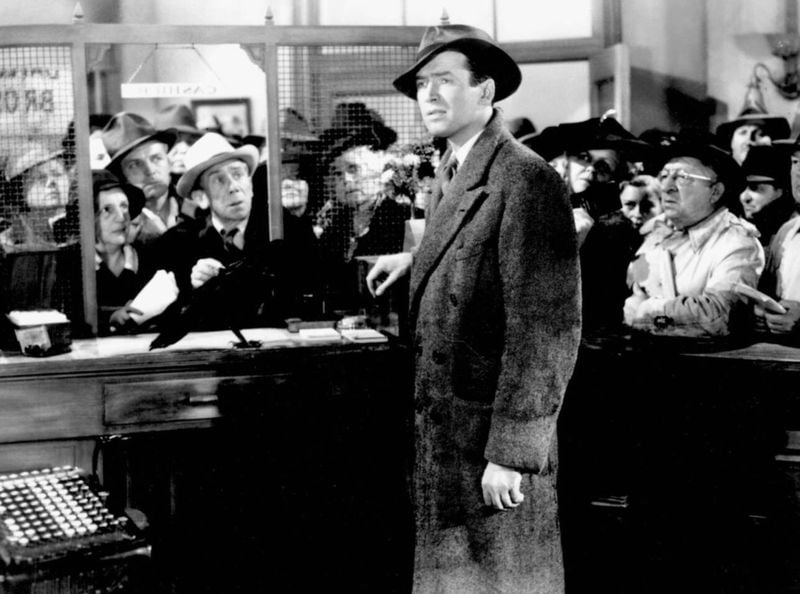
The FBI once accused ‘It’s A Wonderful Life’ creators of communist propaganda

As the nights get longer and frost bites the windows, there’s nothing better than drawing the curtains, stoking the fire and putting a festive favourite on the TV. Whether you’re more of an Elf fan than a Love Actually romantic, it’s hard to ignore the cinematic perfection of a monochrome classic of Hollywood’s golden era. While White Christmas and 1938’s A Christmas Carol are as vital as Christmas elves, It’s a Wonderful Life stands alone as the big man in red.
Directed by Frank Capra, It’s a Wonderful Life is considered the holy grail of festive flicks, sure to warm the cockles on the coldest night and make the heart of the Grinch grow three sizes more. The movie was released on December 20th, 1946, just over a year after the end of World War II.
It’s A Wonderful Life follows the story of a spiralling family man, George Bailey. The character is a businessman living in the fictional town of Bedford Falls who is about to lose his loan company to the rich, duplicitous banker Mr. Potter. With options wearing thin and his family’s solvency in the balance, Bailey considers suicide on Christmas Eve. Fortunately, he is visited by a guardian angel who, in A Christmas Carol style, shows Bailey an alternative timeline in which he doesn’t exist. After realising his true worth and the positive impact he has on his family and the people of Bedford Falls, Bailey reconsiders his circumstances.
Starring Jimmy Stewart and Donna Reed, the movie was a commercial and critical success, earning five Oscar nominations, including one for the Best Picture Award. The movie granted Capra the immortality of history books, and in 1990, the Library of Congress inducted the film into the National Film Registry thanks to its profound moral messages. Sadly, there was a time when the FBI didn’t see it this way.
Once the Nazis were defeated in Europe, the US shifted more of its focus to global Communism as the overbearing threat to western civilisation. J Edgar Hoover, Director of the FBI at the time, tasked his agents with seeking out anti-American propaganda in the media and saw Hollywood’s immensely popular output as a key focal point.
With a command to sift the motion picture industry for signs of “communist infiltration”, the FBI’s Los Angeles-based field office investigated more than 200 movies between 1942 and 1958. Anxiety rode high approaching the Cold War, and the US government weren’t prepared to take any chances.
One of the movies under the searchlight in the late ’40s was It’s A Wonderful Life. The personality and overriding message of the film were seen as concurrent with Communist Party ideals. The FBI claimed that two of its screenwriters, Frances Goodrich and Albert Hackett, “were very close to known Communists and on one occasion in the recent past… practically lived with known Communists and were observed” eating lunch daily with “known Communists”.
After examining the film – ostensibly not by an open fire with a glass of eggnog – an agent reported that the movie “represented a rather obvious attempt to discredit bankers,” something that cut unfavourably against the capitalist grain.
For example, the report claimed that the film cast Lionel Barrymore’s Mr. Potter as the “‘scrooge-type’ so that he would be the most hated man in the picture”. In this shrewd observation, they weren’t wrong, but the film’s plot would hardly stand if Mr. Potter were a generous ‘Buddy the Elf-type’. Still, the FBI report claimed that according to “informants,” this was “a common trick used by Communists” and that the movie “deliberately maligned the upper class, attempting to show the people who had money were mean and despicable characters.”
The FBI argued that the agenda was unnecessary; instead, Goodrich and Hackett could have portrayed Mr. Potter as “following the rules as laid down by the State Bank Examiners in connection with making loans.”
The FBI subsequently handed the report to the House Un-American Activities Committee, an investigative subcommittee of the House of Representatives founded to filter out organisations and individuals with communist leanings. Fortunately for Capra and his team, the HUAC could see little evidence to further the investigations.
It’s A Wonderful Life remained a common feature of Christmas through the Cold War and is still enjoyed by millions every December. Watch the trailer for the heart-warming Christmas classic below.
