


Archaeologists find 2,000-year-old mosaic in rural England

Archaeological work in Shropshire, England, has uncovered a 2,000-year-old mosaic and evidence of a shrine and a public building.
Excavation took place across July and August in Wroxeter, a small village just outside of the town of Shrewsbury. Wroxeter was once part of the fourth-largest city in Roman Britain, Viroconium Cornoviorum. Now, new pieces of history from that era have been discovered, including a beautiful mosaic.
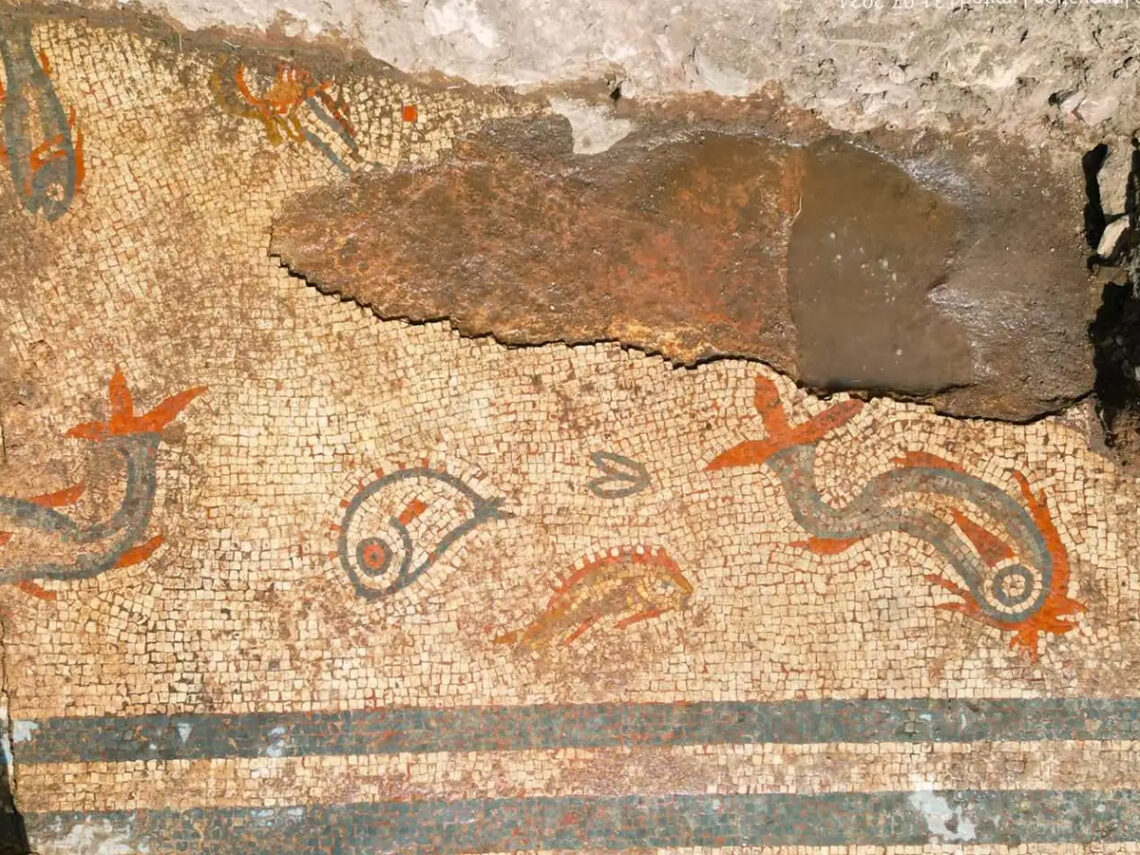
The artefact seems to depict sea life, with several orange and grey fish-like creatures featured in the mosaic. “The mosaic is a truly lovely thing and it was a joy to watch it being uncovered and cleaned,” commented co-director Dr Peter Guest, “like looking at a 2,000 year-old aquarium frozen in stone.”
The mosaic is believed to have come from a rich family’s townhouse, likely dating back to the second century. In a press release from one of the archaeology companies involved, Vianova Archaeology, it was suggested that the mosaic may have remained due to remodels in later centuries.
The excavation team, made up of 30 archaeologists, also uncovered part of a shrine or mausoleum and a public building. Guest, the project manager of the excavation, declared it a “privilege” to be invited to take part by English Heritage.
“What we found this season surpassed all our expectations – no one would have thought that Wroxeter’s Roman remains survive so amazingly well here, or that we should see phenomenal archaeology in each of our trenches,” he commented. He also noted how many members of the public came to visit the site.
Dr Roger White from the University of Birmingham, who also co-directed the project, stated that it was “enormously exciting” to be involved in the excavation. “It is extremely rare to find both a mosaic and its associated wall plaster,” he shared, “And nothing like it has ever been found at Wroxeter before.”
The third co-director, Mike Luke of Albion Archaeology, added that it was a “pleasure” to work with volunteers from English Heritage. “Partnerships between commercial archaeology organisations like Albion Archaeology and research/training excavations are surprisingly rare in Britain,” he added, “But the benefits of such ventures are huge for all partners and participants.”
His statement clearly supports the latest excavation venture in Shropshire. The project’s success may well spark more archaeology partnerships and more discoveries like the aquatic mosaic.
