


Anne Charlotte Robertson: cinema as a diary

For decades, female writers have kept diaries, from Anaïs Nin to Audre Lorde and Sylvia Plath, revealing their innermost desires, turmoils and everyday experiences. These chronicles of female subjectivity reveal what we are often forced to hide, exposing the simultaneous beauty and ugliness of womanhood. From illness and death to sexual encounters or time spent with friends, diaries act not only as an individual time capsule but also as a form of catharsis.
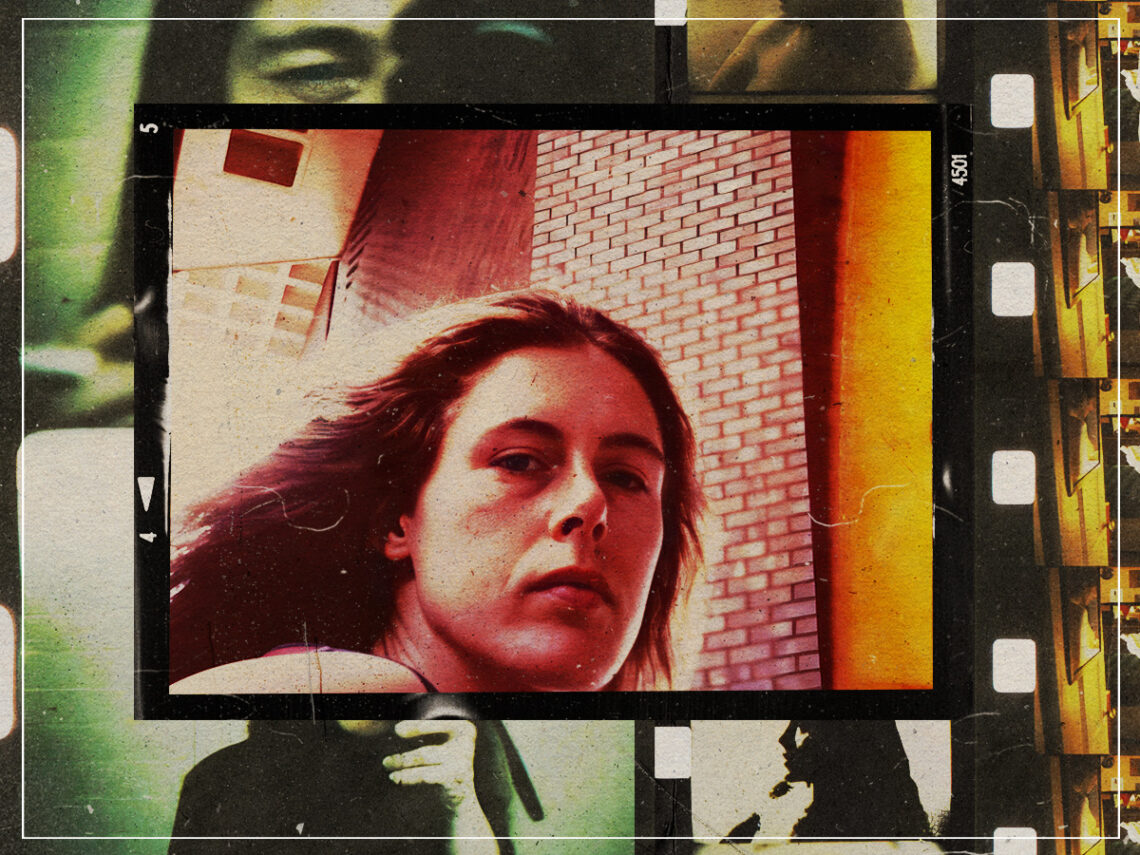
For Anne Charlotte Robertson, diaries became her main form of survival as she battled severe mental health issues, including eating disorders and manic depression with schizoaffective tendencies. However, rather than using pen and paper, Robertson documented her adult life with a Super 8 camera. While studying at the University of Massachusetts Boston, Robertson began making short films such as Pixillation, an abstract self-portrait, moving between clips of her face, time-lapsed images of the sky and a towering brick monument.
She also made the shocking short Suicide in 1979, an intense response to her suicidal thoughts. Roberston explained: “I made a film about suicide illustrating some of the ways I thought I’d kill myself, and literally edited it in about an hour and a half and screened it, and as I watched the film, the suicide voices stopped in my head and they haven’t come back since.” For Robertson, her camera became a saviour, a way of processing her rich inner world.
Soon, she started documenting her everyday life, filming herself as she experienced breakdowns, love affairs, tender moments, heartbreaks and more. The best word to describe much of Robertson’s work is radical. Although she wasn’t the first filmmaker to use her camera as a diary, she took a unique approach with the way in which she openly expressed her mental health struggles while highlighting the typically unseen elements of female life. Her 1997 work Five Year Diary is Robertson’s main accomplishment, with a runtime of 2,160 minutes. Filming began in 1981 and consisted of 83 reels of Super 8, much of which she added voiceovers to, describing the events we see on screen. Sometimes, these vocal additions clash with the audio attached to the videos, resulting in a chaotic merging of emotions that reflect Robertson’s mental state.
Through her bold documentation of herself in varying states, Robertson gives herself full agency, putting the complexities of (female-experienced) mental illness on full display. For many viewers of Robertson’s work, solace can be found in her vulnerability and incredible perseverance. She was self-aware, using the camera as a tool for change in her own life, later stating that by documenting her emotions and obsessions, she helped to cure herself of her depression.
At screenings of her films (Five Year Diary has only been screened in its entirety a handful of times), Robertson exhibited and encouraged viewers to look at her written diaries. She wanted people to immerse themselves in her world, creating a homely space to exhibit her reels rather than in a traditional cinema or gallery.
Besides her Five Year Diary, Robertson recorded other excerpts of her life, such as Depression Focus Please, which she once stated was “sufficient to vignette the nuances of my sadness.” The short movie is one of the most poignant depictions of depression, with Robertson’s impassioned voiceover asking, “How could I want to kill myself when everything is so darn beautiful?” She records cars and streets as she muses, “Everything looks kinda dirty to me… I feel all tangled.” A mess of contradictions, fuzzy images of unexpected beauty and vulnerable declarations of the harsh realities of suffering from severe mental illness, Depression Focus Please is an incredibly honest snapshot that will certainly never leave the viewer.
In a way, Robertson’s videos acted as a precursor to the vlogging phenomenon that defined the internet in the 2010s. Yet, that would almost be an insult to Robertson’s craft. While she filmed herself doing the mundane, propping up the camera to capture herself and another person eating or talking (as many vloggers do), Robertson edited her reels together with great artistry. The thick 8mm grain gives every frame an air of nostalgia, with each image precisely weaved one after the other. There’s no self-indulgence in Robertson’s practice despite being the main subject of her work. Instead, Robertson opens herself up with both humour and sadness, and the camera becomes her companion and guide.
