


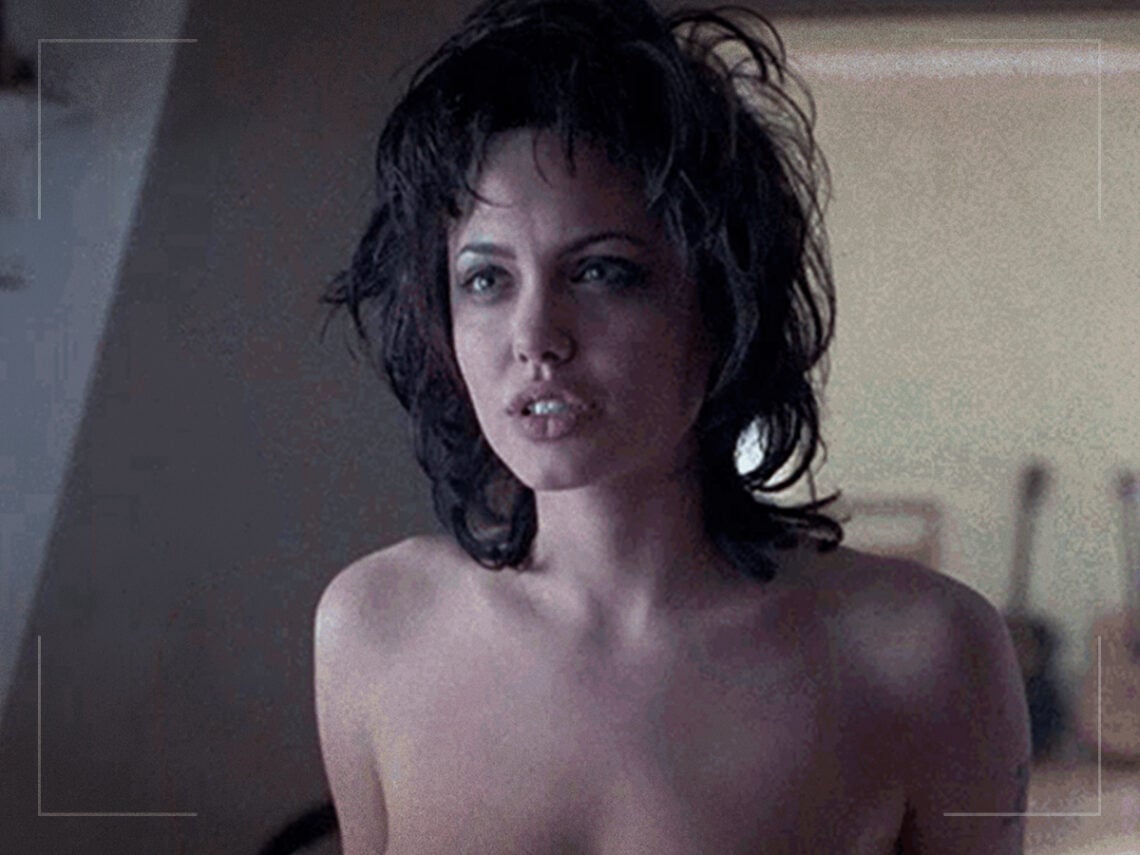
“It was a really sad time”: Angelina Jolie’s 1998 breakthrough movie was almost her last

There are actors in every generation who, usually due to a combination of factors, seem to be elevated to a genuinely scary level of fame. That mix of aesthetics, a hint of danger, sex appeal and talent is like crack to the world’s press and public, and nobody embodied it quite like Angelina Jolie in the late 1990s.
Jolie was never going to have what might be classed as a ‘normal’ upbringing given she was the daughter of 1960s Oscar-winning actor and legend Jon Voight and his actor wife Marcheline Bertrand, but even still she had to deal with feeling like an outsider due to a strange mix of having a film star father but living with her estranged mother with less money than the wealthy students at her Beverly Hills high school.
That led to her leaning into going fully goth, engaging in darker acts like knife play, self-harm and abandoning the acting classes she’d been taking, instead aspiring to work at a funeral home and practising embalming at home. By the end of her teens, she was an insomniac, had attempted suicide, used heroin and been admitted to a psychiatric ward.
All of that was about as bad a preparation for what was about to happen to Jolie as it’s possible to imagine. As her 20s began, she started to take on some more movie roles in films like the geeky thriller Hackers, where she met her future husband in Jonny Lee Miller, and several other mostly ignored films, including one called Playing God with The X-Files’ David Duchovny, who was a big name at the time.
But by 1997, she had shown genuine ability in a TV movie called George Wallace about a racist Alabama governor which earned her a Golden Globe win, and the following year she signed up to play a supermodel in a real life TV movie for HBO called Gia, a role which prompted her to examine many of her own issues, and which she found incredibly hard to deal with afterwards.
Jolie spoke to Rolling Stone at the time and talked about how she dealt with taking on the part of Gia Carangi, who died at just 26 after heroin addiction, saying, “That was a really bad time, because I didn’t think I had that much more to offer. I didn’t think I could balance my life, and my mind, and my work. I was also very scared of getting public after doing that part and seeing how undernourished her private life was, how malnourished she was, though her exterior was very glamorous.”
She elaborated about her fears of loneliness and not having a fulfilling private life, adding, “So, I’d be working and doing interviews, and then going home by myself and not knowing if I’d ever be in a relationship or be really good in my marriage or be a good mother one day or if I’d ever be… I don’t know, complete as a woman. It was a really sad time.”
Despite that, Jolie felt that it was an important part to portray, allowing her to have something of an everyday life that she juggled with attending university in New York and commuting into the city every day. When the film was released in 1998, it proved to be another success for the young actor, as she picked up a second consecutive Golden Globe for ‘Best Actress’, and it sparked a period in which she became critically and commercially huge, receiving a ‘Best Supporting Actress’ Oscar in 2000 for Girl, Interrupted.
During the next decade, Jolie became probably the most famous female actor on the planet, in part due to a volatile marriage to Brad Pitt, a frenzied relationship with Billy Bob Thornton, plus a number of box office hits including the Lara Croft Tomb Raider franchise, Mr and Mrs Smith, Wanted and Clint Eastwood’s Changeling. In more recent years, she has started directing films in addition to starring in them, and this month appears in Couture, about an American filmmaker attending Paris fashion week while battling her own health issues, mirroring Jolie’s personal fight with cancer.
