


Ángel Manuel Soto on ‘The Wrecking Crew’ and indulging his inner child: “It was the most fun I’ve ever had”

It’s a massive oversimplification of events, but it’s not inaccurate that director Ángel Manuel Soto’s The Wrecking Crew started life as a tweet, albeit one that he had nothing to do with.
In 2021, Dave Bautista hit ‘send’ on a post telling the world that he wanted to co-star in a Lethal Weapon-inspired buddy action comedy alongside his Dune and See co-star and friend, Jason Momoa. Four years later, that very movie premieres on Prime Video on January 28th, 2026.
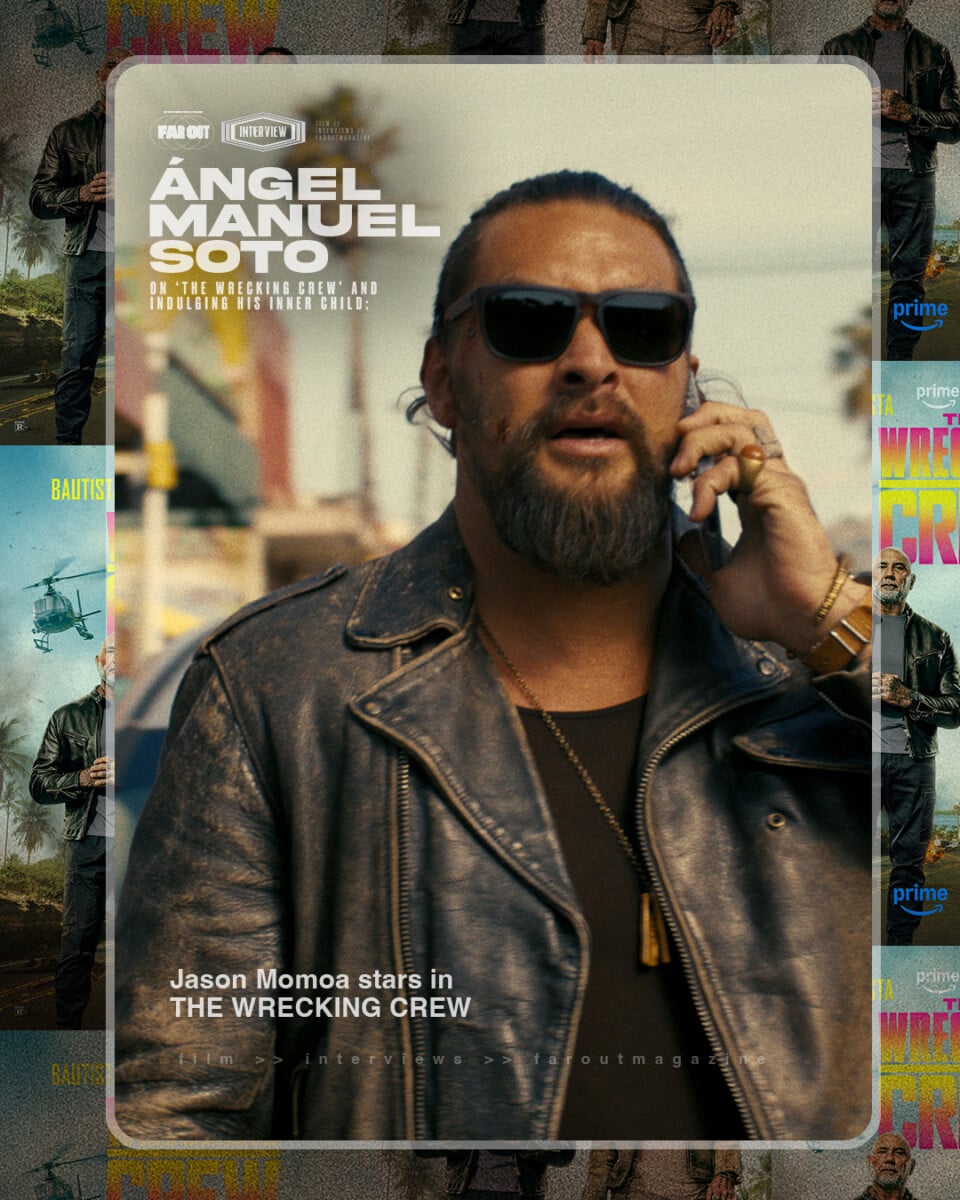
A throwback to the glory days when manly men kicked ass and took names while trading barbs and dropping quips, Bautista and Momoa lead the cast as James and Jonny Hale, two estranged half-brothers reunited after the death of their father, who wasn’t someone they had a lot of time for, either together or separately.
The former is a happily married family man and high-ranking military officer, while the other is a hard-drinking, hard-living cop with a penchant for punching faces first and asking questions later. Prowling the streets on their home turf of Hawaii, the siblings discover that their old man’s death may not have been a hit-and-run accident after all.
As you’d expect, there are fistfights and shootouts aplenty, with The Wrecking Crew harking back to the 1980s, when two stars and their charisma were more than enough to carry a picture. It’s a passion project for its two leads, but Soto, who broke out with his acclaimed 2020 drama, Charm City Kings, before helming the blockbuster comic book adaptation Blue Beetle, didn’t come aboard until August 2023.

As it turns out, he was completely oblivious to the tweet that got the ball rolling. “I was doing post-production on Blue Beetle at the time, and my agent sent me a script by Jonathan Tropper, and I read it, and I thought it was amazing. I met with the producers. That’s when I found out about the tweet,” he told Far Out.
“After I had read the script, I had no idea about that tweet, but it was really, really exciting to see how an idea that came out of a simple tweet could be manifested into this amazing movie and a great opportunity of my career, and it resonated with me,” the filmmaker elaborated. “So after meeting with them, with [producer] Jeffrey Fierson, and I had that meeting with Momoa and Bautista, they saw the movie, and they saw me fit for the project, which I’m eternally grateful for.”
In addition to being the originators of the project, Bautista and Momoa are also producers on The Wrecking Crew, with the script penned by the aforementioned Tropper, who worked with them both on Apple TV’s sci-fi series, See. That made Soto something of a newcomer among a trio of friends and collaborators, but he was instantly made to feel at ease.
“It made perfect sense to me that they will be those characters,” he acknowledged. “And one thing that did help, to your point, is that, because they have worked together before, we tailored those characters to their personalities, and after meeting them in real life, it just felt like it was exactly right for them.”
This being an action flick, “a lot of who they are is, of course, elevated and exaggerated,” but Solo relished the opportunity of taking these two actors who’ve become increasingly synonymous with the genre, and being given the chance to “shepherd them into tapping into a vulnerability that’s rarely explored.”
With his background in intimate drama, the Puerto Rican native was “coming with that sensibility of digging into the emotions of the characters as the principal connective tissue,” while the action-packed Blue Beetle gave him the grounding required to allow the set pieces and humour “to play even louder than it was on the page.”
“During that whole cooperative effort, it was all a symbiotic relationship of finding our strength, recognising our weaknesses, and building each other up in this process,” he added. With that in mind, while it’s very much a big, broad genre film, The Wrecking Crew‘s main focus is on family.
Not just through the fractured bond between the Hale brothers, but also the role their father played in their lingering trauma. The more they investigate, the more catharsis they find after discovering that perhaps he wasn’t the self-serving man they’d always believed him to be, which helped Soto to ground his two stars in among the high-stakes set pieces and adrenaline-fuelled sequences.
“I think that’s what was really done and felt effortless was that the whole process of the plot development, I always saw the plot as perfect,” he agreed. In addition, a subplot revolves around how the greed and corruption of those in positions of power threaten to destabilise and devastate a local indigenous community, something that the director readily identified with.
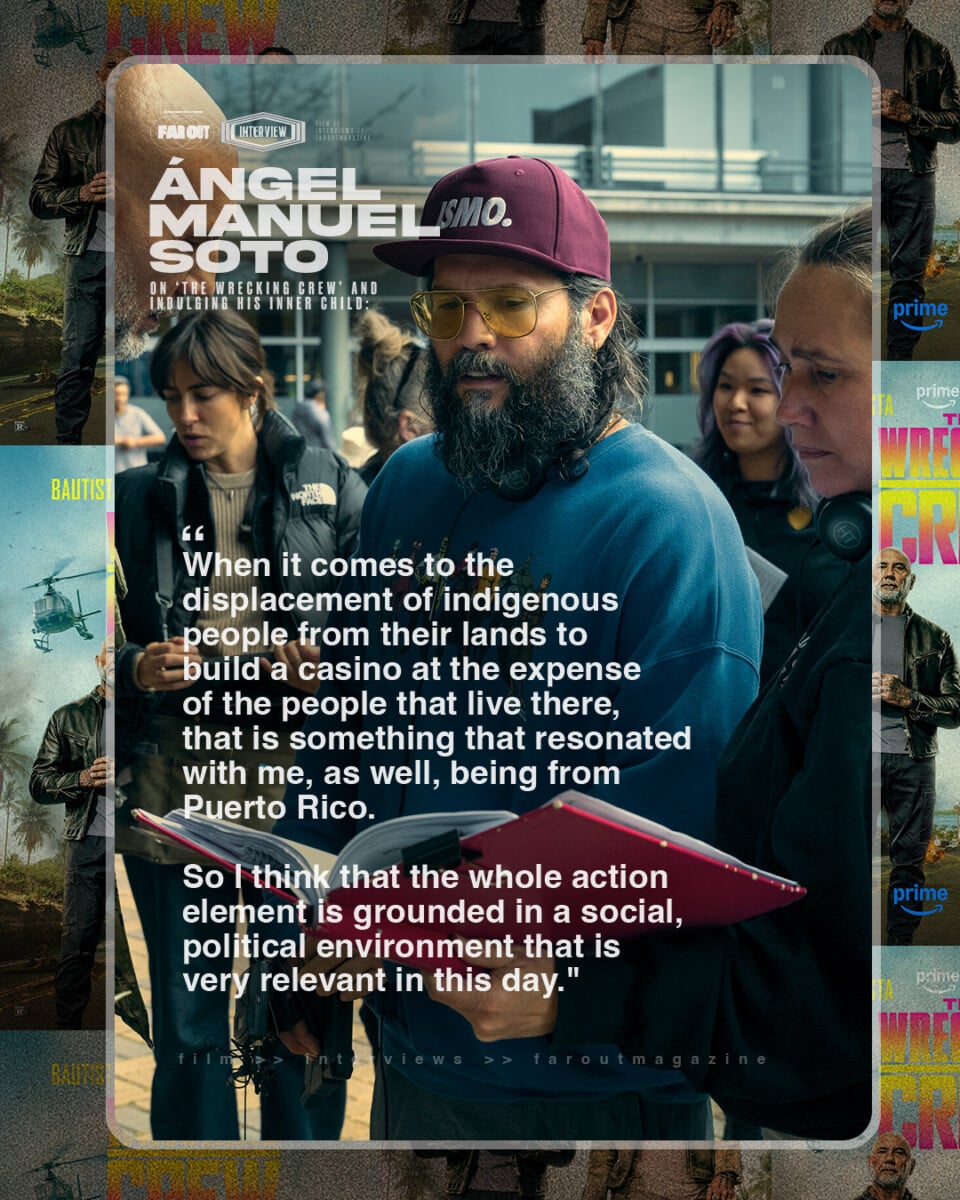
“When it comes to the displacement of indigenous people from their lands to build a casino at the expense of the people that live there, that is something that resonated with me, as well, being from Puerto Rico,” he explained. “So I think that the whole action element is grounded in a social, political environment that is very relevant in this day.”
Beyond that, Soto saw the whodunnit side of the narrative as “a perfect excuse for these two estranged brothers to finally confront their childhood traumas and start a path of healing.” That might sound heavy for a buddy caper, but Bautista and Momoa’s brothers resolve their differences the only way they know how: by knocking lumps out of each other.
“There is that subtextual element that does spark in that cathartic moment when they fight, when they have to, like, beat the shit out of each other in order to say, ‘I’m sorry.'” Soto offered. “And for me, it was very important that the whole thing was linked to that moment, because that’s where the characters heal, and we want them to get along. We want them to fix the wrongs.”
Dropping a sneaky hint for his preferred outcome, he even suggested that the audience should “want them to move forward and make amends so that we can see this wrecking crew evolve in the sequel.” It’s not often that you can call two guys with Bautista and Momoa’s dimensions “manifestations of their own trauma,” but that’s definitely the case here.
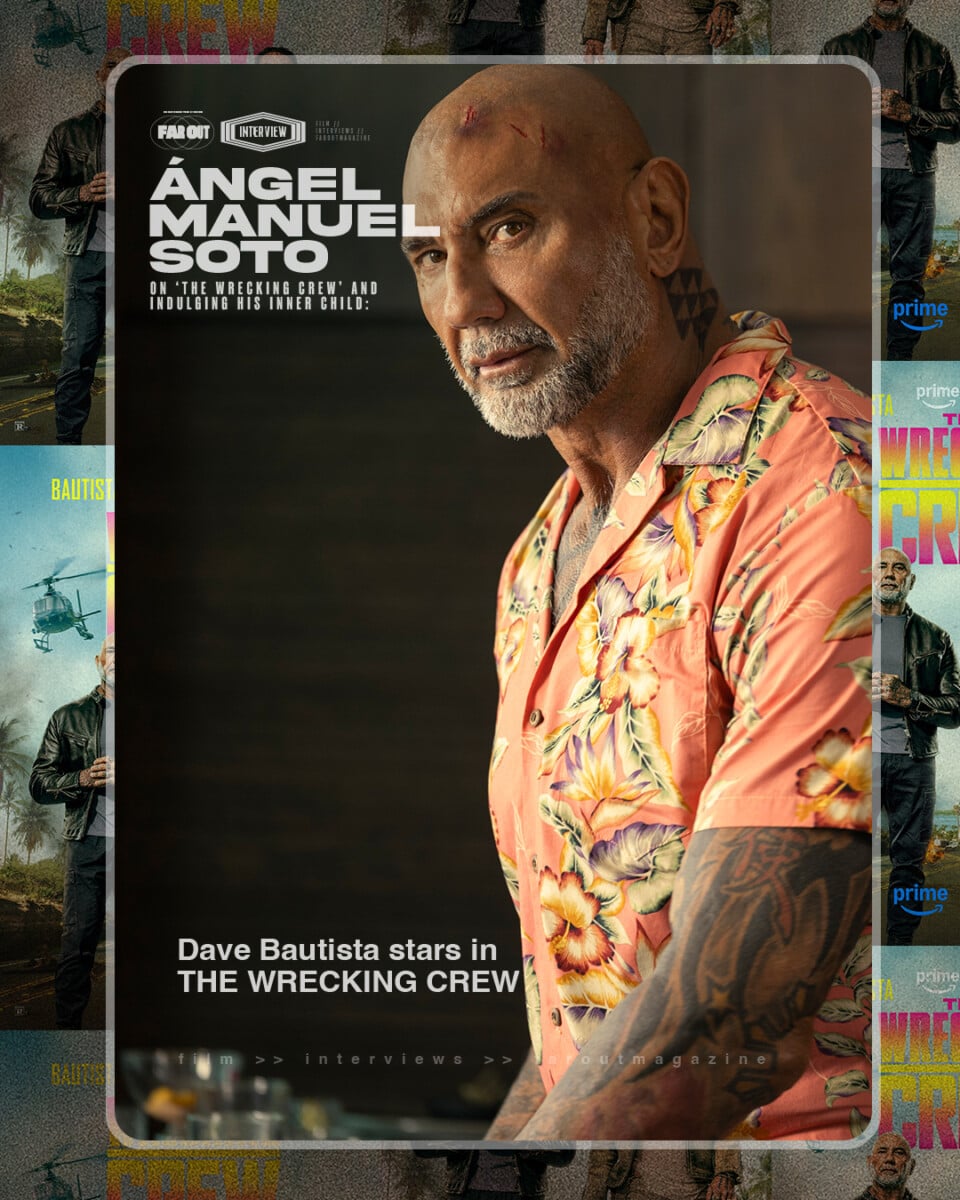
When the Game of Thrones alum described an early iteration of what became The Wrecking Crew, he surmised of himself and his wrestler-turned-actor colleague that “He’ll be grumpy, and I’ll be charming.” That’s 100% accurate, but Soto didn’t want his protagonists to come off as one-note caricatures.
“We understood that Jason’s character is one of a more nihilistic understanding when it comes to the relationship, and Dave’s character is being a little bit more straight and militant about it. And ultimately, yes, that’s where the humour comes in.” However, he didn’t want laughs without at least some sense of pathos.
“They also understood that deep inside those behaviours are masks that they’ve built up for 20+ years to protect a child that has been hurt, and when all that stuff came into play, it was really nice to see their relationship on a personal level, they love each other in real life,” a surprising psychological wrinkle for a movie of this ilk. “I think it felt very organic, because even though, as brothers in the movie, they don’t get along, they’re still connected by blood, right?”
“There’s a familial love that exists, even if you’re at odds with your family, that ultimately drives them to have a resolution. So them being able to be honest and tap into that vulnerability, I think, allowed for everything to sing even better, because it felt so organic.”
Ángel Manuel Soto
As mentioned earlier, Bautista name-dropped Lethal Weapon as being key to his vision for what was then an entirely hypothetical buddy movie opposite Momoa. Fortunately, Soto is also a huge fan of the genre’s ‘Golden Age’, and there were plenty more titles playing on his mind while he was shooting The Wrecking Crew.
“Midnight Run was one of the movies that me and the producer talked a lot about. Running Scared, we always talked about, like, the ending of Running Scared, how great it is,” he began. “48 Hrs. We always liked the relationship in 48 Hrs, especially when Nick Nolte and Eddie Murphy start to beat the shit out of each other. We wanted to have our brothers beat the shit out of each other.”
Of course, no mention of buddy inspirations is complete without Richard Donner’s classic. “When it comes to Lethal Weapon, I just love that movie, as amazing as it is, and I think it’s really the shoulders we stand on in this movie,” Soto confirmed, especially the arc of Mel Gibson’s Martin Riggs.
“He’s very dark, he’s suicidal, hopeless, and he’s dealing with his own trauma, and by the end of the movie, he found a new family, he found hope,” the filmmaker continued. “And that character arc in Lethal Weapon was one of our north stars for us to follow, because we wanted this action-packed movie that’s so fun, it’s explosive, it’s entertaining, it’s funny.”
He wanted “the heart to be the essence of the movie,” and the ability to “honour the movies from the past” while still finding a way to make it both a modern update and his film, was something that Soto “found very exciting to explore.” Lethal Weapon casts a long shadow, and instead of running away from it, The Wrecking Crew sprints directly toward it with its arms outstretched.
One of the easiest ways to pay tribute to the action classics of days gone by is also one of the simplest: using practical effects and tangible action. It’s 2026, so there is CGI involved, but Soto never had any intention other than keeping the movie’s biggest action beats as in-camera as possible.
“100%, those movies from the ’90s and the ’80s, they did everything practical,” he agreed. “It’s almost like the danger feels more relevant. And, you know, after doing Blue Beetle, which we did, almost everything practical, a lot of the explosions and everything had to be, you know, we couldn’t blow up a 500-year-old building! So a lot of the effects had to take place in order for us to do that.”
“I was like, ‘Man, I’ve never had an action sequence with a helicopter’. I’ve always wanted to do that. For me, was very important that this movie lived in the spirit of the movies from the ’80s and the ’90s, but that it has a modern edge to it.”
Ángel Manuel Soto
To that end, Soto wanted to ensure that each of those set pieces had its own flavour, whether it’s a close-quarters opening brawl with dizzying camerawork that opens The Wrecking Crew, to a climactic third-act showdown that has shades of everything from Mission: Impossible to Jason Bourne, and working with someone he knows and trusts made those complicated scenes that little bit easier to capture.
“I work closely with Jon Valera, who is our stunt coordinator, and he was the second unit director for this movie, and we have worked in the past on Blue Beetle,” he illustrated. “We’ve always had this understanding that action needs to also explore character. I think action needs to be part of the story.”
Not that he isn’t aware of the economic realities, noting that “the explosion and the spectacle is going to be as big as the budget allows it to be,” but The Wrecking Crew sought to maintain a character-first approach, even when the bullets start ricocheting, and the debris begins flying.
“What makes it memorable is that you learn more about the characters when you go to the action. And the action, the way we designed it, was that we wanted to see how Jonny’s fight will be, how James’ fights will be, and how, once they start working together, the first time is hyper chaotic,” Or, to put it plainly: “They don’t get along.”
As a result, “they put each other in danger because they’re just starting to work together,” but as the story progresses, and they have that knock-down, drag-out brawl that finally brings them together, Soto was determined to have the grand finale “bring a resolution of what teamwork would look like when they are actually of the same mindset.” In layman’s terms, it’s bad news for the bad guys.
“Jon and I often talked about how we can have fun doing it, play the homages that we want to do, hit the beats of brutality that I wanted to hit, but at the same time, tell this progression of what two guys who don’t get along could be when they’re in sync.” Again, it doesn’t end well for anyone who gets in their way.
Having covered the three acts of The Wrecking Crew, and without wading into spoiler territory, it only felt right to look at the next act of Soto’s career. After all, he mentioned Indiana Jones as a franchise that had a huge impact on him growing up, but did he ever imagine that with Blue Beetle, his latest feature, and his upcoming video game adaptation, Just Cause, that he’d be one of the people making these blockbuster-sized adventures himself?
“Man, never in my wildest dreams,” came the honest answer. “It’s one of those things that I always loved watching that I could only dream of, and I don’t even think I allowed myself to dream. For whatever reason, I never thought that a kid from Puerto Rico would ever have this opportunity to fulfil his dream.”
That dream began as a kid “playing with toys and Legos and Hot Wheels,” and he manifested the shit out of it on The Wrecking Crew. “That whole highway sequence, it was designed playing with toys,” Soto revealed. “Like the whole thing! It was like the most fun I’ve ever had, because it was like tapping into my inner ten-year-old.”
“I was continuously thinking, ‘Man, if that little boy knew that one day he was going to be able to manifest that into a screen’. I would love to tell him that everything is going to be OK and that is going to happen.”
Ángel Manuel Soto
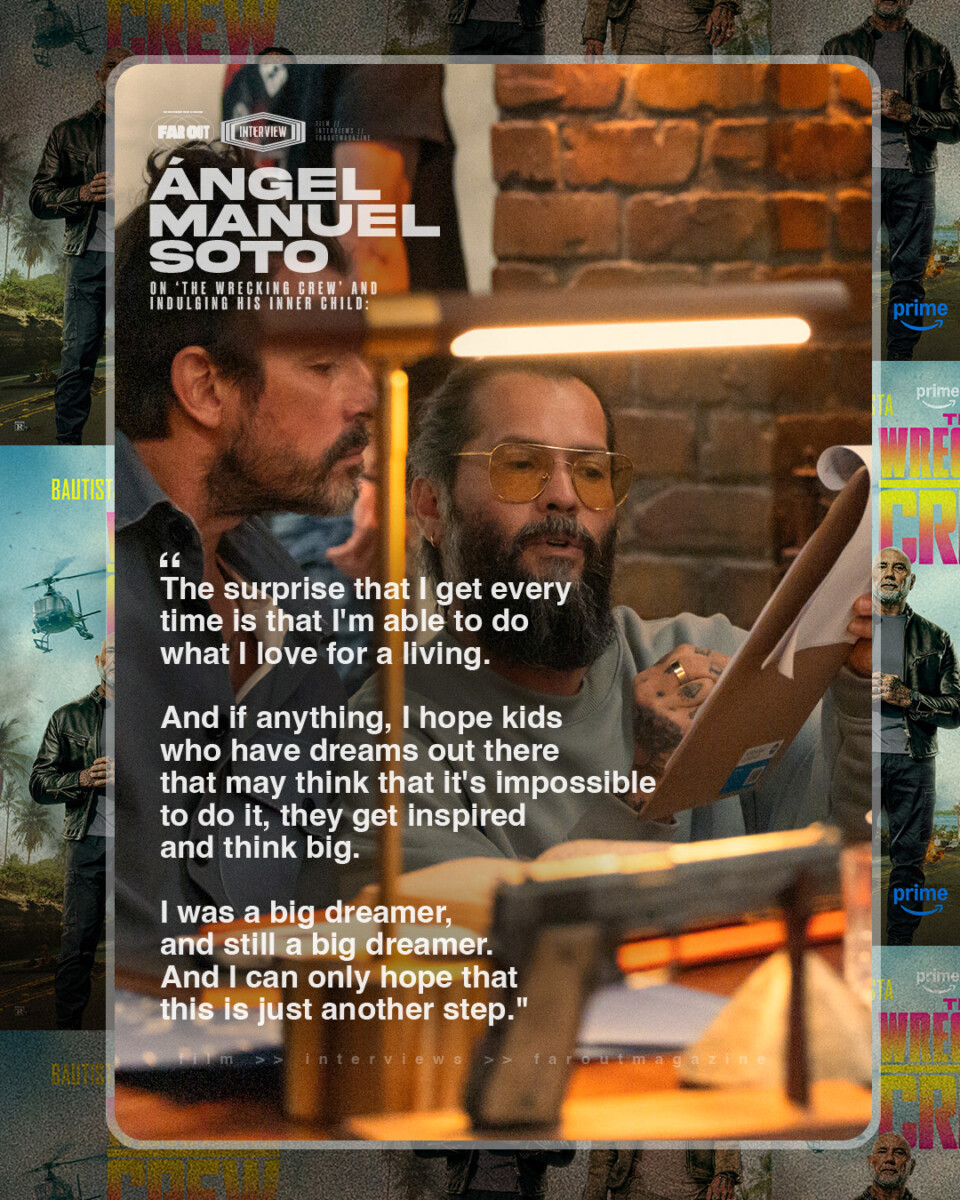
It’s his career, but he still can’t quite seem to wrap his head around it. “The surprise that I get every time is that I’m able to do what I love for a living,” Soto confessed. “And if anything, I hope kids who have dreams out there that may think that it’s impossible to do it, they get inspired and think big. I was a big dreamer, and still a big dreamer. And I can only hope that this is just another step.”
“Dreaming is good,” he concluded, with an important life lesson for added measure. “I remember there was this kid at school who used to do a lot of wrestling, and everybody would be like, ‘Stop playing! Stop playing with that shit! Pay attention!’ Man, playing is good. Let the kids play, because that’s what I’m doing; I’m playing.”
