


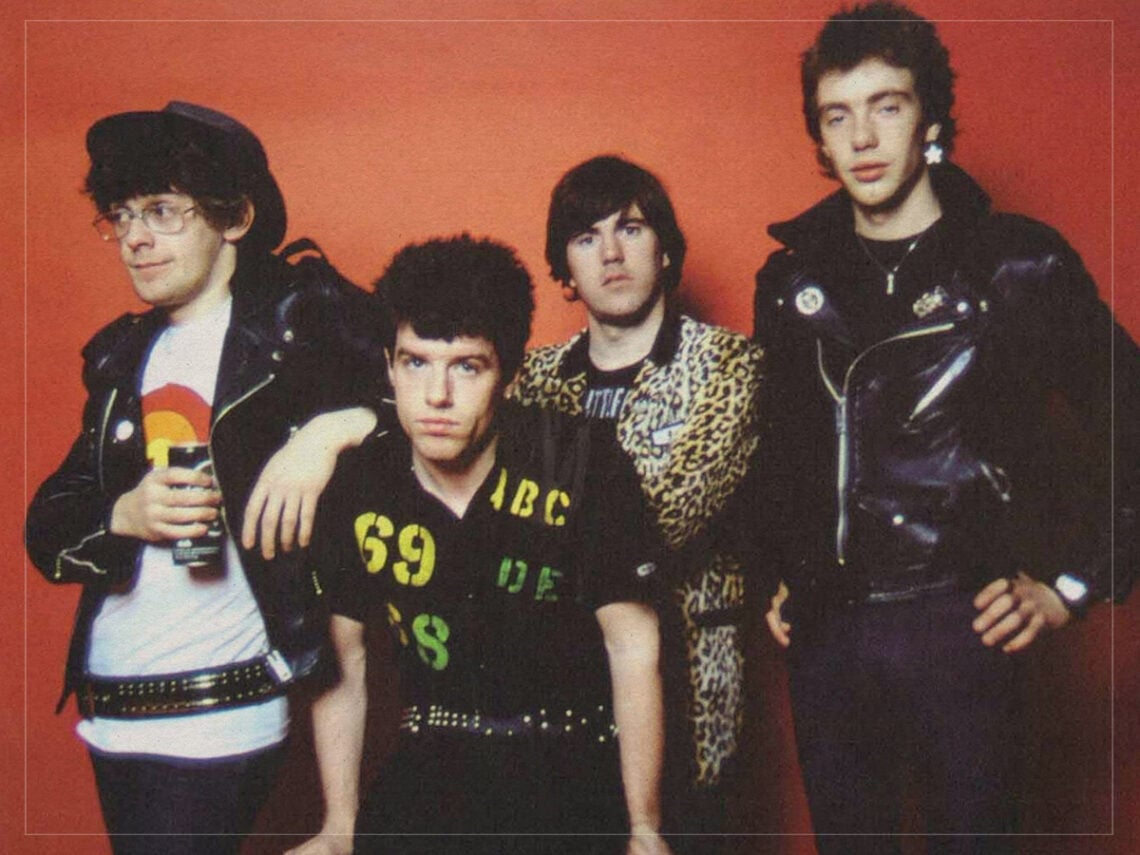
‘Alternative Ulster’: The history of punk’s most important anthem

Despite the sectarian violence engulfing Northern Ireland entering its tenth year by punk’s lightning bolt, only Belfast’s Stiff Little Fingers truly tackled the Troubles so politically head-on during the conflict’s dark days.
There had been some well-meaning if lacklustre efforts from the likes of Paul McCartney, John Lennon, and, believe it or not, Boney M in attempting to offer a musical solidarity that came off as either crushingly naïve or paternalistically trite. Even among the province’s big musical exports, The Undertones eschewed any overt lyrical tackle of the political situation, and Van Morrison wrote romantic longings of a time before ‘flags and bombs’, but always tethered to an escapism indirectly touching on the febrile reality without pointing out explicit targets.
It was Stiff Little Fingers that bottled the reality on the ground. As well as the social malaise and economic downturn plaguing the rest of the UK, such a listless fug was compounded by the complete shutdown of youth activity across Northern Ireland, a dismal drag of perennial curfews, closed-down pubs and cinemas, and a grim unemployment crisis only exacerbating the claustrophobia.
Such a lack of purpose yielded an easy recruiting pool for Republican or Loyalist paramilitaries, offering community and identity to a youth increasingly unsure of its future.
The kids were bored. Already with their debut single ‘Suspect Device’ in the can, Stiff Little Fingers were approached by Alternative Ulster zine for a possible flexi-disc freebie with the magazine. Prompting to pen a number for the giveaway, frontman Jake Burns poured all the fatigue and ennui casting its leaden mire amid the city’s tanks and army barracks for the likewise titled anthem to Belfast youth’s desperate tedium of a conflict snuffing out all the fun to be had.
As ever, it took BBC Radio 1 DJ and tastemaker John Peel to lend Stiff Little Fingers some serious momentum with his incessant spin of ‘Suspect Device’. Before long, Island had funded the band to record some demos in London under the production guidance of Ed Hollis, the elder brother of Talk Talk frontman Mark, a cluster of session material was cut, lacking the representation of the band’s live sound and forcing Island to bow out last minute.
In came Rough Trade. Under pressure for a single follow-up, Stiff Little Fingers’ co-manager Gordon Ogilvie managed to get his hands on the Island demos, and the new label funded a remix of Burns’ fanzine response. Eventually dropped in May 1978, ten months ahead of their Inflammable Material LP debut, ‘Alternative Ulster’ would swiftly leap onto the Northern Irish songbook as a punk classic, as well as Stiff Little Fingers’ defining anthem to broiling frustration at the conflict’s entrenched stasis across their generation’s prospects.
The single cover said it all. Snapped by Milton Haworth, the comic clash of a British squaddie armed and crouched behind a wall underneath a child laughing at the absurdity couldn’t have expressed Stiff Little Fingers’ raw yet irreverent take on The Troubles any sharper. Amid a dismal gloop of cloying and po-faced pop attempts to explore the conflict, ‘Alternative Ulster’ stands tall as a slice of punk fury, bottling all the rage in equal parts mordant humour and seething lyrical reportage.
“We do an outdoor show every year in Belfast,” Burns revealed to The Guardian in 2025, reflecting on their standard’s enduring power. “We always finish with ‘Alternative Ulster’ and it’s such a unifying call. I find it so pretentious when you say stuff like this – but when you stand on the stage and watch the audience’s reaction, it’s humbling.”
