


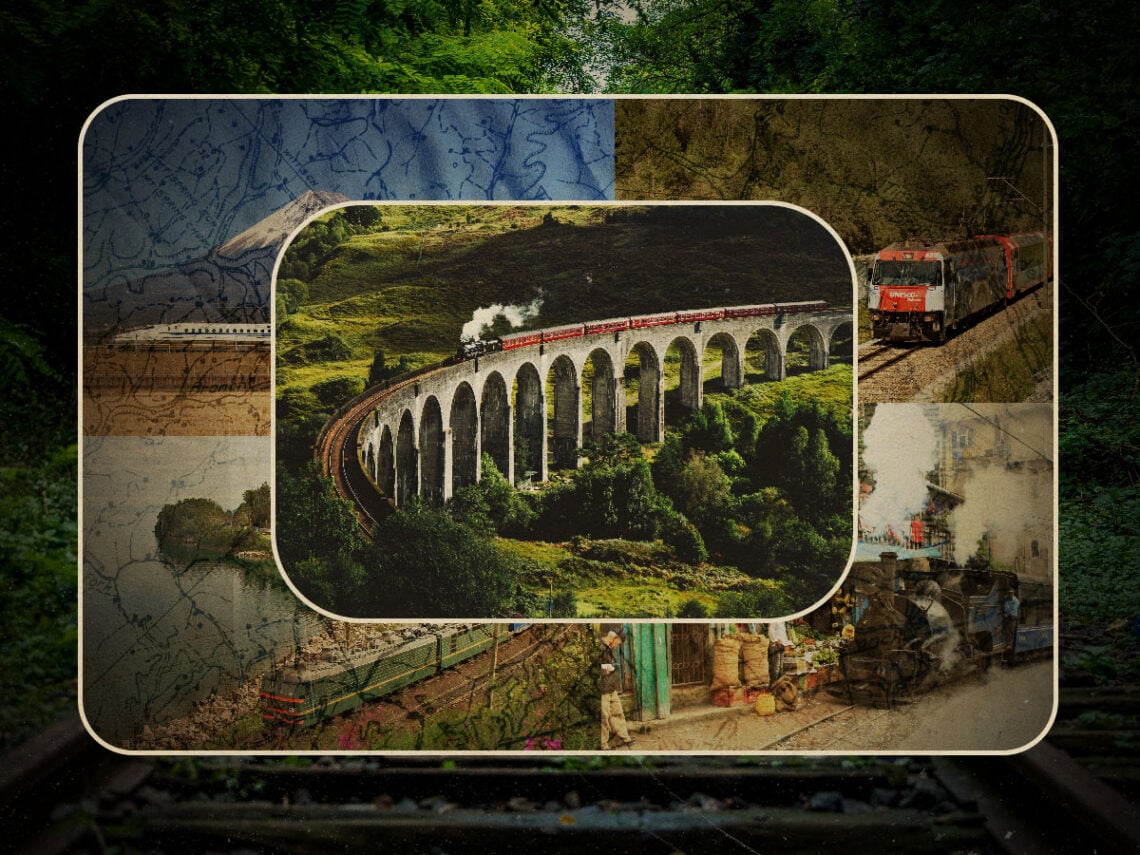
The beauty and poetry in foreign rail travel

There’s something special, almost romantic, about rail travel abroad.
We’re not talking about leaves-on-the-line tannoy announcements on a Virgin CrossCountry, or the hurried, head-down shuffle on the Tube, or even the overcrowded, last train out of Paddington that reeks of Burger King. The beauty of foreign rail travel lies in the grand, sweeping cinematic vistas and the long-haul carriages that carry you across huge, vast expanses on ageing chunks of steel.
When you’ve grown up with the British rail network, it’s fair to say that nearly anything that actually turns up within ten minutes of its departure time feels exotic. Travelling around the sceptred-isle serves us up a familiar routine of late trains, polite queuing on the platform edge, seat reservations not working, and passive-aggressive tuts when people’s music is too loud. We might have invented the railways, but history, as well as our geography, has left our infrastructure functional but archaic.
On foreign soil, trains aren’t just functional; they’re transformational, and the mythology around Japan’s Shinkansen has propelled them to world-renowned status, almost like they’re the Concorde on tracks, where a trip on it isn’t about the destination but the journey.
With the train mirroring its nation’s attitude to engineering, perfection and punctuality, they are precise, departing on the second and never late. Your seat rotates to face the direction in which you travel, and the big windows turn the passing countryside into a work of art. The sight of Mount Fuji appearing on your left as you barrel towards Tokyo is something that you’ll remember forever, and then you arrive, with the train, oh so quietly, coming to a hushed stop at your destination.
The Japanese might have invented high-speed rail, but in China, they’ve mastered it. Railways have helped industrialise China and turn it into a superpower, and they act as the lifeblood of the country, arteries that have turned what were long, overnight journeys between distant cities into quick, comfortable trips.
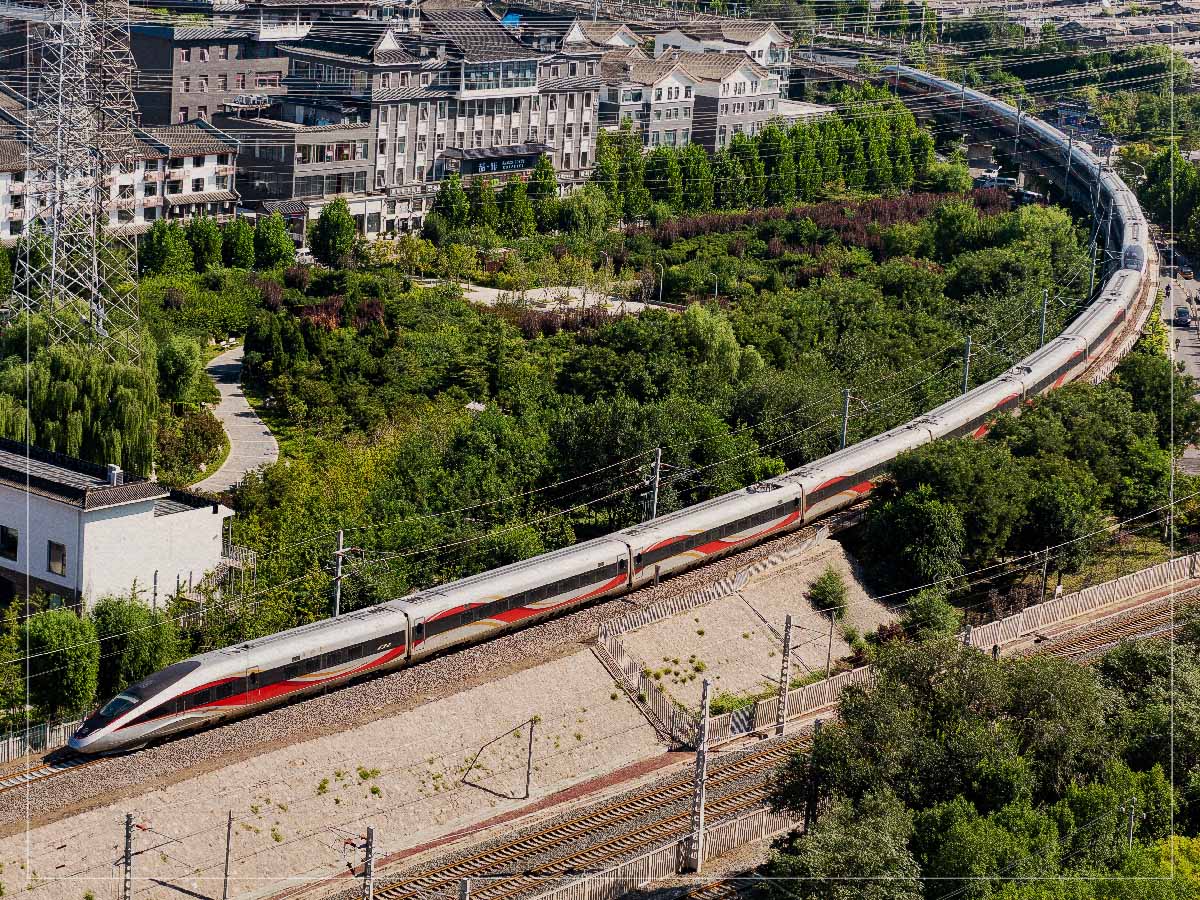
Train stations in China make Heathrow Terminal 4 look like a garden shed as these are huge cathedrals to the god of rail-power, bathed in shiny metal and glass. The train prices, even for first class, cost next to nothing, and you can even order KFC, McDonald’s, Starbucks or from an array of local chains to deliver you food at stops on your journey. Japan might have the reputation for having the best trains, but anyone who has done both will tell you that the Chinese cinch the crown.
However, sometimes you just want to go slow and enjoy the view, and in this department, with its vast landmass that relies upon its rail network, there’s something truly special about getting on board a sleeper train in Russia that’ll take you from Europe into Asia. Some of my favourite journeys have been in countries that were formerly part of the Soviet Union, such that I still reminisce over the fuzzy, lager-filled buzz of being in a sleeper cabin with friends, while slowly chugging across the moonlit Ukrainian countryside. I’ll also never forget watching the boundless plains of Kazakhstan, with seemingly infinite nothingness flashing past the window, with the loud beating heart of an old Soviet train, older than the country it is navigating, ringing out while old babushkas offer hard-boiled sweets.
In the Trans-Siberian Express, Russia has the ultimate train journey. This is the Francis Bourgeois version of watching Brazil play in the Maracana, with nearly 6,000 miles and over a week of continuous travel, across eight time zones from Moscow to Vladivostok underway.
While vast swathes of country are one thing, Europe’s mountains offer something different, as Switzerland’s Glacier Express, with its journey from Zermatt to St Moritz that sees peaks rise and fall, ravines crossed by viaducts and snow-capped mountains punctuating the trip.
It’s not just Europe, with Australia’s Ghan, India’s Darjeeling Himalayan Railway and Canada’s Rocky Mountaineer, all offering long, meandering travel, which firmly puts the journey itself at the heart of the story, with the destination merely a footnote. We live in a world in which air travel has become king, but as much as planes shrink the world, they obscure its beauty too.
Soaring about the clouds is quick, and driving a car gives you control in exchange for your focus, but rail allows you to sit back, immerse yourself in your scenery and watch the world go by at window height.
