


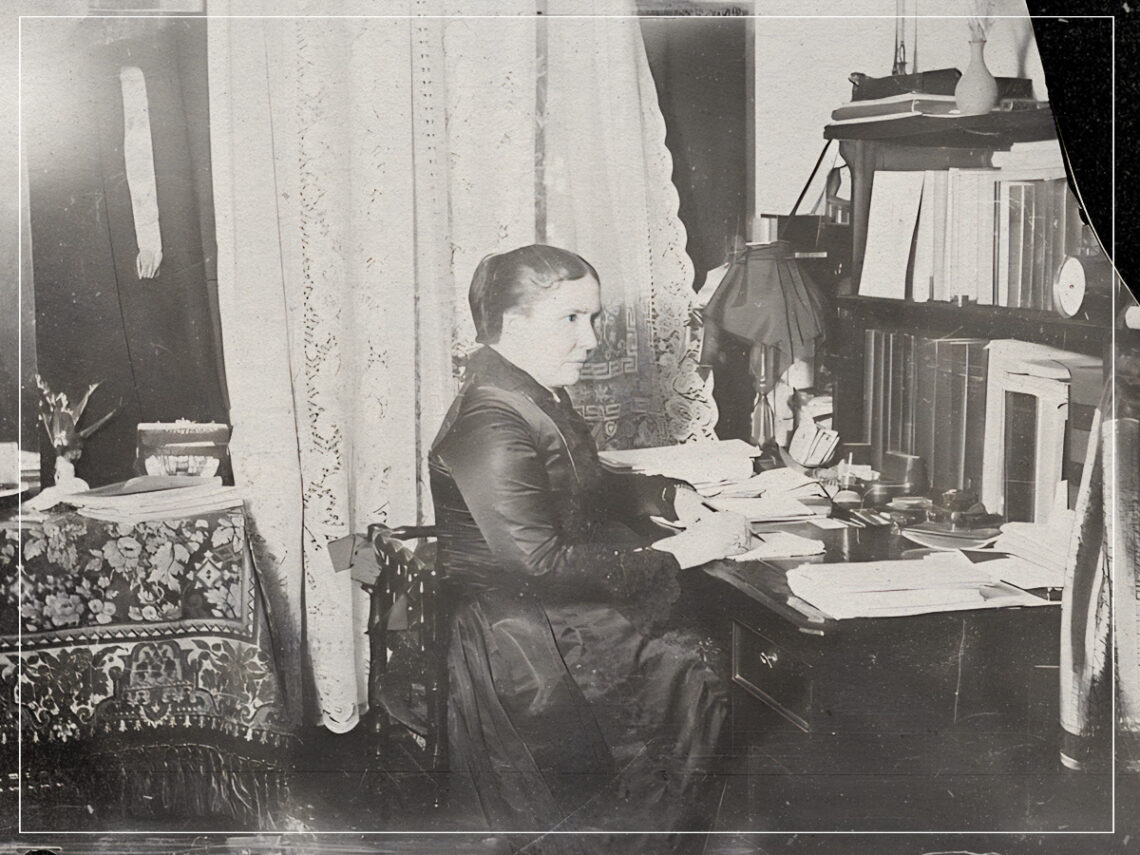
Alice Cunningham Fletcher: the daring work that preserved America’s true folk music

Folk music has an incredibly long and proud history in the USA, with the country producing some of the most talented and well-loved folk musicians the world has ever seen. However, it tends to be the case that the term ‘folk music’, within a US context, refers almost exclusively to music created and shared by white men. In reality, a wealth of incredible folk music was once at risk of being lost forever: the tribal folk music of America’s First Nations.
Within the numerous civil rights movements that have occurred across American history, from the women’s suffrage movement to the fight for Black American voting rights, the struggle of indigenous tribes is something that is often overlooked. From the foundations of Jamestown in 1607, colonial settlers set about the destruction of indigenous life and culture, something that was ramped up considerably in the 19th century through a policy of ‘manifest destiny’.
For hundreds of years, First Nations were massacred and displaced while white Americans set about the destruction of their lives and culture. From the mass cull of buffalos, which prevented tribes from continuing their nomadic lifestyle, to the outlawing of certain indigenous customs, the native population were absolutely decimated by colonialism. Soon enough, tribes were forced onto reservations, which completely undermined their tribal rivalries as well as their belief that land could not be owned.
Due primarily to the technology and sheer population of colonisers, First Nations in America were allowed to be largely destroyed with very little fuss. One of the few anthropologists striving to preserve the cultural landscape of indigenous tribes was Alice Cunningham Fletcher. She took a special interest in the indigenous way of life, working tirelessly in an effort to prevent that culture from being entirely eradicated, including the preservation of indigenous folk music.
It should not be forgotten that Fletcher was problematic in her own right; the scholar advocated the integration of indigenous children into a US capitalist society – a society which was completely at odds with the traditional values of First Nations – in addition to lobbying for the passing of the destructive Dawes Act of 1887, which further diminished the land of indigenous tribes. Nevertheless, it is likely that without her preservation work, a great deal of indigenous culture would have been lost.
For much of the latter part of the 19th century, Fletcher worked endlessly on educating herself about the indigenous way of life, even spending a period living with the Sioux tribe in 1881. Producing a vast number of reports and investigations centred around First Nations; she was also a pioneering force in the research and preservation of indigenous music. In fact, during the 1898 Congress of Musicians, she read numerous essays on the topic, and she also invited members of the Omaha tribe to sing traditional songs for the audience. Her 1900 book Indian Story and Song from North America, a seminal work within the field of indigenous musical research, transcribed many songs for the first time.
Despite the damage that Fletcher caused to the indigenous way of life through the Dawes Act and her desire to assimilate First Nations to a capitalist system, Fletcher’s work in the research of indigenous music proved absolutely vital to the preservation of their culture. Without her research, books and song transcriptions, it is possible that many traditional songs would have been lost, as the rights of First Nations are continually erased even to this day.
