


Six essential civil rights anthems

It’s easy to take our freedom for granted in England and Ireland. We stand in a street, surrounded by possibilities and potential, wondering where we could possibly go next in life. But it’s a freedom that was won by generations of hard work and craft from hordes of marchers less fortunate than us.
The marches began as a form of protest, every person ready to fight off the oppressor that had put them in this difficult position in the first place. And with the marches came opportunity, organisation, adulation, and protest numbers.
To write a protest number is to give the protestors a voice to balance their hard-worn philosophies, giving their mantras a sandbox from which they can demonstrate their reasons and rights. And in this list, we look at five songs that have gone to support and salute civil rights marchers in equal measure.
Whether or not these songs will be used by future generations remains to be seen, but they served their purpose during the decade they were issued. And more importantly, they gave everyone the chance to believe that they too could be a part of the 1960s.
Six essential civil rights anthems:
‘The Times They Are A-Changin’ – Bob Dylan
Despite being an unparalleled presence in the field of rock for 60 years now, Bob Dylan‘s signature tune is a song he wrote reflecting the changing American tides. What he presented wasn’t function, but form, addressing the listeners with the truth, with only a guitar for company.
The immediacy of the tune hit a chord in the hearts of the American people. “I wanted to write a big song,” Dylan recalled. “Some kind of theme song, with short, concise verses that piled up on each other in a hypnotic way. This is definitely a song with a purpose. I knew exactly what I wanted to say and who I wanted to say it to”.
The tune proved popular with artists of all creeds and colours. The Jewish born Paul Simon recorded the song on Wednesday Morning, 3 A.M. and Linda Mason sang the tune during her solo performances. In 2009, the song received a new lease of life when it was used during the opening credits to Zack Snyder’s Watchmen. Suddenly, the tune had contemporary resonances as a portal into the burgeoning countercultural movement of the 1960s.
‘A Change is Gonna Come’ – Sam Cooke
Sam Cooke has inspired many vocalists, from Andrew Roachford’s soul laden vocal performances to the rock posturings of Rod Stewart’s oeuvre, but the man is in a league unto himself. Bolstered by his technical acumen, Cooke’s work was cemented by truth as he brought the refined moments of his life into the recording studio with him. Every vocal he delivered was destined to be a strong one, because he was committed to the subject, both as an artist and as a man of colour.
His work was ripe with contradiction and texture, culminating in a work that was as whimsical as it was biting. He was deeply musical, which explains why his finest track is soaked with orchestral flourishes and panache. The tune was demanding on the vocalist, but he rose to the challenge, preferring an exhilarating performance that stemmed from prescience.
In this tune, Cooke curates a future based on hope, ideals and intuition, hoisting a future where a person is judged by his character and not the colour of his skin. The tune captured the imagination of his listeners and continues to be played on radio stations all over Britain and Ireland.
‘We Shall Overcome’ – Pete Seeger
Arguably the most malleable composition to make this list, this Pete Seeger tune was bandied by civil rights movements in America and Northern Ireland. In a telling moment at the beginning of Paul Greengrass’ Bloody Sunday, James Nesbitt comforts his friends with a rendition of the tune, before going on to march for recognition in Derry.
The song is based around the power of resurgence in a time of great upheaval, and the tune, fresh from the inkwell of the protest songwriter, is based around a simple chord sequence that invites immediacy from anyone brave enough to perform it.
The tune isn’t about melody, but defiance and the power of the song emerge from the commitment of the singer. The more committed and truthful the performance is, then the stronger the vocal will be. Seeger’s vocal is excellent, although there are ample other covers of the tune that are also noteworthy, not least Joan Baez’s startling version, sung in the presence of the first black President at the White House. Suddenly the tune had new resonances, as a folk singer saluted the march that had led her country to this great moment of change and promise.
‘People Get Ready’ – The Impressions
“That was taken from my church or from the upbringing of messages from the church,” Curtis Mayfield recalled. “Like there’s no hiding place and get on board, and images of that sort. I must have been in a very deep mood of that type of religious inspiration when I wrote that song”. The gospel backdrop soaks the tune almost completely, creating a tune that only grows more pertinent with every passing year.
The composition prepares listeners for the change that is on the horizon, bringing peace to the world at large. And when the change comes from an outside firm, it invokes the change that occurs within us every day we wake up and go about our merry way. Unlike the other tunes on this list, the song feels more at peace with itself, championing the progress humanity makes and continues to make.
No greater compliment could befall the track than the rocking arrangement Jeff Beck cooked up for the tune in the 1980s. Bolstered by Rod Stewart’s soaring vocal delivery, the tune had an added edge to it that bore the trappings of the decade it was written in, as well as the proclivities audiences expected from a stadium number in the 1980s.
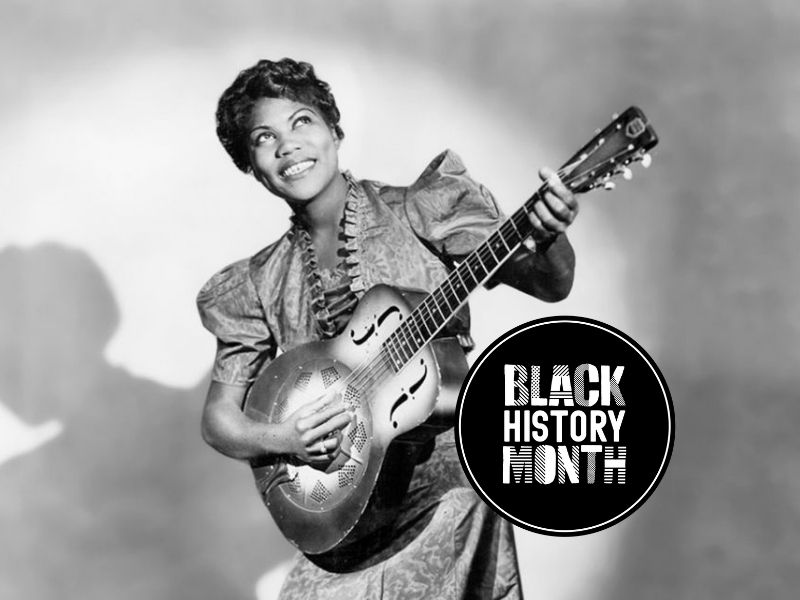
‘This Little Light of Mine’ – Sister Rosetta Tharpe
This gospel tune has been kicking around since the 1920s, although it’s probably best known for Sister Rosetta Tharpe’s punchy cover. Scintillatingly produced, and performed with gusto, the tune holds up surprisingly well decades after it was recorded on primitive audio. The guitars sound jagged because they are jagged.
The song offers the listener the chance to celebrate the virtues that he or she possesses, creating a mosaic of individuality and inclusivity, as the passing tide changes direction to include a passionate, even prescient, quality. The vocal performances are exhilarating because they stem from within Sister Rosetta Tharpe’s person. She only grows more exhilarating with every passing bar and cadence.
A mainstay of the burgeoning rock movement, Sister Rosetta Tharpe fashioned a vocal style that wasn’t dissimilar to Elvis Presley’s, but the recording is laced with a tightness that demonstrates where the artist was as a person in 1960. And wherever she was must have been exciting, because the track simply sizzles all over.
‘Keep Your Eyes on the Prize’ – Pete Seeger
This is another tune Pete Seeger helped to make popular during his tenure with a jaunty singalong tune that asked listeners to carry on the good fight, no matter how bleak the backdrop or how hard the journey might be. And it couldn’t have held a more pertinent, asking everyone to keep their focus on the “prize”, where better times lay ahead.
The composition has elements that go far beyond the realm of folk styling, and the song is prescient enough to withstand geographical change, government change, revolution, rebellion, riots and rigour. As it stands, it’s been performed by a plethora of artists, showing the importance of the words championing the working classes in every vicinity.
As the song outlines, the characters did nothing but hide a little longer than was perhaps advised, suggesting that better times lay ahead of the fruitful adventurer. And through courage, the listener can come to a place of peace, understanding that memories await the listener should they have the commitment and courage to get there. Civil rights are as important to fight for in 2022 as they were in 1962, and by fighting for what’s right, we can continue to make the world a better place.

Never Miss A Tale
The Far Out Bob Dylan Newsletter
All the latest stories about Bob Dylan from the independent voice of culture.
Straight to your inbox.