


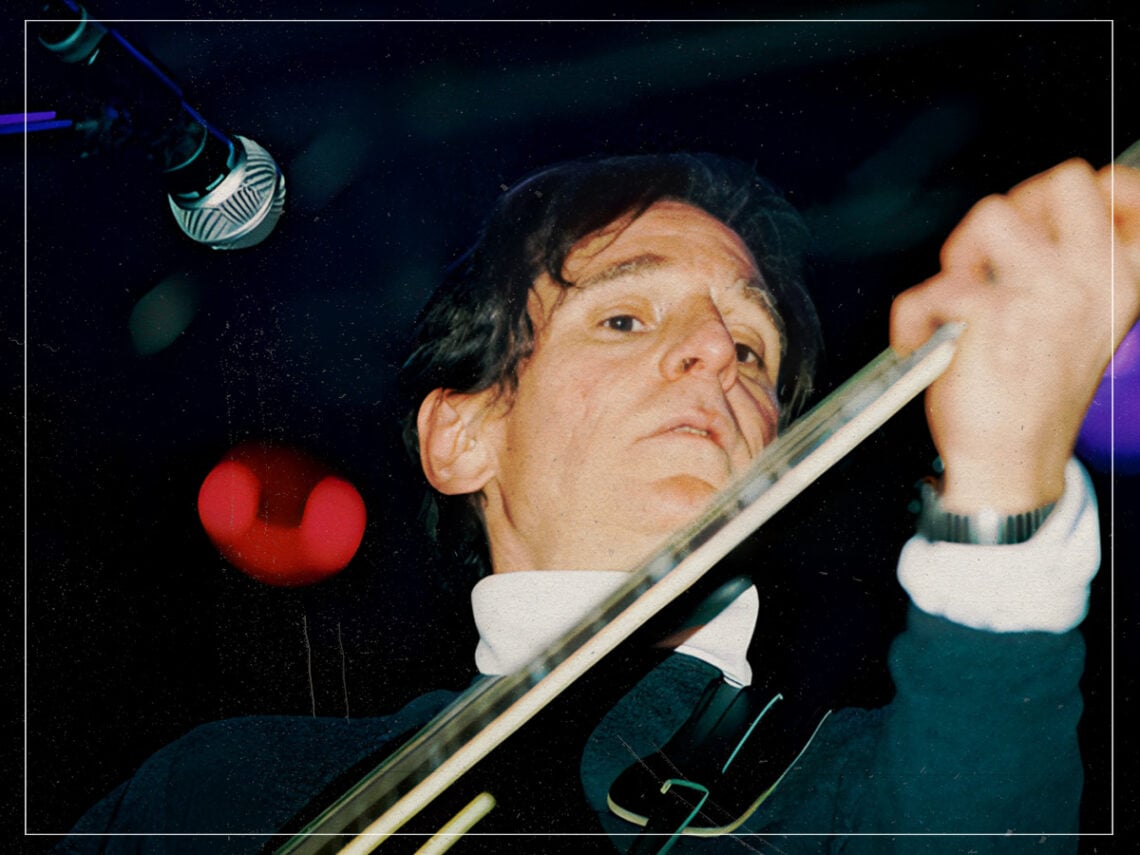
“Too advanced for most people to recognise”: Alex Chilton, the singer whose sales never matched his influence

In Tennessee, people talk about Nashville as being ‘Music City’, where musicians are judged on whether they are ‘Nashville good’.
But 200 miles up the road is a city filled with even more legendary music, with more soulful musicians and arguably a richer, more complex and enduring musical history, and that’s Memphis, home of Sun Records, Stax Studios and Royal Studios, as well as of Elvis, BB King, Otis Redding, Isaac Hayes, Al Green, Aretha Franklin, Booker T Jones, Charlie Musselwhite, Anita Ward, Bobby Emmons, Bobby Whitlock, Chips Moman and thousands more.
Moman, a consummate guitarist and songwriter, is perhaps best remembered now as a legendary producer and the owner of the American Sound Studios, where everyone from Elvis and Dusty Springfield to Bobby Womack, Wilson Pickett and even Petula Clark recorded their best music. Moman wasn’t the only major songwriter and producer at his American Sound Studios, though, and he shared the control room with one of the finest songwriting minds of all time, Dan Penn.
In late 1967, Penn produced a session by The Box Tops, featuring a 16-year-old Memphis native, Alex Chilton, on lead vocals, which yielded their number one hit ‘The Letter’ (not that you’d ever guess his age judging by the scratchy, throaty quality of his voice). The single sold over four million copies, received two Grammy Award nominations and stayed at the top of the charts for a month.
To capitalise on the groups success, Penn gave them some more material to work with, including songs he’d written with Moman and keyboard extraordinaire Spooner Oldham, like ‘Cry Like a Baby’, ‘I Met Her in Church’ and ‘I’m Your Puppet’, which they recorded between American Sound and the hallowed Fame Studios in Muscle Shoals, Alabama (the definitive versions of each of those songs, though, come from Penn and Oldham themselves, and their utterly perfect 1999 live album Moments From This Theatre).
Despite their successes together, the Box Tops switched producers in 1968, at which point the group’s sales began to stall. The group’s final hit, ‘Sweet Cream Ladies, Forward March’ (written by Moman and Tommy Cogbill), debuted on Chilton’s 18th birthday. Though he was only just leaving his teens, by 1970, Chilton was already ready to leave the group, and disbanded the Box Tops.

After briefly toying with the idea of a move to New York, where a chance meeting with Roger McGuinn made its mark on Chilton’s singing and guitar-playing, he returned to Memphis and set up a new band, the pop group Big Star. Modelling their sound on their favourite songs by The Beatles, Big Star saw their first two albums succeed critically but flop commercially. By the time it came to make their third album in 1978, already ten years on from the early success that Chilton had enjoyed with the Box Tops, the singer had lost both interest in the project and confidence in himself.
Moving a long way away from Memphis, and a long way from his blue-eyed soul roots, Chilton returned to New York and fronted another new band, The Cossacks, playing shows at CBGBs alongside Television founding member Richard Lloyd and releasing the influential single ‘Bangkok’. As had so often been the case in his career, he was finding that his work was being appreciated in every sense except commercially. His solo albums, the experimental and lo-fi rock of Like Flies on Sherbert, Bach’s Bottom and High Priest were even less successful than his flops with Big Star.
From the early 1980s, Chilton began to produce other artists alongside his own recordings, including albums by The Cramps, the Detroit garage-punk trio The Gories and the Memphis gothic-rockabilly group Tav Falco’s Panther Burns. He also appeared as a backing vocalist on sessions by Chris Bell, The Replacements (who had once named a song after him), Chris Stamey and more. With his genre-spanning work and raw, honest and open vocal style, he was a critic’s and musician’s musician, without ever really seeing the kind of Box Tops level success again.
Through both his group work and solo albums, he has gone on to influence all kinds of songwriters, singers and bands, including REM, The Replacements, Wilco, Teenage Fanclub, The Posies, Primal Scream and Elliott Smith, and, thanks to the appreciation of so many commercially successful groups, Chilton’s own albums have gone on to become collectibles and often fetch top prices when they become available now. For the Memphis singer, though, who died in 2010, that second musical life was likely too little too late.
“Alex Chilton was one of the greats,” Primal Scream frontman Bobby Gillespie said, “From the very beginning of our band in the mid-’80s right up to his death, he was one of our gurus, one of our heroes. I never knew the man or met the man, but he’s been with us all the time in terms of being a constant inspiration. Guys like Alex Chilton are too far out, they’re too hip, too advanced for most people to recognise. I think he made far out rock ‘n’ roll records, real mad crazy art punk rock ‘n’ roll. I think that insanity’s too much for most people to take in.”
