


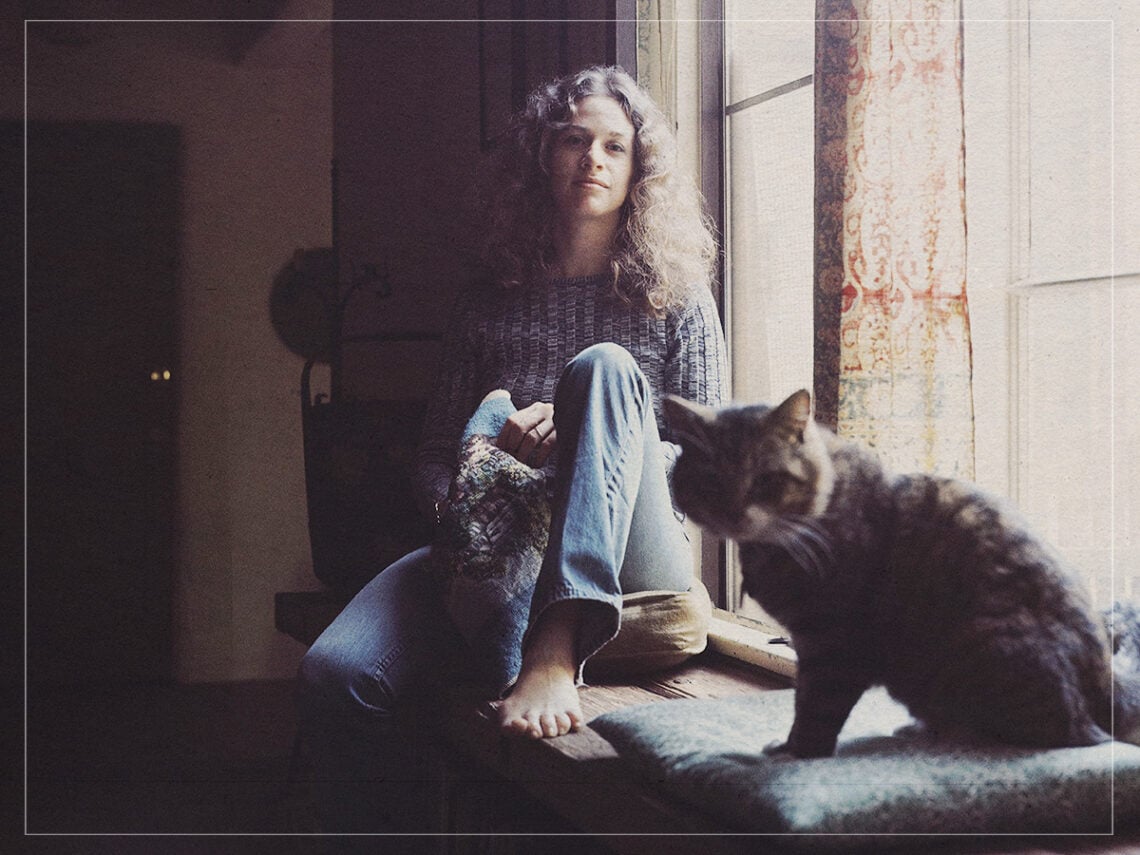
“Sort of a trilogy”: The albums Carole King claims exist alongside ‘Tapestry’

Of all of the warped dynamics that exist within the music industry, perhaps the most baffling exists through the career of Carole King.
Sure, it was common throughout all of the 1960s for songwriters to exist in the shadows, penning future classics and handing them over to a fellow musician to perform. But surely, somewhere along the lines, when King performed one of her tracks before passing it over, the natural talent of King as both a singer/songwriter must have been plain for all to see.
Because when I first played her seminal 1971 record Tapestry, I was under no illusions that I was listening to one of the most heartfelt performers of all time. Her songwriting bled over the piano on which she played, and while the compositions felt inherently familiar and warm, it was portrayed with such a unique sense of character.
Yet it wasn’t really until that ‘71 album that she was viewed with undeniable greatness. Having spent the previous decade consigned to the more humble role of songwriter and writing records prior that didn’t garner the attention Tapestry would, she was toiling away at the life of a musician, with no one yet knowing the icon that existed beneath the surface.
King explained, “Before Tapestry, I had recorded Now That Everything’s Been Said as one of three members of a group we called The City. Then came Writer, which was technically my first solo album, and though it had a different producer, the process was very much the same as it had been on the prior album. And then, with Lou as producer, I recorded Tapestry.
“Technically, Tapestry was my second solo album. However, despite the disparity of success, as well as different producers and band members, I’ve always thought of those three albums as sort of a trilogy.”
Ironically, the success of Tapestry was largely rooted in King’s return to simplicity. With the help of Toni Stern, the record sought to reunite King with nothing more than the piano and the melodies that live within her. The production was deliberately stripped back, so as to foreground her own voice and ideas without falling into the traps of trying to create something her contemporaries had.
As her legendary collaborator James Taylor pointed out, she “decided to own her voice – no gauze on the lens, no affected technique – writing from her own personal experience and her own heart. She was herself, it read as being absolutely sincere, and it connected.”
The result was a perfect storm of an album that straddled the line between authentic and commercial success. The unfiltered presentation of her own voice and thoughts seemed to land with the American public, and so it became a record that not only cemented her legacy but also confirmed her place in the hearts of music audiences, becoming her best-selling record and breaking a host of records in terms of its chart performance.
While it may live in her mind as somewhat of a trilogy, to the musical world, it’s a standalone record that refuses to be matched by anything around it.
