


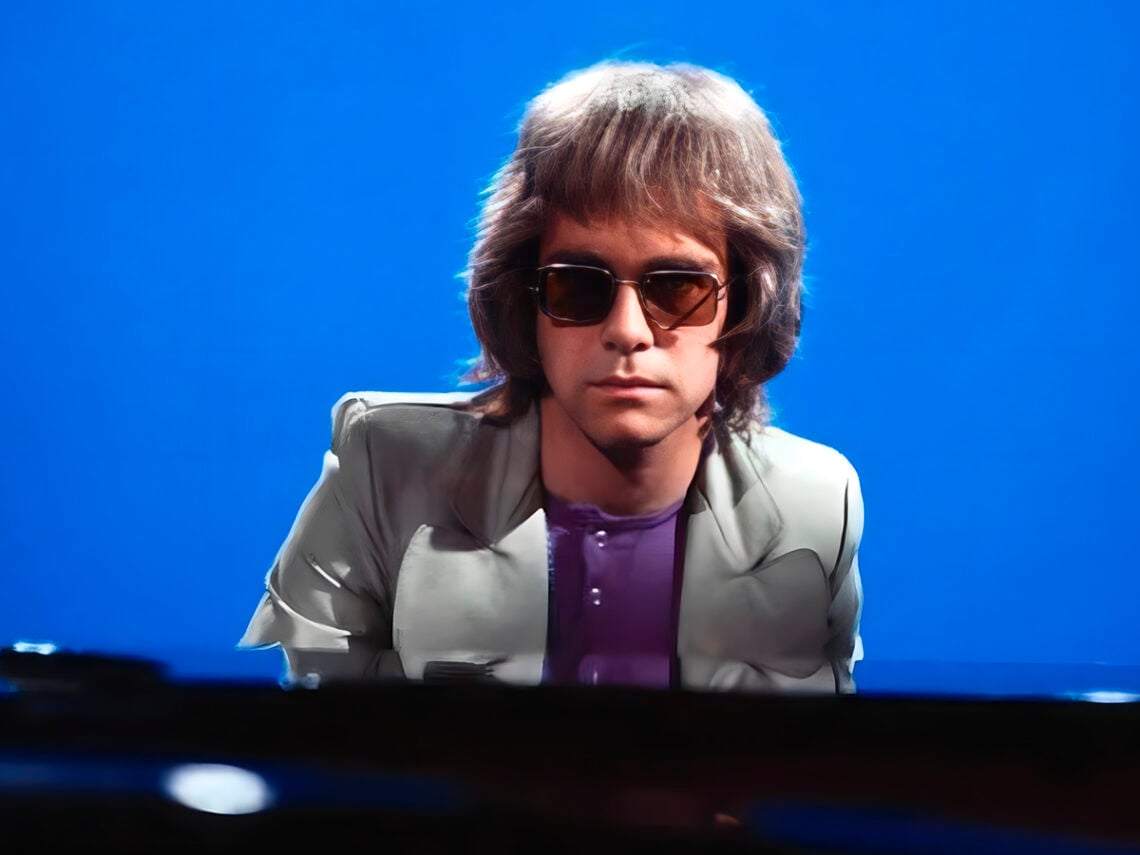
‘Blue Moves’: The album that ruined Elton John’s hot streak

In a paradox that sometimes seems at odds with his intentions, Elton John has this way of making people forget about his sheer musical genius. It’s all flair and flamboyance and paraphernalia, hiding behind the guise of overblown sunglasses or ostrich feathers. Particularly in the late 1970s, following a shimmering period of golden chart hits, the increasing effects of John’s drug addiction became more overtly sinister, and – harsh as it may seem – the gimmick of performance could only last so long.
The fall from grace was always going to be one with a particularly painful landing given the illustrious height John had previously climbed to. Over the five years between 1970 and 1975, all of the Rocketman’s seven albums had hit the number one spot – a then-unprecedented feat – but inevitably, the starry trail had to stop somewhere. Unfortunately, that landed with a thump in 1976 with the release of Blue Moves.
Perhaps owing to the repercussions of drugs or being in search of more expansive sonic pursuits outside the pop canon, Blue Moves marked a musical shift for John in heralding in a new experimental era. It was clear when unleashed on the masses, however, that although he may have thought this was a stroke of genius, no one else was as convinced.
It also seems an ironic hypocrisy, in a sense, that John suddenly became so effusive about getting in touch with his inner creative artist. Much of his discography up to this point had gone to pains to lambast the perils of pretentiousness in favour of good old audience sure-fire winners. Despite this, on Blue Moves – clocking in at a tedious 85 minutes for 18 warbling tracks – it looks very much as though the sight of the fans has been lost in place of rambling, contrived muses and perplexing experimentation.
This drastic change of heart becomes more contextualised when you consider where John was situated emotionally at that point. As much as the first half of the ‘70s had been a bed of champagne and roses, ultimately, the indulgence had become way too rich, and here we see John suffocating at its peak. The album was also the last for some years to feature the hand-in-hand collaborative effort with Bernie Taupin, speaking to rapidly fraying tensions between the pair that eventually descended into a dumpster fire.
Blue Moves may have signalled the beginning of a turbulent time, but nevertheless, there were still glimpses of the classic John that emerged through the scores of unmeaningful ostentation elsewhere on the album. ‘Sorry Seems to be the Hardest Word’, for example, is about the only song that braved it to the legion of classic status – but even still, with just one seminal track doing the heavy lifting for an entire hour-and-a-half double album’s weakness, that weight is too much to bear.
It would be another seven painful years until John returned to the big league with 1983’s Too Low for Zero, featuring the pivotal comeback anthem ‘I’m Still Standing’. It was lucky he eventually managed to claw his way back to the top – because if he had left it with the nothingness of Blue Moves, we could have lost one of rock and roll’s most blazing stars forever.
