


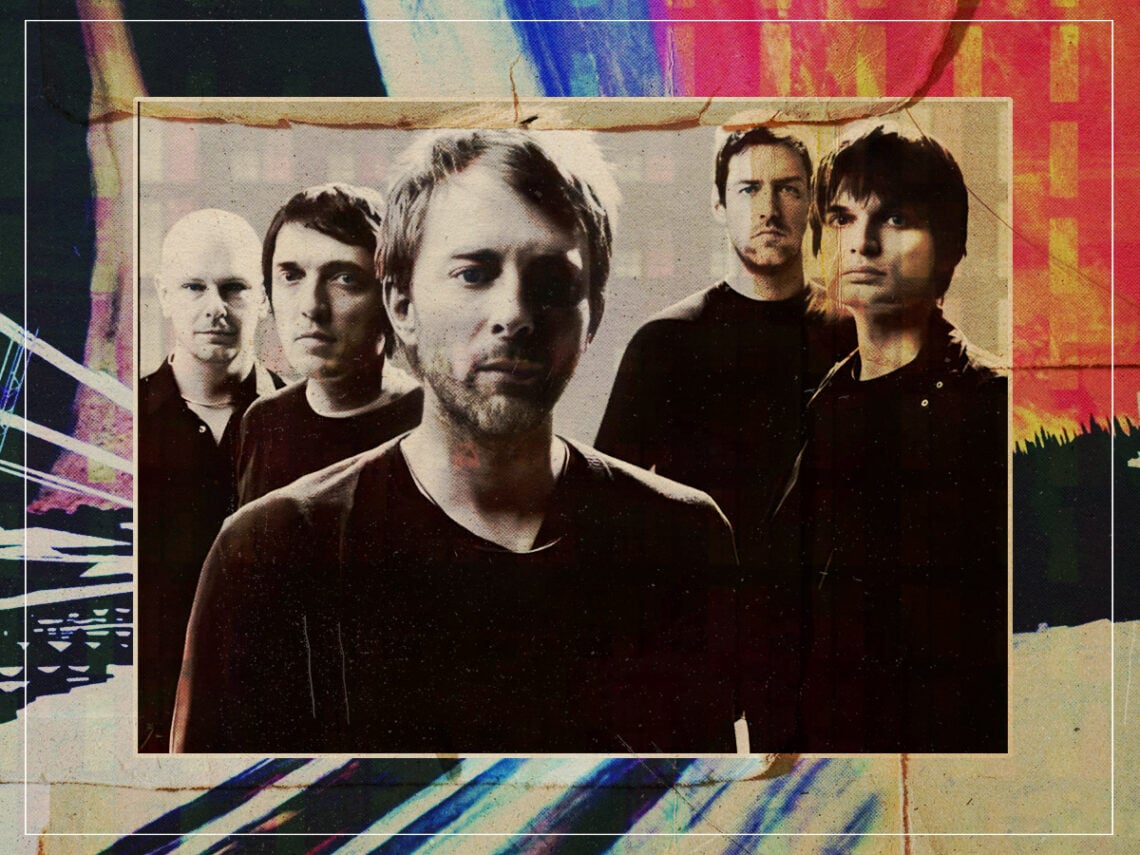
“We can go for that”: The album Radiohead wanted to match on ‘OK Computer’

No discussion on the greatest albums of the past 30 years is complete without a healthy focus on Radiohead’s 1997 masterpiece, OK Computer. Treated almost as a religious text by the band’s extensive and endlessly devoted fanbase, the album truly changed the landscape of alternative rock, providing profound comments on topics of alienation, consumerism, and capitalism in the process. Although the album was on the cutting edge of culture upon its release, its sensibilities were actually borrowed from various albums released decades prior.
Radiohead have explored a multitude of different musical influences throughout their time together, repeatedly refusing to nail themselves to one particular scene or another. The surrounding shoegaze scene storied their early days in Oxfordshire, while their debut, Pablo Honey, leant more towards grunge, and its follow-up, The Bends, even had hints of Britpop – though the band’s cult-like fanbase might string you up for suggesting as such.
In other words, Thom Yorke and his band of miserable men have drawn from an incredibly broad spectrum of influences over the years, and OK Computer might be their most sonically diverse offering. Broadly speaking, OK Computer is an alt-rock album, but that somewhat simplistic tag seems to do the record a disservice.
It is far more experimental than any other late-1990s alt-rock effort, and certain moments feel completely disconnected from the rock genre entirely; in a league entirely of their own. Seemingly, this ethereal quality was completely by design and owed to Radiohead’s listening habits during that time, which stretched from 1960s pop to expansive psychedelic jazz.
In particular, the group immersed itself in a number of ‘classic albums’, perhaps in an attempt to recapture their kind of groundbreaking, universal appeal. Brian Wilson’s magnum opus Pet Sounds, for instance, was on regular rotation at St Catherine’s Court, where the band recorded OK Computer, as was Marvin Gaye’s politically-charged Motown masterpiece What’s Going On. One album that stood out in this mix of classic records, however, was Miles Davis’ revolutionary avant-jazz effort, Bitches Brew.
An album that changed not only jazz, but musical expression in general, Bitches Brew reflected the pinnacle of Davis’ innovation and artistic vision. Worlds apart from the typical sounds of his Birth of Cool-era output in the 1950s and 1960s, the album acted as a kind of spiritual rebirth for the trumpeter, seeing him craft bold and expansive jazz soundscapes packed with the influences of avant-garde expression and mind-bending psychedelia.
The impact of Bitches Brew has always been colossal, but it’s influence on Radiohead is a little unexpected. After all, it isn’t as though the group were attempting to evoke jazz music with their alt-rock sound. “In some ways we were really conceited,” Jonny Greenwood explained in a 2017 interview with Rolling Stone, “and we would listen to a record like Bitches Brew and be so heavily influenced that we wanted to do it.”
“It didn’t bother us that none of us had played or even wanted to have any trumpet,” the guitarist continued. “And yet we had the kind of arrogance to go, ‘Yeah, we can kind of go for that.’” Seemingly, that arrogance paid off for the band, as they ended up crafting their own ‘classic’ album, regularly hailed among the greatest artistic expressions of the 20th century, even if the band still couldn’t play the trumpet.
