


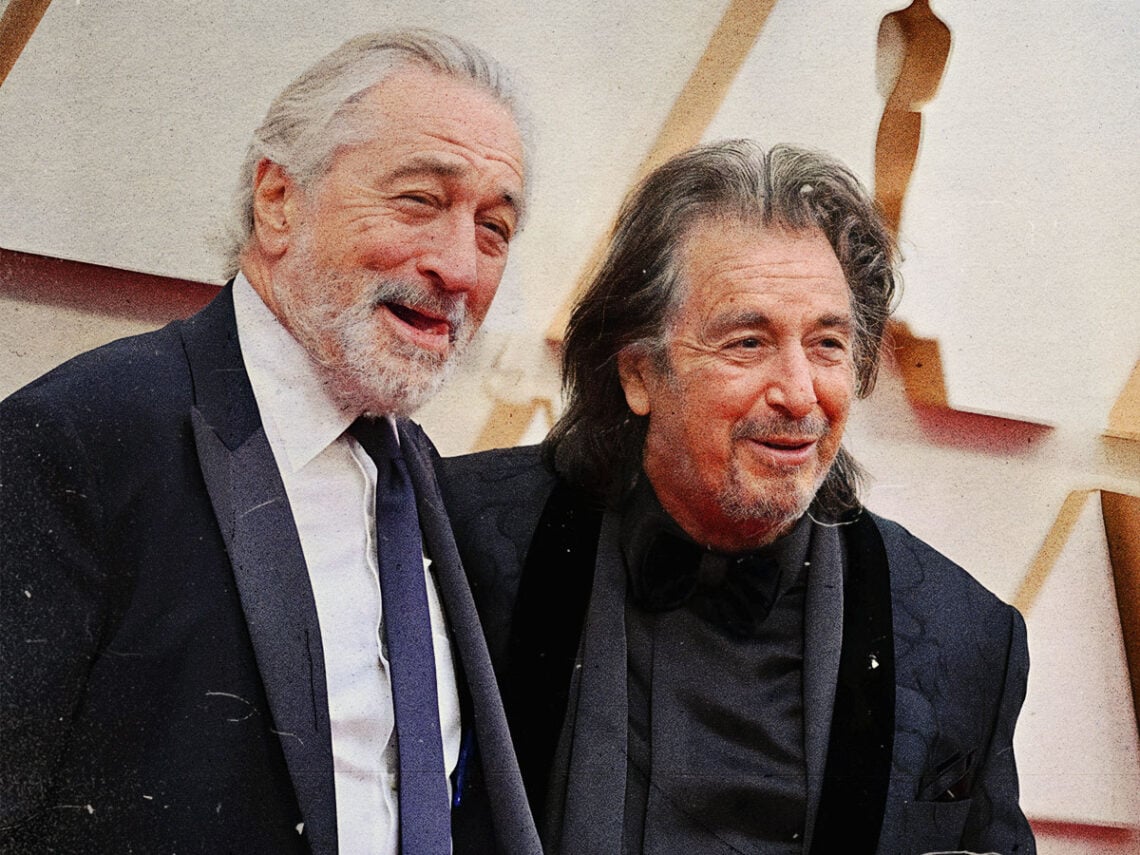
Al Pacino’s favourite Robert De Niro movies: “The one that dominates”

Al Pacino and Robert De Niro were already friends long before either of them became era-defining stars, so in a way, it was fitting that their careers would be so closely intertwined despite the fact they never shared the screen together until 1995.
The two future icons first crossed paths in 1968, the year before Pacino made his screen debut in Me, Natalie and when De Niro only had one uncredited role in 1965’s Three Rooms in Manhattan under his belt, but it wasn’t long before they became a regular part of the same conversation.
As two Italian-American actors born in New York City who started out at roughly the same time before becoming renowned as two of the best actors of their generation during the same period, whether they liked it or not, De Niro and Pacino were never too far away from each other’s orbit.
Between them, they were responsible – alongside the likes of Jack Nicholson, Dustin Hoffman, and Gene Hackman – for helping redefine what a Hollywood leading man was in the 1970s. Pacino had The Godfather, Serpico, and Dog Day Afternoon, while De Niro had The Godfather Part II, Taxi Driver, and The Deer Hunter, establishing them as two of the best and brightest talents in the business.
They remained friendly offscreen for decades, but it wasn’t until Michael Mann partnered them up for the classic crime thriller Heat that audiences finally got the dream showdown they’d been waiting to see for decades. On paper, it was nothing more than two old pros shooting the shit over a cup of coffee, but in the hands of such seasoned masters, every single frame of their iconic exchange mattered.
Things didn’t go so well when they reunited on the dismal crime thriller Righteous Kill more than a decade later, but the third time did at least mark the charm when Martin Scorsese, the third prong in the Italian-American holy trinity, made excellent use of them both in The Irishman.
Part of the enduring fascination with Pacino and De Niro stems from how rarely they have been asked to compete directly on screen. For decades, audiences compared their careers from afar, weighing landmark performances against one another without ever seeing the two actors share more than a handful of scenes. That scarcity only heightened the mystique, turning every collaboration into an event rather than another entry on their résumés.
It also meant that any admiration expressed between the pair carried unusual credibility. Neither actor needed to flatter the other for the sake of publicity, having already secured their place among Hollywood’s greatest performers. When one openly praised the other’s work, it came across less as promotional soundbite and more as the informed judgement of someone who understood better than most what it took to produce performances of that calibre.
Greatness tends to recognise greatness, so when Pacino/De Niro double-act was making the rounds in support of Scorsese’s epic biographical crime drama, they decided to use the opportunity to appraise each other’s filmographies. They’re responsible for some of the finest performances American cinema has ever seen, but which of the latter’s works came out on top for the former?
“The one that dominates for me is Raging Bull,” Pacino told the New York Times. “Of course, there’s Taxi Driver. I am thinking about your films, Bob; I’m going to have a Bob De Niro film festival.” He may have toed the party line and named the two that almost always come to mind when talking vintage De Niro, but that doesn’t make his picks any less viable.
Travis Bickle and Jake LaMotta are the definitive roles of De Niro’s extensive collection, and if they’re good enough to occupy the top two spots in Pacino’s personal ranking, then who’s to argue?
