


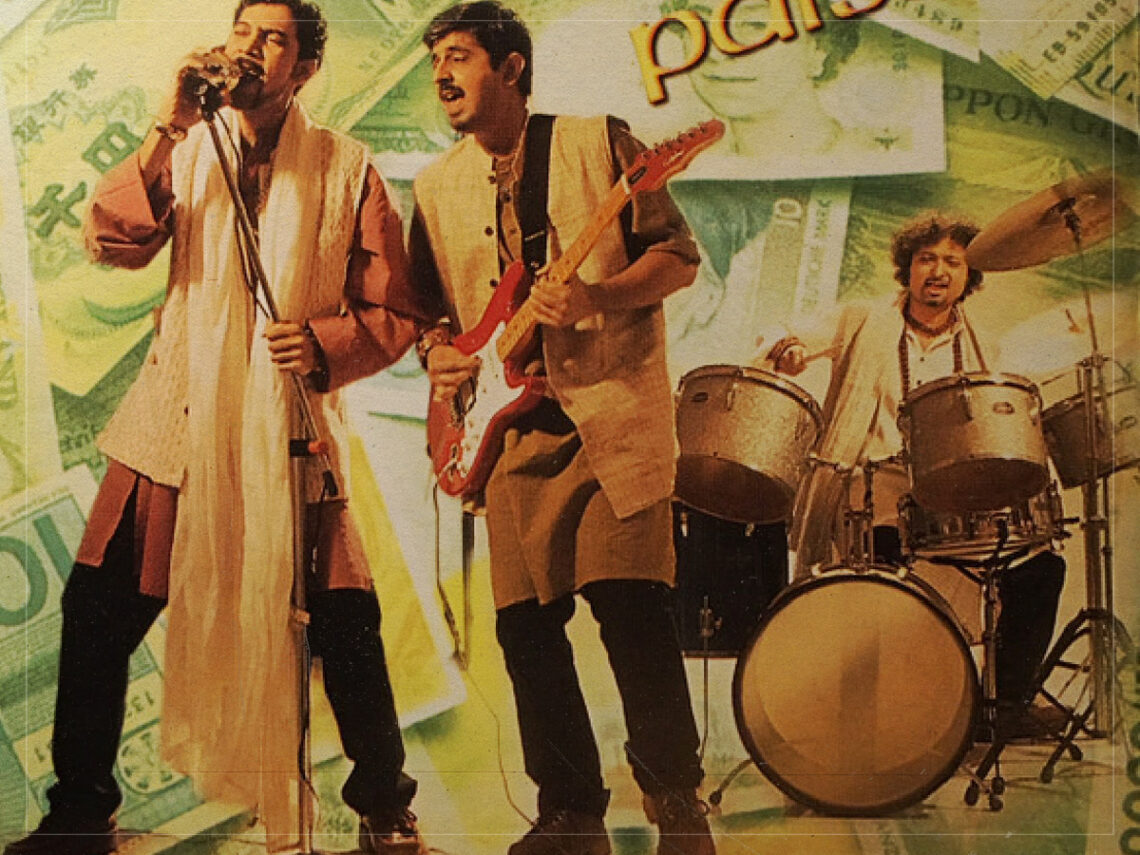
Agosh: The first pop-punk band in India

In the late 1990s, when pop-punk was the teenage angst-driven anecdote to the bubblegum pop that dominated radio airwaves, The Offspring brought an added humour to their guitar-driven pop that allowed them to break into the mainstream, and beyond America, they were one of the first to break through in India.
Their fifth album, 1998’s Americana, featured their hit single, ‘Pretty Fly For a White Guy’, an absurdly catchy tune that maintained their Southern California rock sound without taking themselves too seriously. Inescapable in American media, the song was a surprise hit in India, with its music video broadcast on both MTV and Channel V, and used in one of the advertisements for the latter, naming The Offspring “one of the coolest bands”.
In India, there was an audience for traditional rock music, but not necessarily the pop-punk strain, as it later came to be known. The Offspring set the foreground for bands like Blink-182 and Sum 41 to follow in their footsteps, gaining traction in the country for a period before, similar to America, its popularity giving way to the likes of Britney Spears and *NSYNC; however, a few years later, one Indian band would revive the pop-punk sound.
By 2002, Agosh was a fairly new outfit, with vocalist Gopal Rao, a mathematics graduate from Chennai, and guitarist R Anandh and drummer Shaleen Sharma, mechanical engineers from Roorkee. Forming in the 1990s, the band spent the previous decade writing ad jingles for brands including Pepsi, Fanta and Nestle while they also composed songs for film, working on the soundtrack for Bollywood‘s 1998 Zor, and featured on the Come On India compilation album in the form of ‘O Yaara Re’, made for the ICC Cricket World Cup in 1999.
In the midst of their relative success, Agosh wanted to push their music further, experimenting with their compositions in a way that could challenge the Indian music industry, which led to them debuting ‘Paisa’, their first attempt at making ‘indipop’ or independent music, wanting to craft songs that commented on the life of the common man.
Immediately, the influence of American pop-punk was evident in its sound; there was an obvious pop sensibility, heard in the vocal harmonies and upbeat melodies, but their introduction of sprawling guitar riffs and the drums as the song’s backbone fused pop and rock in a way that had not been commonly heard.
‘Paisa’ (a monetary unit) commented on a fixation with wealth, telling the story of a man’s dreams and numerous failed attempts to become rich.
Its music video, centring a parody of television commercialism, reimagined popular advertisements in a light-hearted tone, which was particularly ironic considering Agosh’s start penning commercial jingles. Regardless, the band’s Bollywood beginnings blended with qawwali music, capturing audiences on music television and dominating their airwaves.
While ‘Paisa’ became a one-of-a-kind hit, Agosh soon faded away as popular music began to favour remixes and Bollywood soundtracks, but their attempt to bring pop-punk to Indian music in the new millennium remains widely respected and remembered with a distinct nostalgia, and the band continues to be regarded as largely ahead of its time.
