


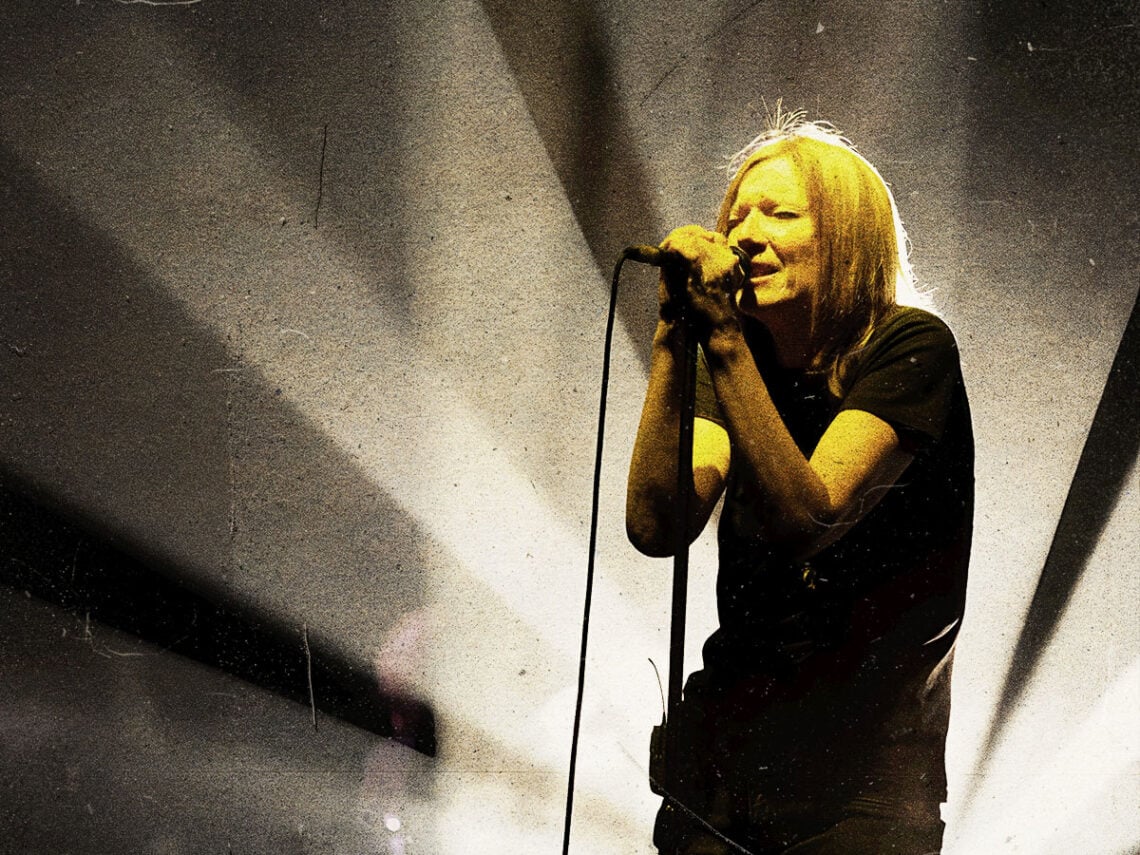
The underappreciated act that Portishead deemed the “pioneers of electronic music”

In the early 1990s, Portishead emerged from Bristol’s rich trip-hop scene, as pioneered by Massive Attack, to carve a moodier, more gothic path for the subgenre. The trio’s warped soundscapes are seasoned by record scratches, samples, synthesised sounds and, of course, Beth Gibbons’ captivating, emotive vocals.
Portishead released their Mercury Award-winning debut album, Dummy, in 1994. The album premiered the band’s signature style with pure class and brought something wholly unprecedented. The release was lauded as a pioneering work of art that combined pre-extant styles and groundbreaking production methods in blissful harmony.
Shortly after the album’s release, record shops noticed unhappy customers returning with their Dummy records and requesting a refund. They would complain that the pressing quality had been compromised by dust during manufacture; fresh from the packaging, there was a crackle over the quieter passages of the music.
The record shop owners would smugly explain that these Bristolian trailblazers had actually added the crackles for a retro sound and warm ambience. Determined to record the album with a vintage feel, Portishead opted for analogue recording methods over modern digital alternatives.
To create the crackles, Portishead collected a stack of pre-existing and newly-recorded vinyl and physically manipulated the sound by jumping on the records and scraping them across the floor. This scene of destruction would undoubtedly raise the hackles of any budding record collector, but the result was more than agreeable.
Portishead’s pioneering spirit can be traced back to their diverse and obscure taste in music. In a past interview with The Quietus, Portishead sat down to discuss their 13 favourite albums as a collective. The selections spanned from US hip-hop to 1960s psychedelic rock, with notable selections from Jimi Hendrix, Nirvana, Neil Young, The Specials, Wu-Tang Clan, John Coltrane and more.
Among the albums was CAN’s popular and seminal krautrock album, Ege Bamyasi. The release was regarded, alongside Kraftwerk’s early material, as a true genre classic, but before these pioneering acts came Silver Apples and their monumental debut album, another of Portishead’s selections.
Silver Apples was formed by Simeon and Danny Taylor in New York City in 1967. While their debut album of 1968 wouldn’t garner much attention at the time, like The Velvet Underground’s debut of ’67, it became a crucial building block in musical evolution.
Silver Apples disbanded in 1970 after receiving limited commercial attention, but having nudged CAN and Kraftwerk, the wheels were in motion. Thankfully, through the 1990s, the duo received the attention they deserved thanks to contemporary admirers – it would appear the industry had finally caught up.
Simeon and Taylor reunited in 1996 after a 25-year hiatus to find a climate far more accepting of their progressive style. Spiritualized, Blur, and Portishead were among the notable contemporary acts to sing their praises.
Portishead’s Adrian Utley, a Silver Apples fan of many years, introduced his bandmate Geoff Barrow to the duo’s material in the early ’90s. “He said: ‘You have to check this out’,” Geoff Barrow remembered per The Guardian. “And I was like: ‘Fucking hell, this is amazing.’ For people like us, they are the perfect band. Silver Apples were a pathway to Portishead. They should definitely be up there with the pioneers of electronic music.”
In 2007, Portishead invited Simeon and his current Silver Apples lineup to perform at their curated ATP festival. The following year, Portishead released their critically praised studio album Third, featuring ‘We Carry On’, a homage to the unmistakable Silver Apples sound.
