


The influence of Abbas Kiarostami and Wim Wenders on Ryusuke Hamaguchi’s ‘Drive My Car’

Over the last decade or so, a number of Japanese auteur directors have risen through the cinematic ranks, but few have made an impression quite like Ryusuke Hamaguchi. Coming to international attention in 2015 with Happy Hour and then delivering admired works like Asako I & II and Wheel of Fortune and Fantasy, Hamaguchi has carved out a reputation as a modern master.
In 2021, Hamaguchi made cinema history when his drama film Drive My Car became the first Japanese film to earn an Academy Award ‘Best Picture’ nomination. Based on Haruki Murakami’s short story of the same name Drive My Car tells of a theatre director who takes on the challenge of producing a multilingual adaptation of Anton Chekhov’s play Uncle Vanya while dealing with the grief of his late wife’s death.
Drive My Car is a genuinely stunning film with amazing performances from Hidetoshi Nishijima, Reika Kirishima and Toko Mirura and a mesmerising and tender score from Eiko Ishibashi. Winning three awards at the Cannes Film Festival and the Oscar for ‘Best International Feature’, Hamaguchi’s second effort of 2021 remains one of the director’s best.
Hamaguchi had once pointed out the influence of Abbas Kiarostami, the Iranian director known for his films Close-Up, Where is the Friend’s House? and Taste of Cherry. Speaking with Filmmaker magazine, Hamaguchi explained, “His films have very striking scenes where there’s a driver and the surroundings are changing a lot. And at the same time, the relationships between the characters are changing as well. I began to think that this image was somehow a condensation of life.”
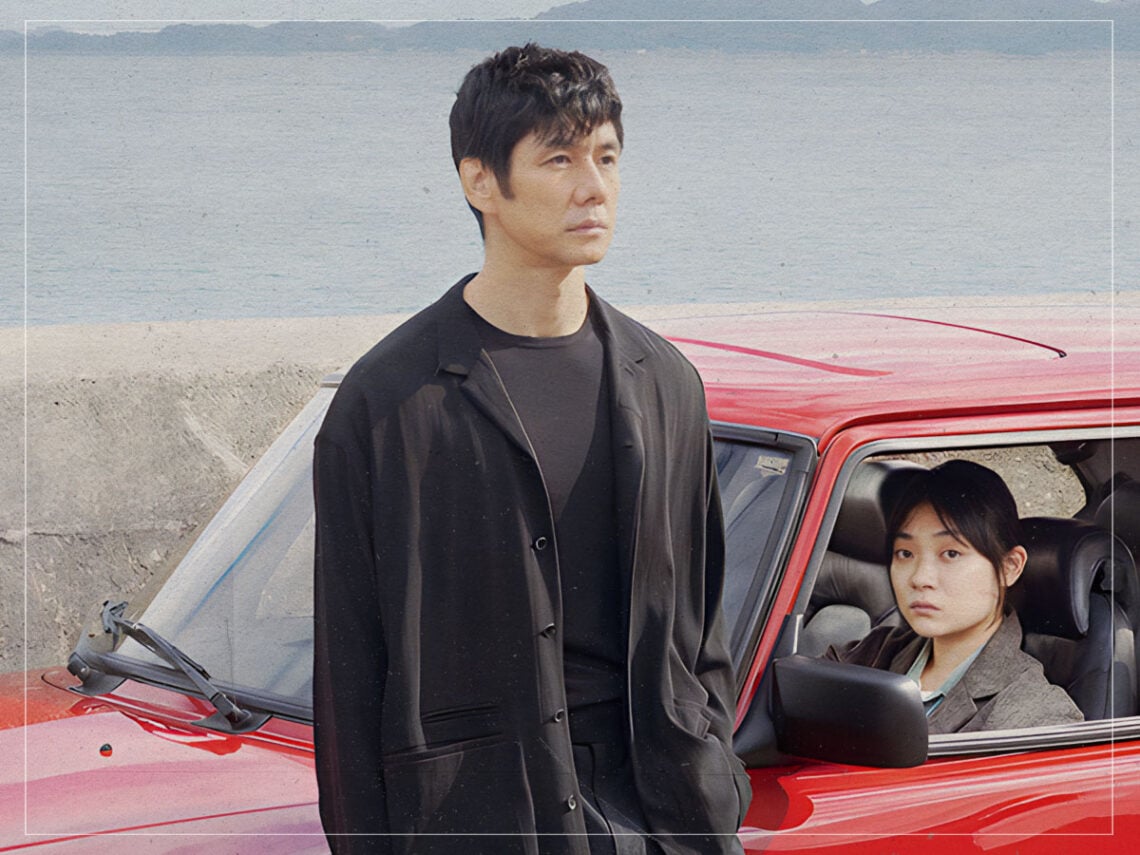
Indeed, naturally, Drive My Car involves Yusuke Kafuku being driven around by a young driver by the name of Misaki Watari, just in the way that many of Kiarostami’s films feature interior driving scenes. In another interview with Asian Movie Pulse, Hamaguchi said, “Kiarostami is a filmmaker I very much respect. There are so many of his films that I love, but particularly 10 on Ten. I remember watching the film and seeing people talking in the car, realising that you can actually make such a film that is interesting.”
Back when Hamaguchi was still at university, he joined a film club and met with a number of fellow cinephiles. It was during this time that he was introduced to the work of Wim Wenders, the German filmmaker known for the movies Paris, Texas, Wings of Desire and The American Friend, amongst many, which would also inspire the Japanese director when it came time to make Drive My Car.
Speaking with Filmmaker, Hamaguchi explained how Wenders was as important to the 2021 film as Kiarostami was, noting, “It’s also the same with Wim Wenders and all of his transportation scenes, where a relationship changes and the fact that the surroundings change at the same time helps you understand that something is evolving. This is what inspires me the most.”
Unsurprisingly, a true cinephile like Hamaguchi tapped into the deep and rich history of cinema to find great inspiration for one of the best Japanese movies of the 21st century. Drive My Car is a stunning work of film, one that gets underneath the realities of our deepest traumas, exploring how we frequently hide our pain from those around us, just as Wenders and Kiarostami had done on many occasions.
