


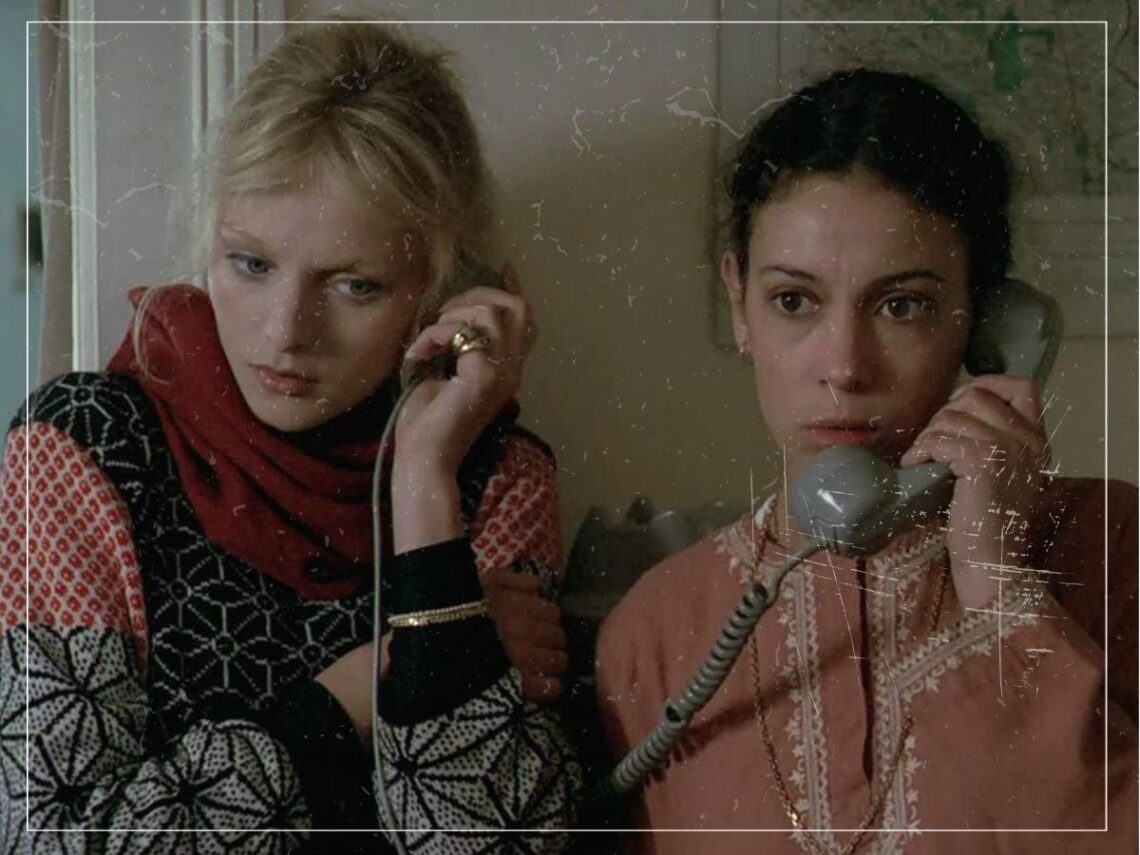
‘A Good Marriage’: Why Éric Rohmer’s tale of romantic desperation is most relevant today

We live in an age where dating has never been more trying and torturous. While phones or texting might not have existed in the past, we now find ourselves in a time when dating apps, Snap scores, and social media pages have a detrimental impact on our ability to find love.
Delusion and denial are now ingrained parts of the modern dating scene, with the concept of situationships sending us into a collective frenzy as we fret over murky intentions and undefined relationships. It’s a plight that has progressively worsened in recent years, with people being afraid to commit as a result of the temptation to go where the grass is supposedly greener, constantly searching for an unattainable version of love that doesn’t even exist.
However, while this approach to love seemingly cropped up from nowhere, it doesn’t come as any surprise that the master of exploring human infallibilities and emotional grey areas, Mr Éric Rohmer, was able to predict this long before it happened in his 1982 film A Good Marriage.
The story follows a single woman called Sabrine who is fixated on the idea of getting married, not caring so much about who it is, just as long as she does what is expected of women her age and finds someone to settle down with. However, after her friend introduces her to a lawyer called Edmond, she becomes convinced that he will become her husband and tells everyone that she is engaged to him, despite the fact that he couldn’t be more disinterested in her.
It is one of Rohmer’s most unhinged stories, with Sabrine living in the ultimate state of delusion and denial as she blindly pursues a man who has no intention of getting into a relationship after just going through a divorce. But after speaking to him once, she becomes convinced that he is the one, informing everyone that she is getting married and moving on to the next stage of her life.
While the film is very light-hearted and energetic, it also has a dark undertone that captures our inability to make peace with the unknown and our struggles to fulfil the societal expectations placed on our shoulders. Sometimes, it feels easier to jump into any situation that will make us feel as though we have adhered to the status quo, with women especially being pressured to find partners and demonised for being single.
Sabrine’s situation is painted through a comedic lens, but there is a sadness beneath her desperation that shows her discomfort with letting life flow at its own pace. At certain points in our 20s, we can feel like it is easier to embrace the norm and settle for something mediocre instead of suffer through the fate of not knowing how life will pan out. In Sabrine’s case, she simply wakes up one day and feels the weight of the unknown, knowing that she would rather appear to have it figured out and be unhappy than continue down the path of being single with no end in sight.
In an era in which romantic love feels increasingly difficult to find, many people are beginning to feel as though they should adopt a similar approach. While there was a wave of thinking in the 2010’s in which people spoke about the fulfilment of platonic love and tried to take away the emphasis on romantic relationships, with the previous rhetoric telling us that this was the only source of happiness and most important pursuit during adulthood, this wave recently died away after people perhaps realised how difficult it is just to meet new people, yet alone find a partner.
While living in the digital age, in which people are becoming increasingly radicalised through the internet, the idea of meeting a nice and normal partner feels borderline impossible. When every second person you meet is a freak, after meeting one normal person, you begin to wonder whether settling might be the best possible option and whether you should lower your expectations of romance.
This is certainly the case for Sabrine – she is less focused on meeting ‘the one’, and instead just finding any one man who will alleviate her loneliness and worries about not getting married and reaching the expectations she has about her future life. She is drawn to the idea of being validated by a romantic partner, of taking away that brutal, invisible label that hangs over single women and tells the world that there is something wrong with them for not being in a relationship.
Rohmer was often ahead of the curve in his astute perceptions of people and our relationships to one another, but while A Good Marriage is often dismissed as a fluffy comedy about a psychotic wannabe bride, Sabrine’s desire reveals far more about the modern world and our approach to relationships than any film being released today, once again showcasing Rohmer as an understated genius who knew far more about the human condition than other auteur.
