


A definitive ranking of cinema’s 10 weirdest women

A maid, a wife, a thoughtless sex symbol—these are the roles the film industry has historically assigned to women, often with very little imagination or nuance. For decades, countless films have relegated women to the sidelines as silent observers or submissive servants, existing only in relation to the men around them. Rarely were they given the agency to speak their minds or the power to shape their own narratives.
After decades of being confined to dull and uninspired roles, women began to push back against the one-dimensional characters that dominated the screen. Audiences and creators alike started demanding more—characters that embodied anger, vulnerability, peculiarity, and rage. It was a call for authenticity, complexity, and the richness that had long been missing from female representation in film.
Since then, cinema has embarked on a bold quest to delve into the wilderness of femininity, exploring its many tones and complexities. This journey has uncovered the unsettling, the strange, and the grotesque alongside the deeply moving and profound—offering a richer, more authentic portrayal of womanhood in all its messy, multifaceted glory.
Over the years, we’ve seen a delightful number of strange women on screen, both from new filmmakers and revolutionaries who were doing it when it was still unheard of. It begs the question, which women remain the weirdest?
And so, from weird to weirder, here are cinema’s top ten weirdest women.
The 10 weirdest women in movie history:
Bringing Up Baby (Howard Hawks, 1938)
Nobody can prepare you for the pure madness that is Bringing Up Baby, a film so unhinged in its absurdist humour that the production was severely delayed because the cast kept having uncontrollable laughing fits.
The screwball comedy stars a flustered Cary Grant and deliciously chaotic Katherine Hepburn in a tale of continuous mistakes and mishaps. The pair finds themselves entangled in a series of strange events, eventually burdening them with the responsibility of finding a missing leopard.
As well as being one of the earliest examples of the ‘enemies to lovers’ trope just generally being one of the most hilarious films of all time, Hepburn’s character of Susan Vance was also quite groundbreaking for the time, playing a woman so peculiar and outspoken whose words are always running over the verbal speed limit, proving herself to be a match to the strained temper and ditziness of David Huxley who just cannot keep up with her. She is outrageously wicked and quick-witted, somehow managing to leave a trail of trouble in her wake, leaving the men around her both mesmerised and completely exasperated by her. While she isn’t ‘weird’ within the classical definition of the word, she is, certifiably insane – and for this, she has to earn a spot on my list.
Under the Skin (Jonathan Glazer, 2013)
Jonathan Glazer’s 2013 film Under the Skin is a one-of-a-kind masterpiece—so alienating and arresting that you enter a new plain inside your mind as you allow the slow dread of it to sweep over you. Scarlett Johansson plays a creature that stalks the streets of Glasgow for prayer, consuming the men who fall into her trap. It’s concerning and unsettling, with long sequences as she strips down and slowly envelops the men around her, highlighting her own detachment from the human world and the coldness of these creatures.
Many people have debated the inner meaning of the film, to which I have interpreted it as an allegorical tale about misogyny, with Johansson using her sex appeal to lure in her ‘prey’ before devouring them completely. However, there comes a point where she starts to feel enticed by the human world and the possibility of true connection, abandoning her instincts just once to feel something real with another person. But in one swift moment, one of these men betrayed and violated her trust, and she is reduced to what lies under her skin.
The creature that Johansson plays takes on the appearance of a woman, beginning with an illusion of power and control that is slowly rendered useless in a human world that does not allow women to have power and control. But there is no doubt that in the human world, the creature’s depiction of a woman is one of the more sinister and unnerving characters in cinematic history.
Women on the Verge of a Nervous Breakdown (Pedro Almodóvar, 1988)
Ladies, we’ve all been there. Sometimes you get played and accidentally murder the man who did it; sue me! We’re only human. In Pedro Almodóvar’s 1988 film A Women on the Verge of a Nervous Breakdown, he explores what happens when a woman is pushed to the absolute edge of her limits, being manipulated and hoodwinked in such a catastrophic way that she quite literally loses her mind. It’s a horribly entertaining sight to see, even if it hits a little bit too close to home.
The main character, Pepa, decides to kill herself with a batch of sleeping pills after discovering that her lover has been cheating on her. However, her suicide is unceremoniously interrupted by a bizarre sequence of events involving some gazpacho, another woman who falls off her balcony, guns, motorbikes and some chickens. It appeals to the very human side of us that understands how these situations can drive us to do crazy things but also to the sadistic side of us that enjoys watching people suffer if it happens in an entertaining enough way.
The film’s ability to escalate each situation to ludicrous new heights is remarkable. With a gang of rightfully angry women seeking revenge on a society that mocks their emotions and day-to-day dramas, I am glad to include Almodóvar’s tale of female rage on this list.
Grey Gardens (Ellen Hovde, Albert and David Maysles, 1975)
The story of Edie and Edith Beale documents the life of two reclusive women who once belonged to the upper margins of society, now living in poverty in their decaying mansion. It is both riotously funny and deeply sad, sometimes leaning dangerously close to being not funny at all. It
Both women are emblematic of the struggle to achieve the American dream, but as people who dealt with it uniquely, wrapping themselves in a crumbling fantasy and blissfully ignoring the harsh reality that this dream had failed them. The best word to describe them would be ‘eccentric’, dressing outrageously despite having nowhere to go and insisting on having afternoon tea atop their stained mattresses, maintaining the illusion of grandeur as if their very lives depended on it.
While the subjects are real people and not characters, they have had such a huge impact on pop culture that it’s hard to dismiss them just because they’re not fictionalised people. It’s a darkly comedic portrait of two women who choose to live in their own bubble of decaying luxury and squalor, clinging to the fantasy for as long as they can. And it’s because of their unique idiosyncrasies and oddities that they remain as some of the strangest women ever seen on screen, even if you want to cry while watching them.
Freeway (Matthew Bright, 1996)
Freeway is one of those criminally underrated films that I still cannot believe exists. It’s a sleazy and cynical modern retelling of Little Red Riding Hood, with a young Reese Witherspoon in the lead role as an angry young woman called Vanessa who screams and hurls abuse at anyone who dares her look her way.
The film takes us on a journey through the grungiest back-alleys of Los Angeles, with Red Riding Hood escaping her abusive stepfather and a slimy paedophile who stalks her along the way. Vanessa is a clever subversion of the classic angry young man trope as we follow her through grimy trailer parks and attempt to evade the capture of social services with a foul mouth that knows no boundaries. She kicks and screams her way out of danger, much to the alarm of those who try to hurt her, violating the outspoken rules of femininity and making herself as loud and inconvenient as possible.
It’s a white trash version of Grimm’s fairytales, that is outrageously dark and hysterical as we watch Vanessa use increasingly creative insults against the people that put her in harm’s way; cleverly subverting the idea of the damsel in distress as a damsel who likes to cause distress.
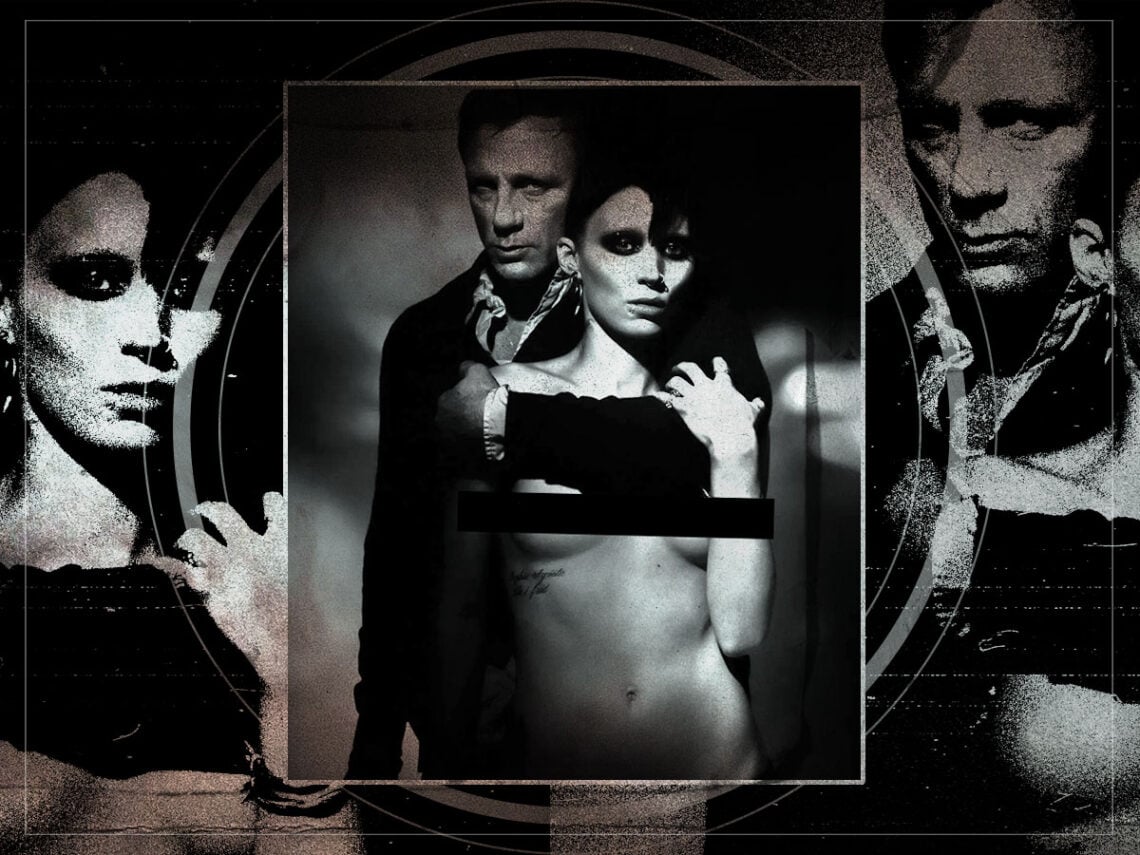
The Girl with the Dragon Tattoo (David Fincher, 2011)
This film has a soft spot in my heart as my favourite Fincher film of all time, but also for Rooney Mara’s prickly portrayal of Lisbeth, a computer hacker who works with a disgraced journalist to uncover the mysterious disappearance of a teenage girl.
Lisbeth is violently vulnerable in her inability to confront her own pain, haunted by a past that stands in the way of her chance at true connection and safety with another person, and understandably so. She refuses to assimilate into the people around her, instead drowning her cruel memories in her work, accepting dangerous missions and tasks that she breezes through. She is abrasive in the way she speaks to people and never masks her disdain towards the people around her, making it quite clear that she has very little tolerance for the petty problems of most people.
But what I truly love about Lisbeth is the stark contrast between all of those things and, despite that, the faint glimmer of hope that she allows herself to feel at the end of the film, which is all obliterated by Mikhail, someone who she trusts enough to briefly let inside who ultimately betrays her. He proves himself to be as bad as everyone else, leading her to retreat back into her cave of solitude, away from the danger of other people and back towards the familiarity of loneliness. She’s weird in a heartbreaking but understandable way, and as we watch her drive away into the darkness, we understand that she has no choice but to be this way.
Belle De Jour (Luis Buñuel, 1967)
Luis Buñuel’s masterpiece of repressed desire and sexuality showcases the full spectrum of Catherine Deneuve’s undeniable genius as a recently engaged woman who becomes a sex worker to explore her own sexual fantasies.
I cannot emphasise enough just how revolutionary this story was, with Deneuve’s character Severine being unable to express her masochistic desires in her relationship, instead finding other ways to realise these fantasies and unlock this other side of her being. It’s surrealistic, dream-like and darkly fascinating, with Severine finding herself becoming absorbed by her fantasy life and not wanting to return to the bleak safety of married life, slowly fading into the image of ‘the wife’.
Eventually, the line between reality and Severine’s fantasy world becomes completely blurred, and we find ourselves wondering whether she has been completely consumed by the restrictions of the patriarchy or if this alternate life has taken over. It’s a fascinating insight into the hidden depths of our desires and the way they can consume our waking lives.
Céline and Julie Go Boating (Jacques Rivette, 19740
Céline and Julie Go Boating is another one of those films that I can’t quite believe was made. It follows a bizarre cat and mouse chase between two women who suddenly become friends, soon realising that their lives are being mirrored within a film that is happening in a nearby dimension.
It’s a trippy and mind-bending story that reflects Céline and Julie’s adventure into the public subconscious and the roles that women are asked to play, becoming a film within a film as they rewrite how they are seen under the male gaze. Through the film that is unravelling next to them, they playfully jump in and out of each narrative and reframe their own existence, giddy with choice over the possibilities of the parts they could play.
The film doesn’t follow any conventional narrative structure, and at a whopping 193 minutes, it isn’t one that really cares for its audience. Instead, it almost feels like a test of endurance, with the women acting in increasingly nonsensical ways that challenge our perception of womanhood itself. It’s a genius experiment of meta-art and escapism, creating a tonal poem that is both silly and poignant.
Titane (Julia Ducournau, 2021)
As one of my favourite films of all time, it is hard not to include the earth-shattering triumph that is Titane from the genius mind of Julia Ducournau.
Ducournau explores the limitations of gender expression through scratching, dancing and violence, all through the interweaving stories of one man and woman who are both united in their search for unconditional love and acceptance.
It’s a story that blazes with raw vulnerability and strength, with the lead character of Alexia forging a new life and identity for herself that makes us live in a grey area of life that we don’t often see on screen. When in private spaces, she is Alexia, and in public spaces, she becomes Adrien, playing on the idea of gender performance and the fluidity of self-expression. It’s surprisingly beautiful for a film partly about a woman who has sex with cars, with a nuanced exploration of the confines of our own flesh and how true freedom can be found when we release ourselves from our own skin and bone.
Daisies (Vera Chytilová, 1966)
Daisies is a wonderfully experimental film about two destructive teenage girls who decide to take revenge on the men around them by eating all their food.
It’s a fun and daring foray into the very meaning of filmmaking itself, redefining the limitations of how we construct a story with its fragmented editing and gleeful anarchy. It pushes the boundaries of the medium through the deconstructed narrative style and frantic chaos of real people who act like cartoon characters, running around and chopping up hard-boiled eggs with scissors, giggling and kicking their feet at the beautiful madness of it all.
The girls in the story are a satire of our own gender norms and expectations of lady-like behaviour, with the pair of them mocking this notion that women should always eat with their figure in mind, instead scoffing their faces and making themselves sick as they shovel cake and meat into their mouths. It’s heartwarming and gloriously wicked, with the liberation of the characters reflected in the visual style that chops and changes the medium of the film until it no longer exists.
