


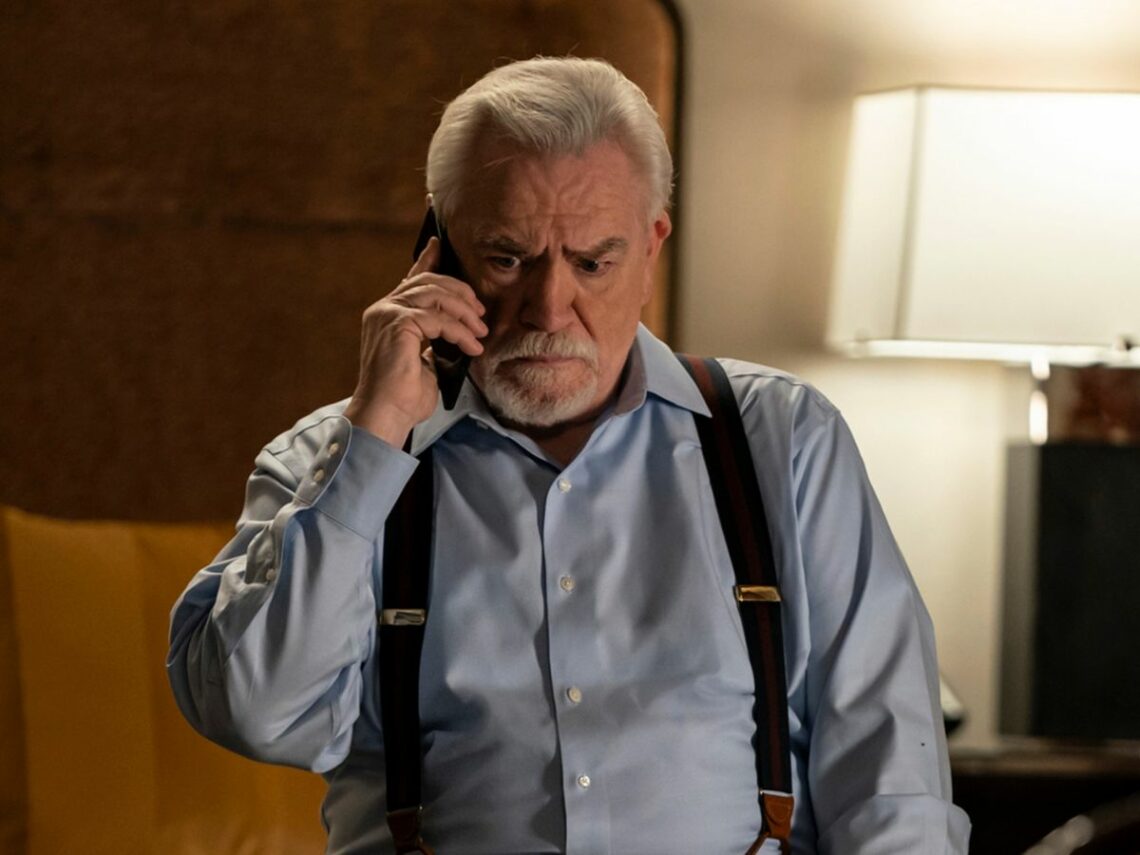
A collection of Brian Cox’s favourite books

Few actors hold the gravitas of Succession star Brian Cox. The Scot began his career at the Royal National Theatre in the 1980s, playing the title characters in Titus Andronicus and King Lear and dipping his toes into directing. With classical Shakespeare training under his belt, Cox made his screen breakthrough in the 1990s, particularly with the release of Braveheart. By the late end of the decade, he was appearing in movies alongside Morgan Freeman and Daniel Day-Lewis and working with cult director Wes Anderson.
Since the dawn of his career over 50 years ago, Cox has kept a finger firmly on the pulse of pop culture. Throughout the 2000s, he featured in David Fincher’s thriller Zodiac, the Matt-Damon fronted The Bourne Identity, and, most recently, HBO’s Emmy-winning Succession. The TV show recently made history with the most ‘Lead Actor’ nominations at the coveted awards ceremony. Cox received a nomination alongside his fictional children, Kieran Culkin and Jeremy Strong.
Cox’s character was set to die early on in the show, but writer Jesse Armstrong quickly changed his mind when the cast got on set. Consequently, Succession exposed Cox to a whole new generation of fans, those who lauded and hated the actor for his portrayal of Waystar Royco CEO and ruthless father Logan Roy. The role put Cox’s captivating gravitas to good use, as he encapsulated the all-powerful Shakespearean figure and effortlessly threw expletives at his cast members.
Alongside his acting work, Cox has also ventured into the literary world. His distinctive, deep voice has narrated a number of audiobooks, from Joseph Conrad’s Heart of Darkness to Bram Stoker’s Dracula. Though, neither of those titles makes an appearance on the list of the actor’s favourite books, which he divulged in an interview with The Week.
The first book Cox recommends is In Search of the Miraculous: Fragments of an Unknown Teaching by P.D. Ouspensky. He shares: “The story of George Gurdjieff, a Greek-Armenian philosopher and mystic, and his search for consciousness. It’s a very good introduction for anybody who is interested in esotericism and the esoteric nature of life.”
Cox follows this recommendation with a book by Gurdjieff himself, Meetings with Remarkable Men, which follows the philosopher’s wanderings. He calls it “a classic road book – and wonderful”. Cox also adds Man’s Search for Meaning by Viktor E. Frankl to the list, which “traces the beginnings of Frankl’s theory of logotherapy, an approach to psychotherapy drawn from his experiences as a concentration-camp inmate”.
The Dice Man by Luke Rhinehart gets a mention, with Cox dubbing the novel “entertaining, thrilling, and very funny”. The book considers the idea of luck by following a psychiatrist as he uses dice to make decisions for him.
Cox also picks out the Emily Brontë classic Wuthering Heights, calling it “one of the great stories. The quintessential obsessive love story. Truly amazing”.
Cox rounds out the list with Kevin Brownlow’s David Lean: A Biography, stating: “This is one of the best biographies of a filmmaker I’ve read”. Lean was at the helm of a number of huge epics, including the 1962 film Lawrence of Arabia and an adaptation of Oliver Twist in 1948.
The actor continues: “It shows brilliantly David Lean’s metamorphosis from editor to director over a period of years, and the contrast between his days in the editing suite and those he spent shooting Lawrence of Arabia in the vast open desert of Morocco. If you want to understand anything about film, I highly recommend this great, tremendously enjoyable book.”
Expectedly, Cox’s favourite books mix the classic with the innovative. It’s a collection of texts that span the educational, philosophical, and eclectic, much like Cox’s career.
Brian Cox’s favourite books:
- In Search of the Miraculous: Fragments of an Unknown Teaching by P.D. Ouspensky
- Meetings with Remarkable Men by George Ivanovich Gurdjieff
- Man’s Searching for Meaning by Viktor E. Frankl
- The Dice Man by Luke Rhinehart
- Wuthering Heights by Emily Brontë
- David Lean: A Biography by Kevin Brownlow
