


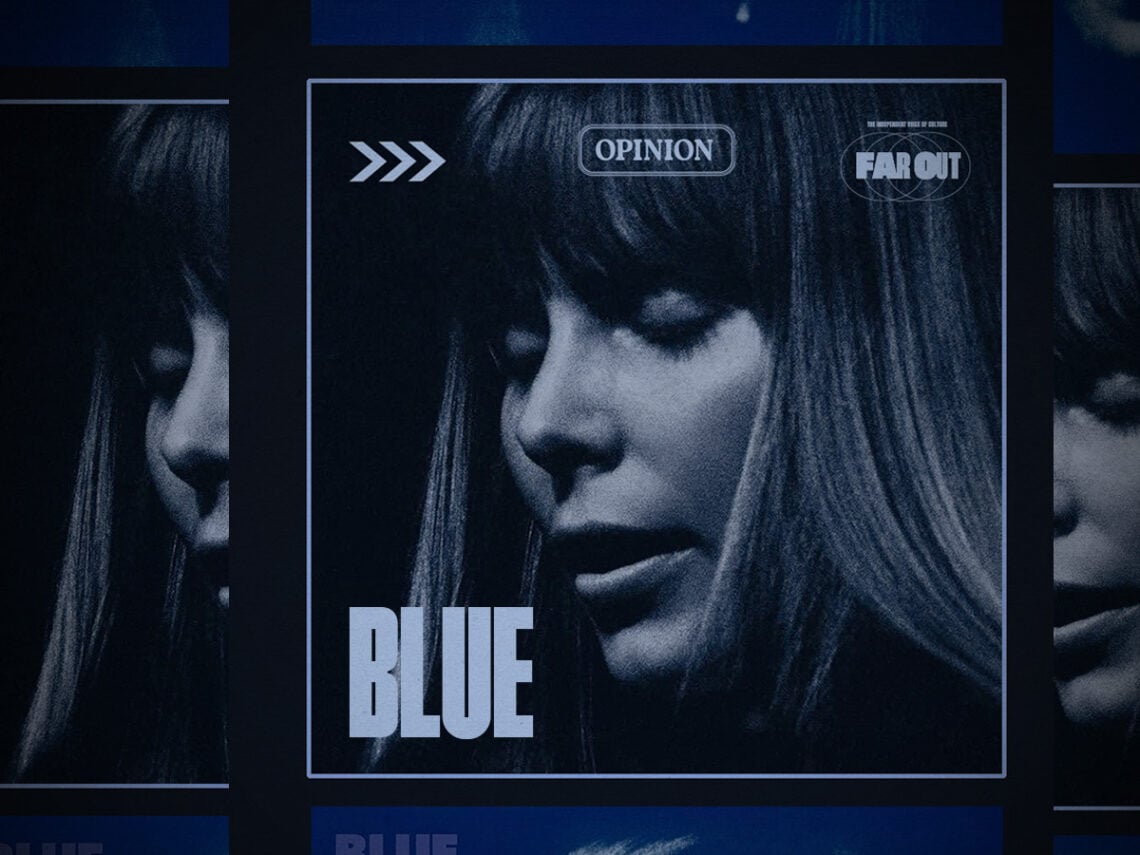
55 years after its release, today was my first time listening to Joni Mitchell’s ‘Blue’

If you have clicked on this article, ready to lambast me for my lack of Joni Mitchell appreciation, I’m sorry to disappoint you.
The simple truth is that 1971 was rather a long time ago now. Over three decades before I was born, and an even longer time before I ever started retrospectively hearing the sounds of that heady era, it was fair to say that as soon as I was introduced to the intoxicating drug of Mitchell’s voice, it was a gateway. I had a lot of catching up to do.
Naturally, I had heard things of hers in certain basic snatches. Emma Thompson crying to ‘Both Sides Now’ in Love Actually, for example, or Harry Styles covering ‘Big Yellow Taxi’ in 2019. But those cases, for obvious reasons, were only really scratching the surface, and didn’t come close to revealing the true gemstone depths of what Mitchell has to hold.
Admittedly, it doesn’t take long in this journey of discovery to hit on Blue, the early ‘70s opus that would go on to define not only much of the rest of the course of Mitchell’s career and what her key sonic strengths are, but also a sizable chunk of the modern music way of being. It always intrigued me, though: how could a masterpiece be crammed into 36 minutes?
To my mind, Mitchell has always been the epitome of a warbling wordsmith. I don’t mean that in an insulting or overwrought sense, but more so that her songs have always been so full of stories and life that the length, in comparison, felt somewhat minimalist. Oh, how wrong I was. As I hit play, I don’t think I quite appreciated the winding roads that would entail.
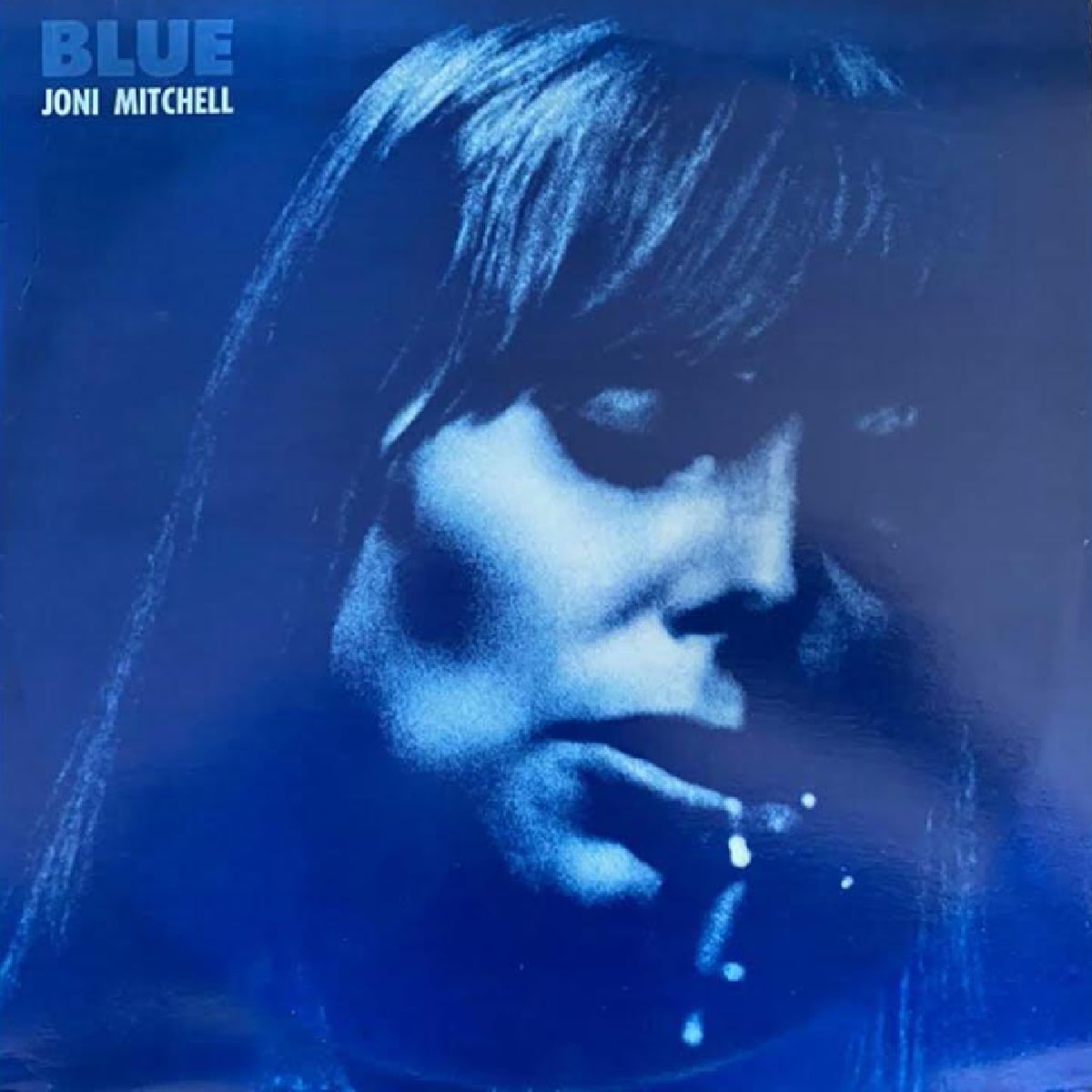
For someone who was in the midst of one of the most turbulent romantic periods of her life, it was the mark of Mitchell’s sheer genius as a songwriter that she was even able to formulate her thoughts into ideas at all, and not just dissolve into a puddle of emotion. But that’s the other thing; Blue, despite its name, is a record of so much more than heartbreak.
Having said that, the romantic emotional rollercoaster was not the immediate thing to hit me as I took in the ten-track course. It is the sense of geography, time, space, and location, both acutely specific and loosely figurative, that paints the singer to me, in that moment, as a woman constantly on the move in search of her own self.
To outline one straightforward example, ‘California’ is transportative from the rainy streets of Paris to the warm glow of the Sunset Strip. Contrast that to ‘River’, and we’re in the depths of festive winter, wrapped up and snuggly on the outside but looking to fill a well of cold soullessness from within.
‘A Case of You’, meanwhile, serves as Mitchell’s immortalisation to Canada, and ‘The Last Time I Saw Richard’ starts out in Detroit in ‘68. To be clear, this is not an attempted exercise in pointing out as many place names as possible, but to me, it seems to represent the musician physically hauling herself through all the places and spaces of her life to try and find peace.
In my mind, there is nothing more beautiful or as masterful as that perceptive ability. Of course, it should still be said that this doesn’t come without its gnarlier moments. The title track ‘Blue’ holds the searing lyric that “songs are like tattoos” and the references to “acid”, “booze”, “guns” and “grass” hark back to a time with James Taylor, which was less about philosophically finding oneself as it was about gritty survival.
But all of this combined makes Blue the ultimate timeless masterstroke, even at 55 years old. For a first-time listening experience, it really doesn’t matter whether this is 1971 or 2026: Mitchell’s writing is so deft but accessible that it can be found by anyone, at any time, and still hit home just as deeply.
Above all else, that is precisely what makes Blue such a defining record. Its imperfectness is what provides its perfectness; its words and its notes are never cast away for the sake of it but embedded into the bones of every song, thus creating an album that almost transforms into its own human being with all its incredibly lifelike ability.
Mitchell was not just a genius for writing Blue. She gave life to a whole new meaning of music.
