


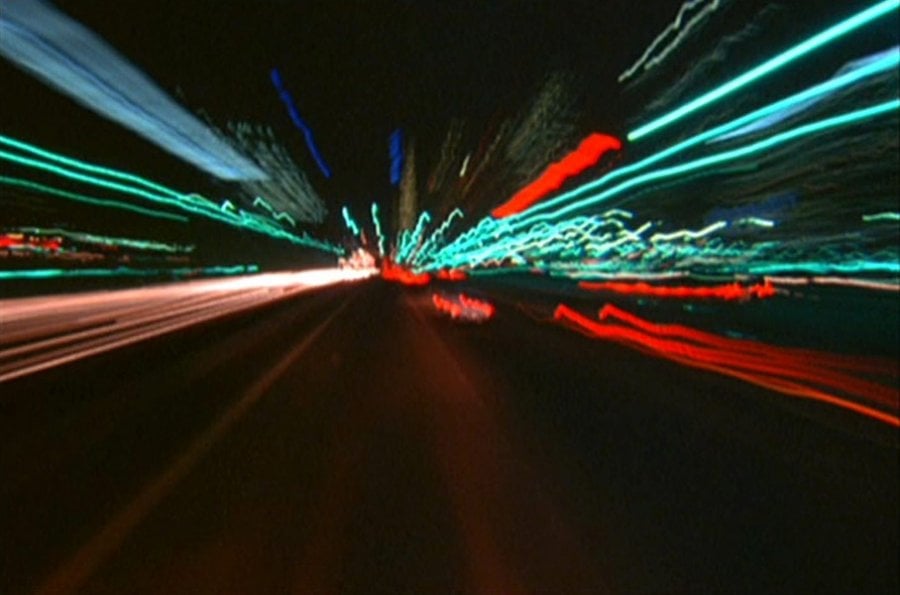
40 years of ‘Koyaanisqatsi’: Godfrey Reggio’s frenetic meditation

The breadth of possibility with the cinematic form encourages filmmakers to reach far beyond their own imaginations, taking audiences to impossible planets with spectacular CGI in order to experience a reality far different from our own. Though in 1982, American filmmaker Godfrey Reggio proved that such ethereal wonder could be created on the firm ground of planet earth, fiddling with every device of the cinematic medium in order to create a truly alien piece of filmmaking that feels like the work of an omniscient extraterrestrial.
A powerful document of life on earth, Reggio’s Koyaanisqatsi was released with the help of fellow cinematic visionary Francis Ford Coppola, who helped to release and distribute the film under the belief that it was “important for people to see”. Shying away from factual representation, however, Reggio’s film was unlike any other of the medium, using a non-narrative structure to siphon out a human truth from mere images of contemporary life.
Flowing through cities and natural landscapes across the US, Reggio’s visual poem shows us a ‘life out of balance,’ as translated from the title itself born from the Hopi language. Using pioneering editing and camera techniques, Koyaanisqatsi became a cinematic oddity at the time of its release, telling a frightening, powerful and intimidating tale that conversely felt warm and beneficial.
In many ways, the film reflects cinema in its purest form, harnessing the pace of the moving image to tell a frenetic tale of surprising humanity. A striking reflection of modern life, Reggio wonderfully contextualises his visuals within constructs of modernity, examining how the advance of our technological developments has changed the world forever. Crucially, however, whilst this is an undeniable takeaway from the meditative experience, the director did not wish to impose this forceful message.
Speaking in the short film Essence of Life, which explores the making of the 1982 classic, the filmmaker reveals, “these films have never been about the effect of technology, of industry on people”. Eager that everyone who watches his films extracts a different truth, he adds, “It’s not the effect of, it’s that everything exists within [technology]. It’s not that we use technology, we live technology. Technology has become as ubiquitous as the air we breathe”.
Tightening the strings of the visual masterpiece is Phillip Glass’ orchestral score, a symphony of life that electrifies the film and provides almost uninterrupted synchronised sound and vibrant punctuation to the images on screen. Whilst each and every one of his tracks inspire an ethereal presence, it is the orgasmic climax in ‘The Grid’ at the conclusion of the film where Glass manages to provide a soundtrack for the humdrum of the every day; electrifying the cityscape whilst giving order to the chaos of modern life.
Getting lost in Reggio and Glass’ world is a perplexing, hypnotic experience that feels unmatched throughout the rest of cinema’s rich offerings. Speaking to life’s beauty, violence, chaos and rhythmic pleasure, the dynamism of Reggio’s iconic film makes for a unique adventure upon each and every watch.
