


10 essential films about protecting the environment

The threat of global warming is undoubtedly the most pressing and existential crisis humanity is currently facing, with the livelihoods of everyone on the planet likely to be impacted by the gradual change in the planet’s climate.
In striving for global change, such contemporary icons such as Greta Thunberg, David Attenborough and even actor Joaquin Phoenix have voiced how people can change their everyday attitudes to the world around them, with each of them having used cinema and television to persuade an entire global population.
Informing the viewer about a previously unreported incident or inspiring them to make a real-life change, documentaries can be a key tool in changing the mindset of an individual, but so too can fiction. Striving to inform, persuade and encourage personal change, take a look at our list of ten essential films about protecting the environment, below, featuring films from such filmmakers as Steven Soderbergh, Werner Herzog and Hayao Miyazaki.
10 essential films about protecting the environment
10. Erin Brokovich (Steven Soderbergh, 2000)
A classic of early noughties filmmaking, Steven Soderbergh’s drama following an unemployed single mother who becomes a legal assistant and single-handedly brings down a California power company, is a compelling bid for personal agency. Winning an Oscar for Best Actress in a Leading Role, Julia Roberts fuels the film with a terrific performance, helped by Susannah Grant’s script that suggests anyone can make a difference against industrial malpractice.
Also featuring the likes of Albert Finney and Aaron Eckhart, Erin Brokovich is too often forgotten in the landscape of excellent environmental movies.
9. Microcosmos (Claude Nuridsany, Marie Pérennou, 1996)
Non-narrative, atmospheric documentaries can be the perfect genre to house the most beautiful environmental movies, with the French film Microcosmos by Claude Nuridsany and Marie Pérennou being a perfect example. Centring on one patch of rural countryside, the documentary reveals what fascinating life exists in the meadows and ponds in our very own back gardens.
Helping the viewer to appreciate the wonder of life in its simplest form, Microcosmos does well to highlight the importance of each and every ecosystem, no matter how seemingly ‘meaningless’.
8. Pom Poko (Isao Takahata, 1994)
Studio Ghibli are well known for bringing large-scale global issues to children’s animation, with their 1994 movie Pom Poko being no different, telling the story of the environmental threat of constant urbanisation. Telling the charming tale of a community of shape-shifting raccoon dogs who are struggling to protect their forest from human influence, Isao Takahata’s film is as thoroughly entertaining as it is critically urgent.
Featuring voice work from such actors as Jonathan Taylor Thomas, Clancy Brown and J.K. Simmons, each character is beautifully realised in this heart-touching tale of loss and acceptance.
7. Chasing Ice (Jeff Orlowski, 2012)
One of the most illustrative ways that we can witness the impact of climate change is when we look at the change in the Arctic glaciers that are decreasing in size by the day. This is what is explored in the documentary Chasing Ice, following the National Geographic photographer James Balog across the Arctic as he captures unprecedented footage of the melting of the Arctic glaciers.
Nominated for an Oscar in 2013, Jeff Orlowski’s documentary was followed by the equally important film Chasing Coral in 2017.
6. An Inconvenient Truth (Davis Guggenheim, 2006)
Perhaps the most famous documentary regarding climate change remains An Inconvenient Truth by Davis Guggenheim, a sobering analysis on the state of the climate in 2006. Terrifyingly, the statistics of the film may be a little outdated over a decade since its release, though this shouldn’t put you off watching the essential film, with the Former Vice President of the United States Al Gore putting together a compelling argument.
Releasing An Inconvenient Sequel: Truth to Power in 2017, the sequel failed to seize the impact of the original film but remains a solid documentary about climate change.
5. Food, Inc (Robert Kenner, 2008)
Many food-related documentaries have tried to change attitudes to human consumption across the years, with Food, Inc. and Super Size Me presenting the most famous arguments for global change. Helmed by Robert Kenner, the 2008 documentary highlights the pitfalls of the American corporate-controlled food industry, revealing some terrifying home truths and shocking scandals across the way.
The film is also a terrific starting point to explore a whole range of food documentaries, with Cowspiracy, Fed Up and What the Health each worth checking out.
4. WALL-E (Andrew Stanton, 2008)
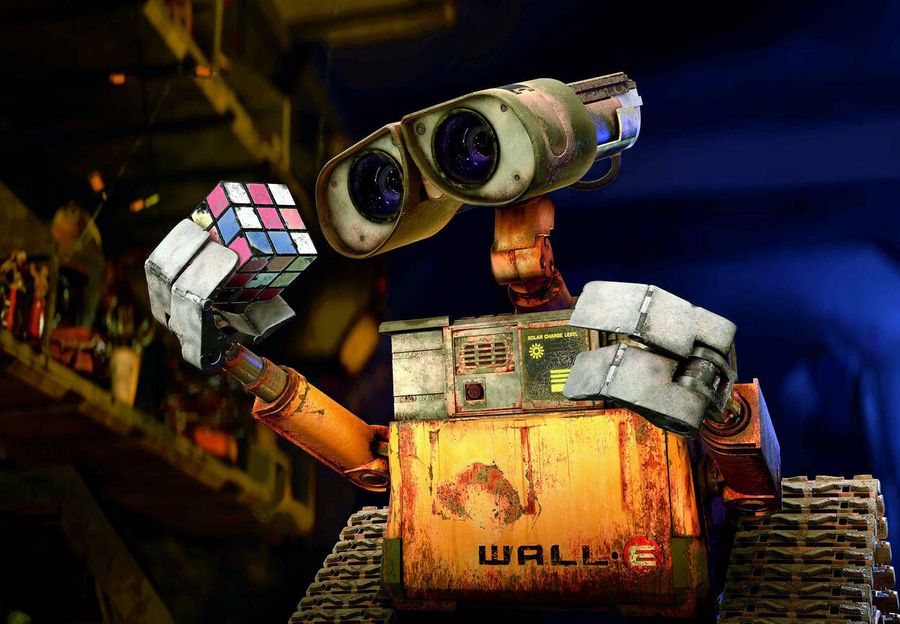
Just like Studio Ghibli, Pixar is known for making films for both children and adults, with their compelling stories often contextualised in life stories of childhood, parenting, the familial dynamic, and even consumerist culture in the case of Wall-E. In one of the studio’s most ambitious films, the movie stars a mute, rusted robot with binoculars for eyes who journeys to save humanity by travelling through space.
Holding a living, luscious plant as the key to humanity’s future, the robot travels to a cosmic cruise ship holding one of the last remaining vessels of human life where consumerism has turned humanity into ignorant, apathetic drones. It’s a truly wondrous watch.
3. Encounters at the End of the World (Werner Herzog, 2007)
It’s hard to imagine that the images of Antarctica that Werner Herzog captures are even part of the same world we live in. Captured in such awe-inspiring vision, Herzog’s documentary about life in one of the world’s harshest climates is truly fascinating. Travelling to a remote part of Antarctica, the filmmaker and his documentary team meet up with the people who brave the continent’s brutal weather conditions, as well as the landscape and wildlife, which are slowly changing with the changing climate.
Exploring above and below the thick ice sheets that make up the area, Herzog is able to document a land previously unseen and inexperienced. It makes up one of many of his impressive nature documentaries.
2. Nausicaa of the Valley of the Wind (Hayao Miyazaki, 1984)
Studio Ghibli’s first and very best feature film is Nausicaä of the Valley of the Wind, not the production company’s most creatively dense or thematically imbued film, but the one which most perfectly draws each of its elements together to create a truly compelling whole. Totally fantastical, Nausicaä is a fairy-tale come to life, colourful and fun, led by eccentric caricatures of conventional story archetypes.
Considered a predecessor to Princess Mononoke, Nausicaä of the Valley of the Wind was an early indicator of the flourishing future success of Studio Ghibli and Japanese animation as a whole. Merging a delightfully fun, thrilling animated tale with an environmental subtext of genuine importance.
1. Samsara (Ron Fricke, 2011)
There’s something about the cinematography and storytelling of Ron Fricke that seems to access the very heart of the human condition, beating to the drum of its rhythm to tap into something extraordinarily existential. He has proven this time and time again, from the thrilling 1982 documentary Koyaanisqatsi to 1992s Baraka, and finally his masterpiece Samsara in 2011.
A poetic non-narrative documentary, Samsara is a project filmed over five years in 25 countries on five continents, capturing the natural wonders of the world in stunning beauty before contrasting this with the industrial impact of humanity. Forcing the viewer to consider their own position in the mechanical workings of the modern world, without imposing overt criticism, Fricke’s movie is an urgent modern masterpiece.
