


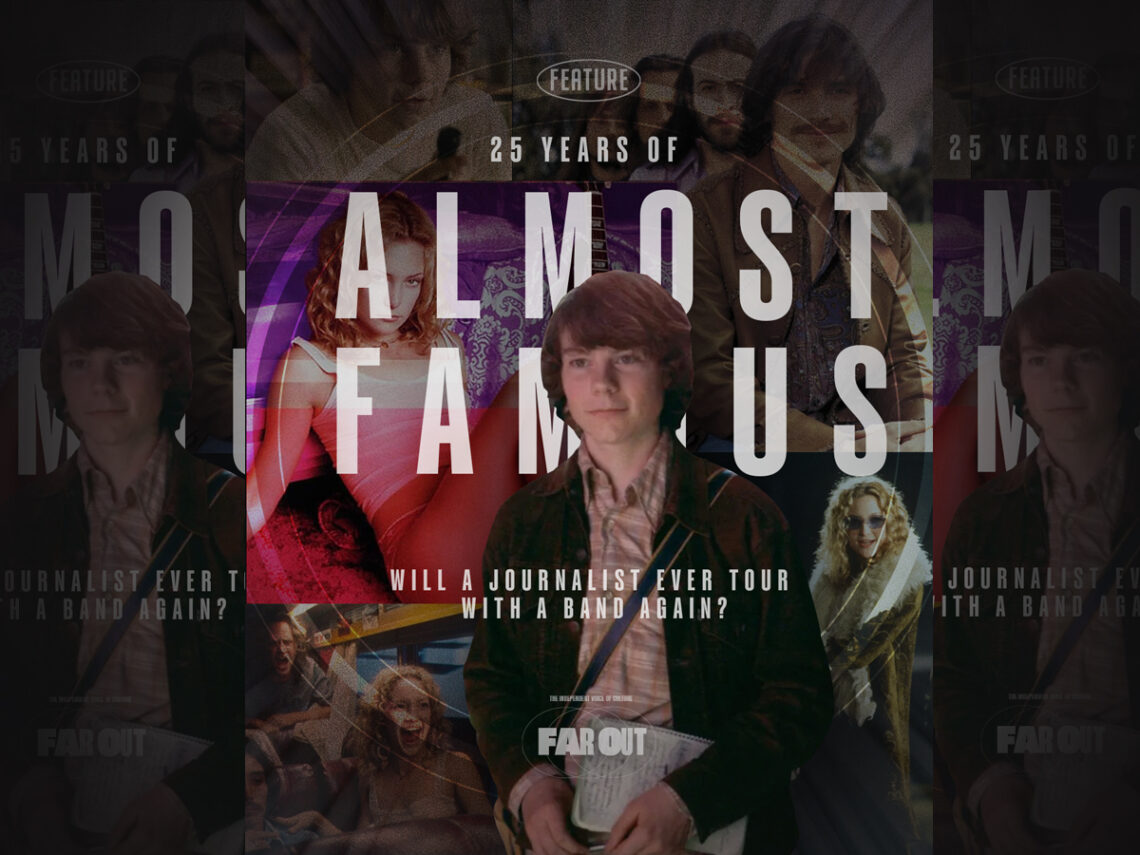
25 years of ‘Almost Famous’: Will a journalist ever tour with a band again?

In recent years, music has become somewhat of a seasonal industry. In the depths of winter, we nestle in the dingy solace of DIY independent venues, rubbing shoulders with our music-hungry peers, before spending the rest of the season’s darkness wrapped up in the comfort of noise-cancelling headphones.
But then, spring appears, and the promise of festival season awaits. As bands now tour relentlessly to simply make a living, summer has become music’s peak season, where festivals stack up on one another, representing perhaps the last remaining beacon of social liberation and blissful ignorance. For in this rat race of societal shit we find ourselves in, it is seemingly broken up only by the sound of live music, in a sprawling, sun-soaked field.
It was at one point, during this heady festival season that I had one of my best and worst experiences. The privilege of doing this job is getting to spend time with musicians I genuinely admire, quizzing them on the idiosyncratic experiences that made some of my favourite music. Naturally, while conducting this, both I and the act in question opt to share a pint while doing so, socially lubricating this professional yet friendly encounter with something fizzy or fermented.
While chatting to icons of Australia’s laid-back surfer-cum-musician scene, Babe Rainbow, we all determined it felt right to continue on with our chat, long after the microphones stopped recording. Right here was what I now consider my best experience, shooting the shit with musicians and hosting the sort of conversations I romanticise as the sort of studio nonsense I’m so fascinated by.
“It’s so much harder for labels and management to ‘control the narrative’ if a writer is given open access. A shame as these things often are invaluable in creating the ‘romance’ around bands, especially if the writing is great.”
Steve Phillips
As the drinks kept flowing, the roles reversed, and the questions started firing at me. Talking about my journalistic ambitions, we nostalgically harked back to the iconic film Almost Famous and the giddy prospect of generally being a journalist on tour with a band. “Hey, why don’t you come on tour with us?” the bassist flippantly suggested. After effusively saying I would love to, the conversation and the beer fizzled out under the realisation of the outright impossibility of this in the modern age: Journalists don’t go on tour with bands anymore. Why though?
“Cost and social media probably are the simplest reasons why these things unfortunately don’t happen anymore,” publicist and representative of Babe Rainbow Steve Phillips told me, when I asked in light of this article.
He continued, “It’s so much harder for labels and management to ‘control the narrative’ if a writer is given open access. A shame as these things often are invaluable in creating the ‘romance’ around bands, especially if the writing is great.”
There is, in fact, romance in the uncontrolled. Social media has emphatically placed us into an era of careful curation. Curated content and curated lifestyles, seemingly devoid of the spontaneity that exists so deeply within music as an art form.

William Miller in Almost Famous didn’t learn about the excitement, danger and tragedy of life on the road by watching marketing promotion posts, painfully read out by his favourite band, through a handheld screen. He had moments, big and small, like Russell expanding on the true meaning of music in a real-life conversation and Penny resting her head on his shoulder while on the tour bus, by being there in real time with the band.
Sure, when William joins Stillwater on tour, his wide-eyed outlook on the world as a 15-year-old undoubtedly provides the view of the band through rosy and admired eyes. But even when you strip away the glitzy sentimentality of a Hollywood movie, and really think about the role of a journalist on tour, there is, god willing, ever in budget again, an undoubted importance in their role.
Because the fact is, in the current economy, there is a very real expectancy of bands to be full-time content creators alongside their primary focus of living a life dedicated to music. Learning how to market every facet of their daily life is, let’s face it, a taxing and unglamorous reality of being a modern artist. An artist who is adored enough to go on tour should be given the right to focus solely on the creation of music that will fully engage with society, rather than focus on short-term internet trends. In that light, does the role of a modern multimedia journalist to tell their unfiltered story and their possibility at keeping industry fatigue at the door offset the cost?
Journalists, like musicians, are storytellers but the latter know how to tell theirs in the studio and onstage, pulling out extracts of themselves one piece at a time and then lacing them into the poetic platform of a song. Journalists are observational, picking up on the quirks and idiosyncrasies those living in the world they observe might not otherwise see. Therein lies the dynamic in which they will forever be valuable, mediating the conversations between artist and fan in a once again authentic way, one not polluted by digitalised shorthand and sanitised algorithms.
So, what if next year, when the sun peaks through the clouds and ushers in the next festival season, where bands drop in and out of the country’s festivals like a rolling circus, in a bid to make hay in this modern landscape of seasonal fandom, I, for Far Out, go inside the eye of the storm and try to beat social media at its own game by balancing the weight back in the favour of artists. Would you prefer it?
