


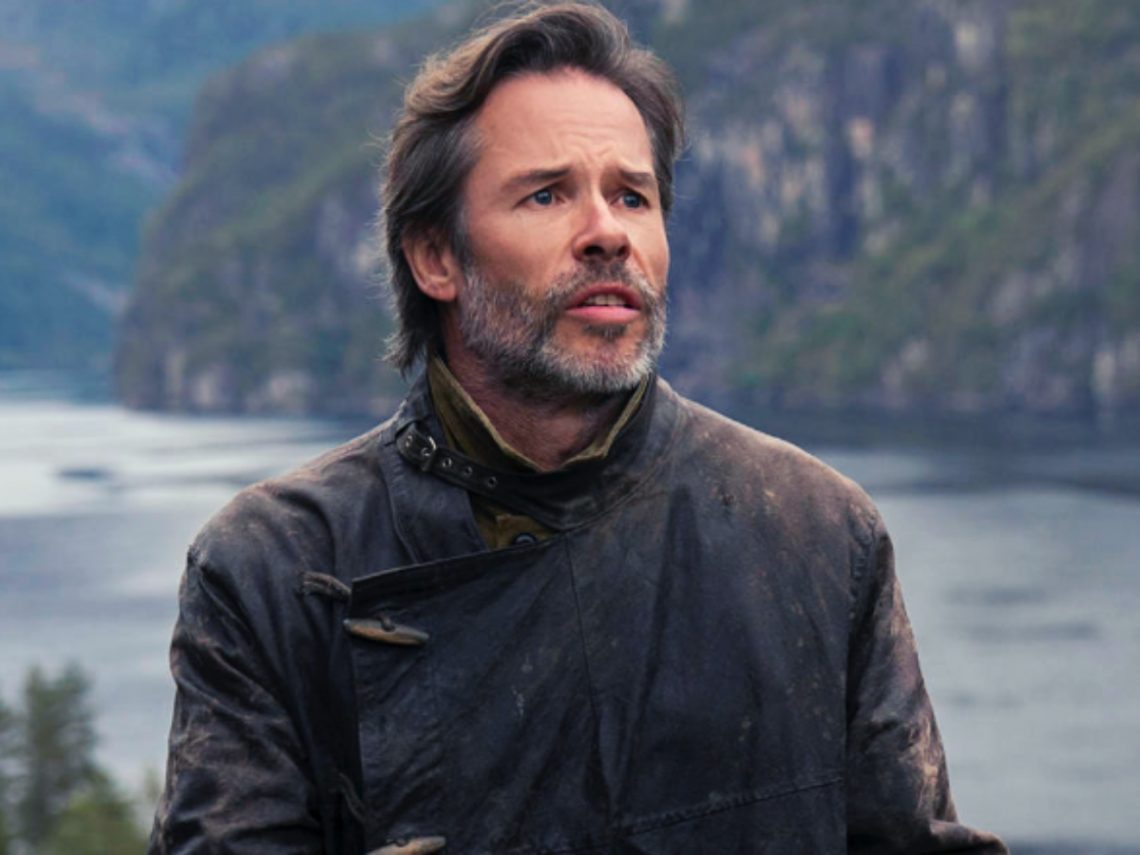
The 2002 movie Guy Pearce couldn’t stand making: “People would say good morning, and I’d go, ‘Fuck off'”

Around the turn of the millennium, everyone assumed that Guy Pearce would be the next Australian actor to seamlessly crack the Hollywood A-list, but nobody bothered to ask him if that’s what he wanted.
Ticking off both boxes required by most Antipodeans by appearing on both Home and Away and Neighbours early in his career, Pearce first gained international attention for his performance in the 1996 cult classic, The Adventures of Priscilla, Queen of the Desert, and America soon came calling.
His maiden Stateside production also happened to be one of the year’s best, with the Aussie’s first major role outside of his native country coming in Curtis Hanson’s LA Confidential, which won two Academy Awards from nine nominations, and proved that he could more than hold his own against some heavy hitters.
William Friedkin’s Rules of Engagement was a bust, but it nonetheless provided the platform for Pearce to take third billing behind Samuel L Jackson and Tommy Lee Jones under the direction of a legendary auteur, with Christopher Nolan’s Memento significantly increasing his stock, even if he hated his performance.
However, it was 2002 when things started to go tits up. Running himself into the ground, Pearce made four pictures back-to-back, and all of them were released within a seven-month period. He was exhausted and increasingly bitter, but it was his ill-judged attempt at becoming a blockbuster leading man that left the worst taste in his mouth.
Simon Wells’ The Time Machine wasn’t a bomb, but it was rubbish, and playing the lead in a big-budget, effects-heavy studio flick was the straw that broke the camel’s back. Reflecting on that time in his life, he didn’t recall being a happy camper. “People would say, ‘Good morning’, on set, and I’d go, ‘Fuck off,'” he confessed. “I was becoming really unpleasant.”
By the time his fourth and final feature of the year, Till Human Voices Wake Us, debuted in September, he was ready to wash his hands of the business for good. “I needed to get out of the industry,” Pearce acknowledged. “I hated every minute of it, hated everyone. I told my agent: ‘Don’t call me. Leave me alone.'”

Left alone he was, and that period of recharging his batteries was exactly what he needed. During his sabbatical, Pearce reassessed his priorities, vowing that the only person who would dictate the trajectory of his career would be him, and there would be no more kowtowing to industry pressure.
He wouldn’t return to the screen until the summer of 2004, and while Two Brothers was hardly indicative of his new direction, the movie he made immediately after that, John Hillcoat’s The Proposition, definitely was. Pearce may not have hit the heights that were predicted for him two and a half decades ago, but a lot of that has to do with the fact that he wasn’t interested in hitting them.
